I am no cheese expert but just did a little bit of research. Esters are chemical compounds produced by an alcohol reacting with an acid facilitated by enzymes created by bacteria during fermentation. Different esters create different flavor profiles that we perceive as the “fruity” notes when tasting cheese. There are esters that make cheeses smell like anything from pineapples to apples to bananas. Our scent is so strongly connected to our taste that these esters influence the overall flavor of the cheese heavily.
Tl;dr: Fermentation makes chemicals that smell like fruit and thus make cheese taste like fruit.
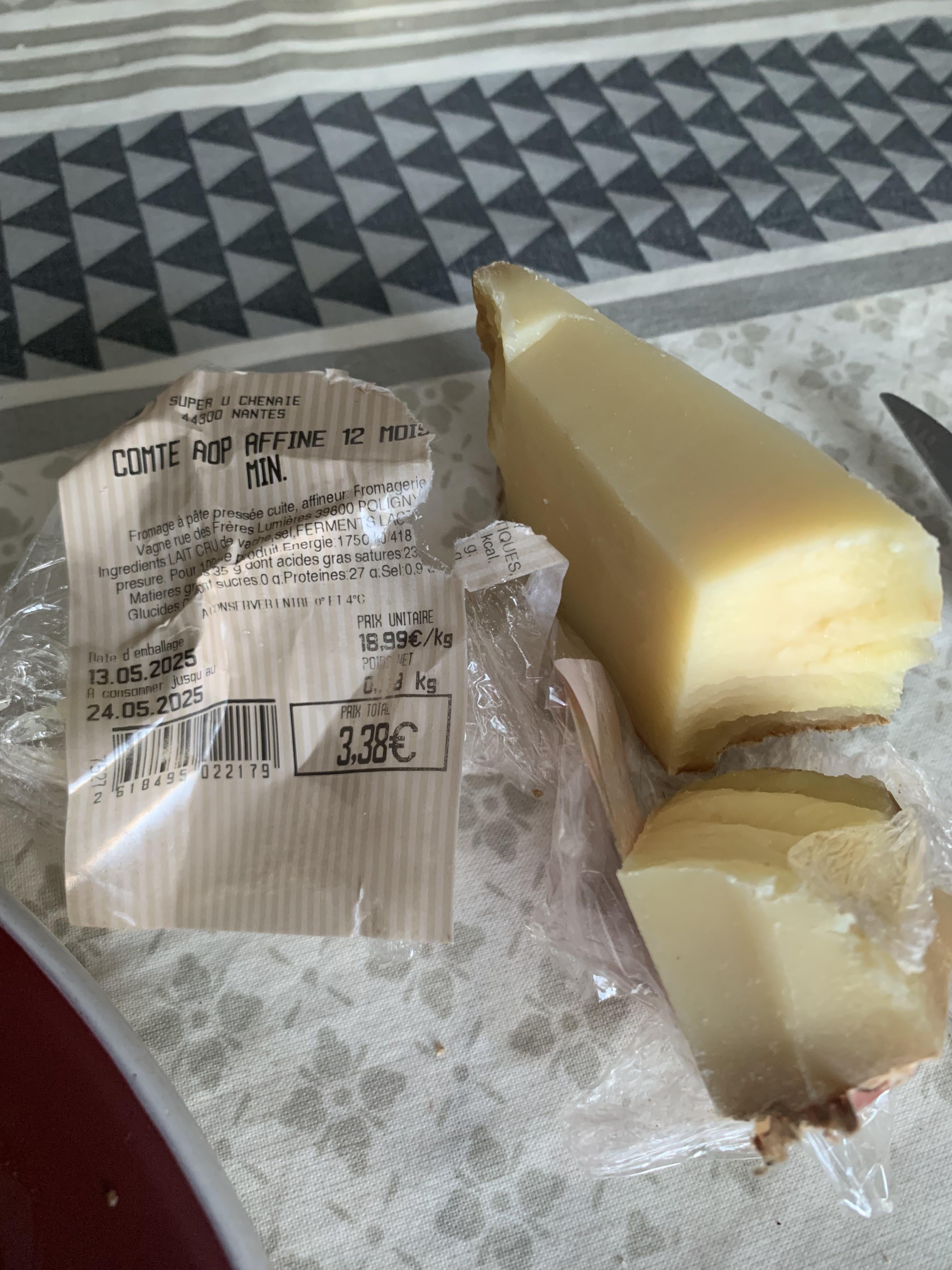
Comté and Beaufort are some of the absolute best hard cheeses in the world.
TurnoverConsistent62 on
What cheese is this?
amazonhelpless on
Bacteria poop.
FrugalVerbage on
🤤
Far-Repeat-4687 on
just wait till you hear about fermented grapes.
The_Turdman_Cometh on
Rent and Enzymes 😎
SnackingWithTheDevil on
You should try some older ones as well; 18 month and up get even more complex and fruity.
YoavPerry on
First and foremost, before crediting enzymes and microbiology, this starts with cows of specific breeds (genetics!) that munch on alpine maintain grass and flowers in rotational grazing and incredible health, at spring and summer time (winter milk from hay fed cows is not for this cheese). The straw color alone can tell you the story -that’s beta carotene from the grass. (Take that, white cheddar from miserable cows). Bottom line, this is not your supermarket milk. Milk for this level of cheesemaking is robust with hundreds of diverse compounds that come together to create this harmony. This is also a raw milk, cheese, and it is safe because it is very well aged to low moisture point that no longer enables pathogens to live in it, but what it means for cheesemaking is that you don’t throw the baby with the bathwater. This style of cheesemaking has been around for about 1200 years so there’s a lot of knowledge about which things should not be offered to the cows and best practices of grazing, milking, fabrication and aging.
Bacterial cultures and enzymes are magical, but without these compounds, they are useless. And then, there is the skill of master cheesemakers, and affineurs (cheese agers) that have the sense of how to time the occurred for perfect consistency, and tuneup their mix of cultures for responsiveness to the conditions of the specific milk of the day, because milk is dynamic and it constantly changes with brain, sun, feed, breed, time of season, hour in which milking was done, and the point in the lactation cycle in which the animal is. Affineurs need to tend to the cheese for years, washing it with Bryan, turning it, look for defects, and deciding which ones have the potential to age more and which ones should be sold right now.
Most people have no clue how much goes into making their cheese and just complain about the price. (In Europe, the pricing is more reasonable because of heavy subsidies. The other half of the price tag comes out of your taxes….)
Penumen on
Cows eat plants.
Bake_Bike-9456 on
so cheap for 12 months !
RasiakSnaps91 on
Honestly, food science in general is amazing to me!
Cheese, charcuterie, whiskey, and wine. All delicious, and all basically reliant on natural processes for different incredible flavours.
Laeslaer on
Cow ate fruit
Seriously, what the cow eats greatly impacts the flavor. During the fall, comte will taste more grassy and sometimes like onion

17 Comments
Fermentation is culinary magic.
It should had been raised in a fruitière.
And that’s a better price and quality than that!
https://www.reddit.com/r/Cheese/comments/1ku9ro6/how_do_you_feel_about_this/?
utm_source=share&utm_medium=web3x&utm_name=web3xcss&utm_term=1&utm_content=share_button
I am no cheese expert but just did a little bit of research. Esters are chemical compounds produced by an alcohol reacting with an acid facilitated by enzymes created by bacteria during fermentation. Different esters create different flavor profiles that we perceive as the “fruity” notes when tasting cheese. There are esters that make cheeses smell like anything from pineapples to apples to bananas. Our scent is so strongly connected to our taste that these esters influence the overall flavor of the cheese heavily.
Tl;dr: Fermentation makes chemicals that smell like fruit and thus make cheese taste like fruit.
Source: https://www.sciencedirect.com/science/article/abs/pii/S0958694604000688?utm_source=chatgpt.com
Enzymes.
Cheese magic
Comté and Beaufort are some of the absolute best hard cheeses in the world.
What cheese is this?
Bacteria poop.
🤤
just wait till you hear about fermented grapes.
Rent and Enzymes 😎
You should try some older ones as well; 18 month and up get even more complex and fruity.
First and foremost, before crediting enzymes and microbiology, this starts with cows of specific breeds (genetics!) that munch on alpine maintain grass and flowers in rotational grazing and incredible health, at spring and summer time (winter milk from hay fed cows is not for this cheese). The straw color alone can tell you the story -that’s beta carotene from the grass. (Take that, white cheddar from miserable cows). Bottom line, this is not your supermarket milk. Milk for this level of cheesemaking is robust with hundreds of diverse compounds that come together to create this harmony. This is also a raw milk, cheese, and it is safe because it is very well aged to low moisture point that no longer enables pathogens to live in it, but what it means for cheesemaking is that you don’t throw the baby with the bathwater. This style of cheesemaking has been around for about 1200 years so there’s a lot of knowledge about which things should not be offered to the cows and best practices of grazing, milking, fabrication and aging.
Bacterial cultures and enzymes are magical, but without these compounds, they are useless. And then, there is the skill of master cheesemakers, and affineurs (cheese agers) that have the sense of how to time the occurred for perfect consistency, and tuneup their mix of cultures for responsiveness to the conditions of the specific milk of the day, because milk is dynamic and it constantly changes with brain, sun, feed, breed, time of season, hour in which milking was done, and the point in the lactation cycle in which the animal is. Affineurs need to tend to the cheese for years, washing it with Bryan, turning it, look for defects, and deciding which ones have the potential to age more and which ones should be sold right now.
Most people have no clue how much goes into making their cheese and just complain about the price. (In Europe, the pricing is more reasonable because of heavy subsidies. The other half of the price tag comes out of your taxes….)
Cows eat plants.
so cheap for 12 months !
Honestly, food science in general is amazing to me!
Cheese, charcuterie, whiskey, and wine. All delicious, and all basically reliant on natural processes for different incredible flavours.
Cow ate fruit
Seriously, what the cow eats greatly impacts the flavor. During the fall, comte will taste more grassy and sometimes like onion
fuck yeah comté