
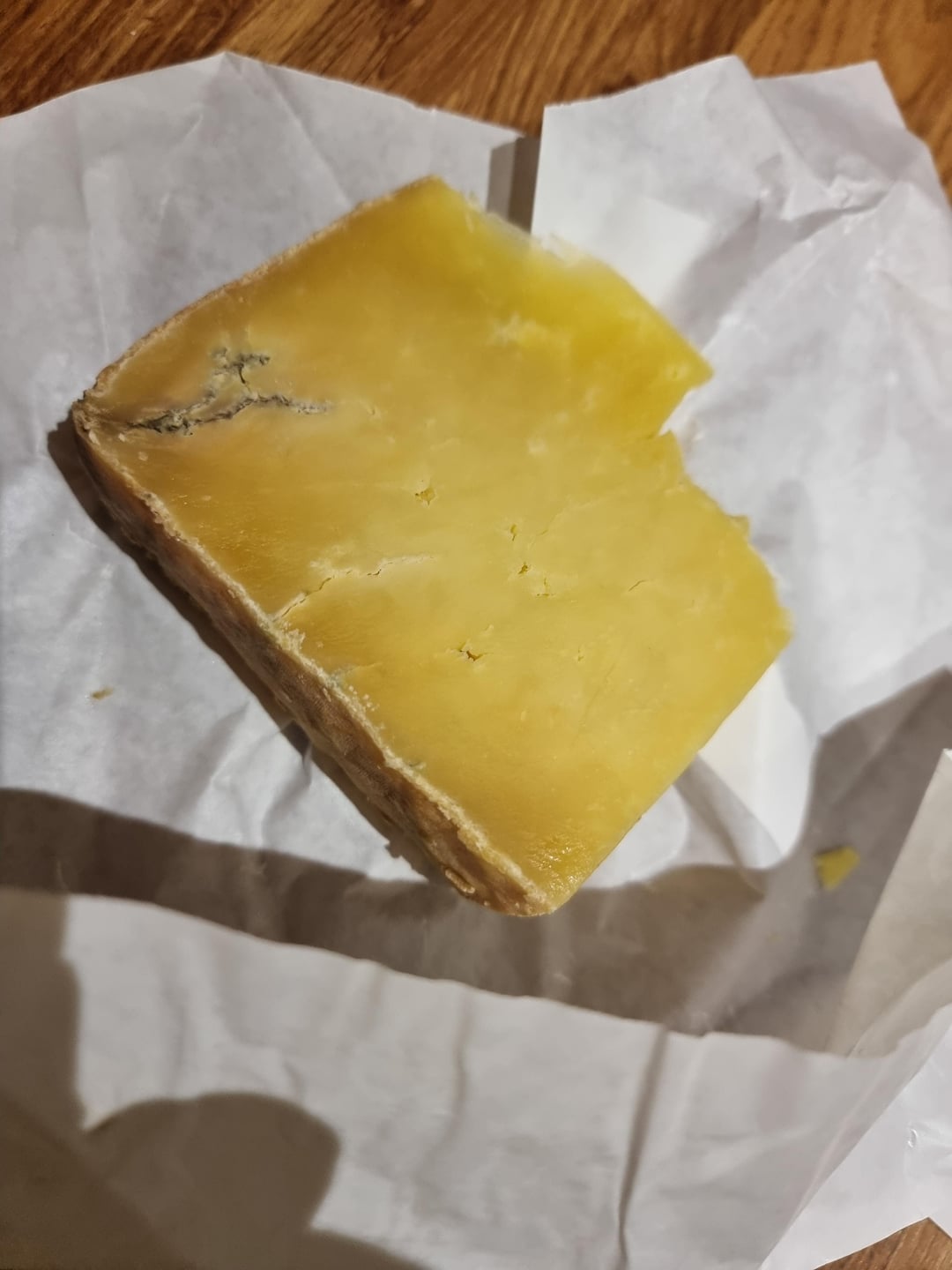
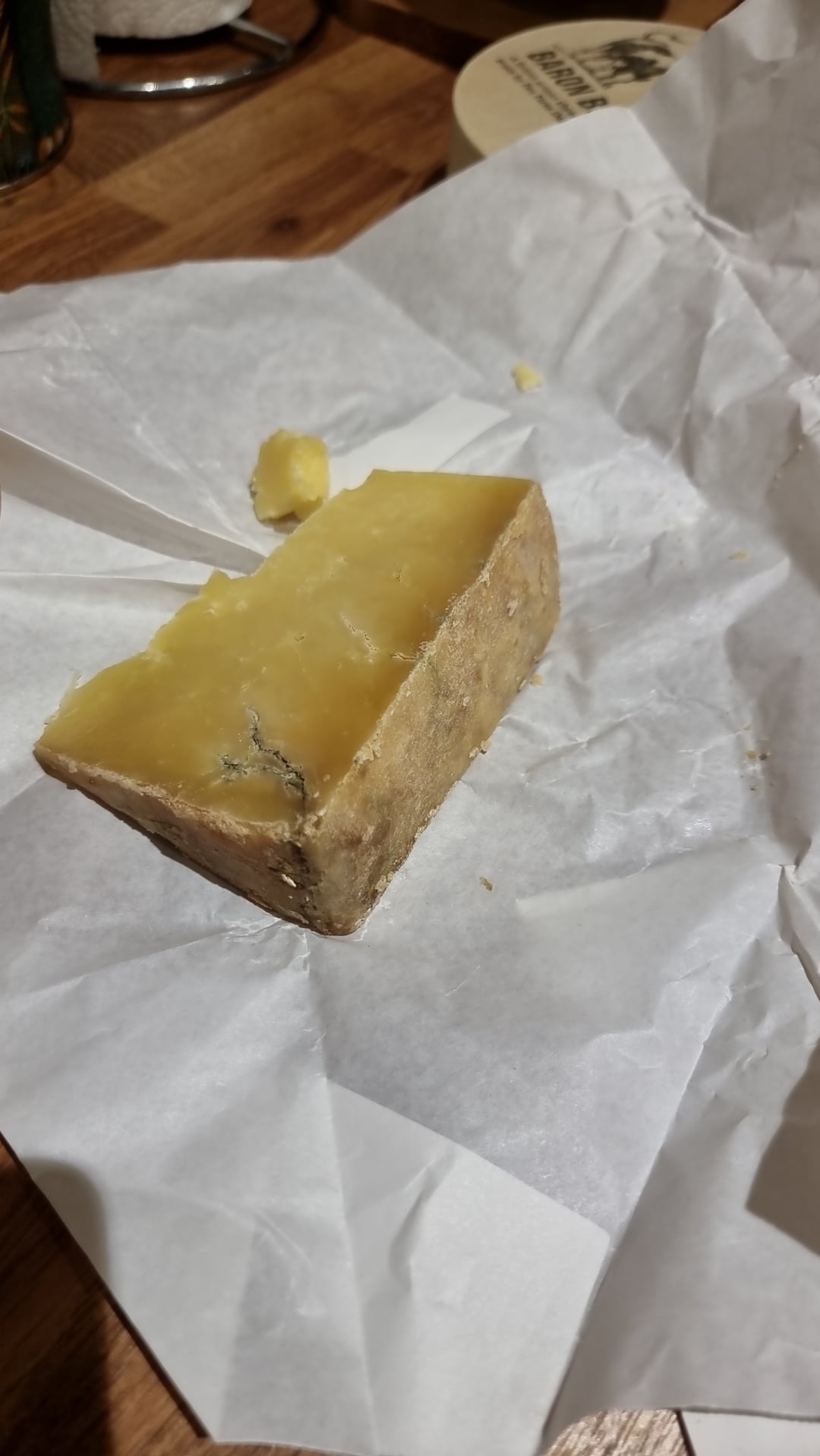
I bought this cheese mid December and was planning to take it to my in-laws for Christmas. I forgot to take it with me and have just found it at the back of my cheese drawer.
I opened it to eat it and it has some blue mould. The thing is I can’t remember whether it was meant to be a blue cheese or not. The receipt just says ‘Cumberland’. The place I got it sells a lot of small varieties of cheese so I doubt it’s something mainstream (I remember buying it thinking it was interesting and my FIL would like it).
Should I eat or leave? If I am eating it should I avoid the mouldy bit? (I already ate the small corner furthest from the mould because I couldn’t resist.)
by bobbieibboe
6 Comments
Looks like you have a piece of Cumberland farmhouse cheese.
https://keswickcheesedeli.co.uk/product/cumberland-farmhouse/
While the mold is not optimal, it’s not that big of a deal on the rind of a cheese such as this. It looks like the cheese is a bit dry at this point, so the flavor will be stronger, but you can simply remove the mold.
You can eat the moldy bit. This is very common in artisan produced cheddar. Sometimes these pieces are even more sought after than ones without mold. 😉
Totally normal blue-ing, even from a fresh wheel
That natural bluing is the best part and some places charge more if you get the blue bit in your chunk! Definitely good luck! My favorite cheese Montgomery has some natural bluing and I’m drooling just thinking about it.
I’ve seen a lot of English Farmhouse Cheddars with this veining and rind, like Quickes and Keens.
Honestly that looks great to me. Get stuck in