*I am a bot, and this action was performed automatically. Please [contact the moderators of this subreddit](/message/compose/?to=/r/food) if you have any questions or concerns.*
I’ve been working on this recipe for the past year, and I’m excited to finally share it! This one is a little different because it calls for a hard-to-find ingredient, pre-smoked duck breasts (the exact product is linked on the main website post for this recipe). Because of that, I have also included recipe instructions to make this with normal raw duck breast, but it will not have the same smoky flavor. I plan to develop my own smoked duck breast recipe to accompany this one later this year.
This dish is loosely inspired by Gion Duck Noodles in Kyoto, Japan. I loved the combination of rich duck meat and brothy soup and went for a similar effect here (though overall quite different in flavor profile).
**Ingredients**
* 2 smoked duck breasts, or raw duck breasts; *see notes*
* 1 medium yellow or white onion, roughly diced
* 4 cups chicken stock, or similar
* 2 250 g packs premium frozen udon noodles, or similar, see notes
* 6 oz green cabbage, or baby bok choy, roughly chopped
* 3 tablespoon miso paste (I use red miso paste, but other kinds are ok!)
* 2 green onions, green portion sliced thin
**Instructions**
*To prepare using pre-smoked duck breast:*
1. This recipe uses duck breast that has been smoked at a temperature where the meat is cooked, but the fat has not rendered. I use frozen smoked duck breasts, but if you can’t find these or something similar, you can still make this recipe with raw duck breast; just scroll down to the next section in this recipe. Make sure the smoked duck breasts are fully defrosted before following this recipe.
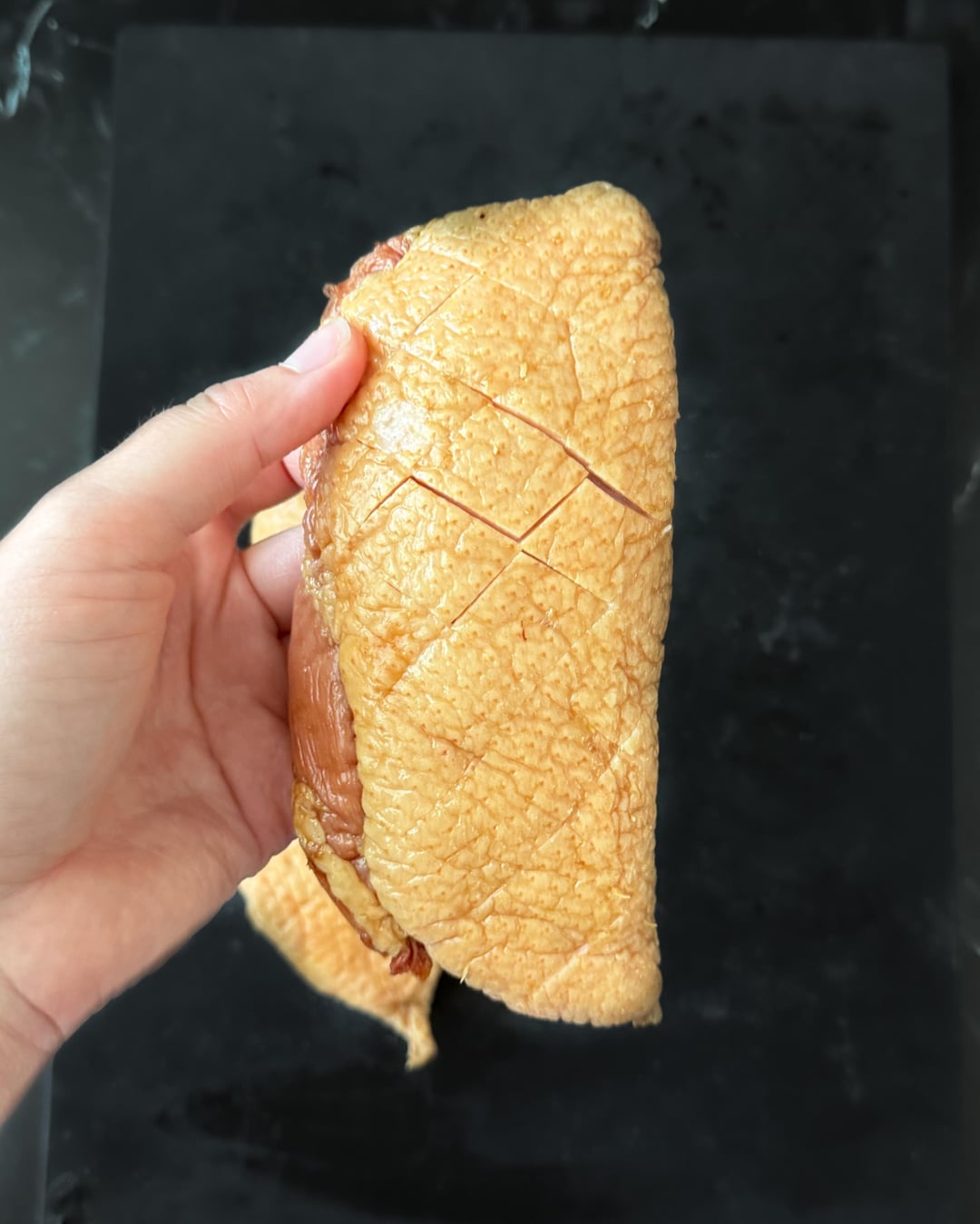
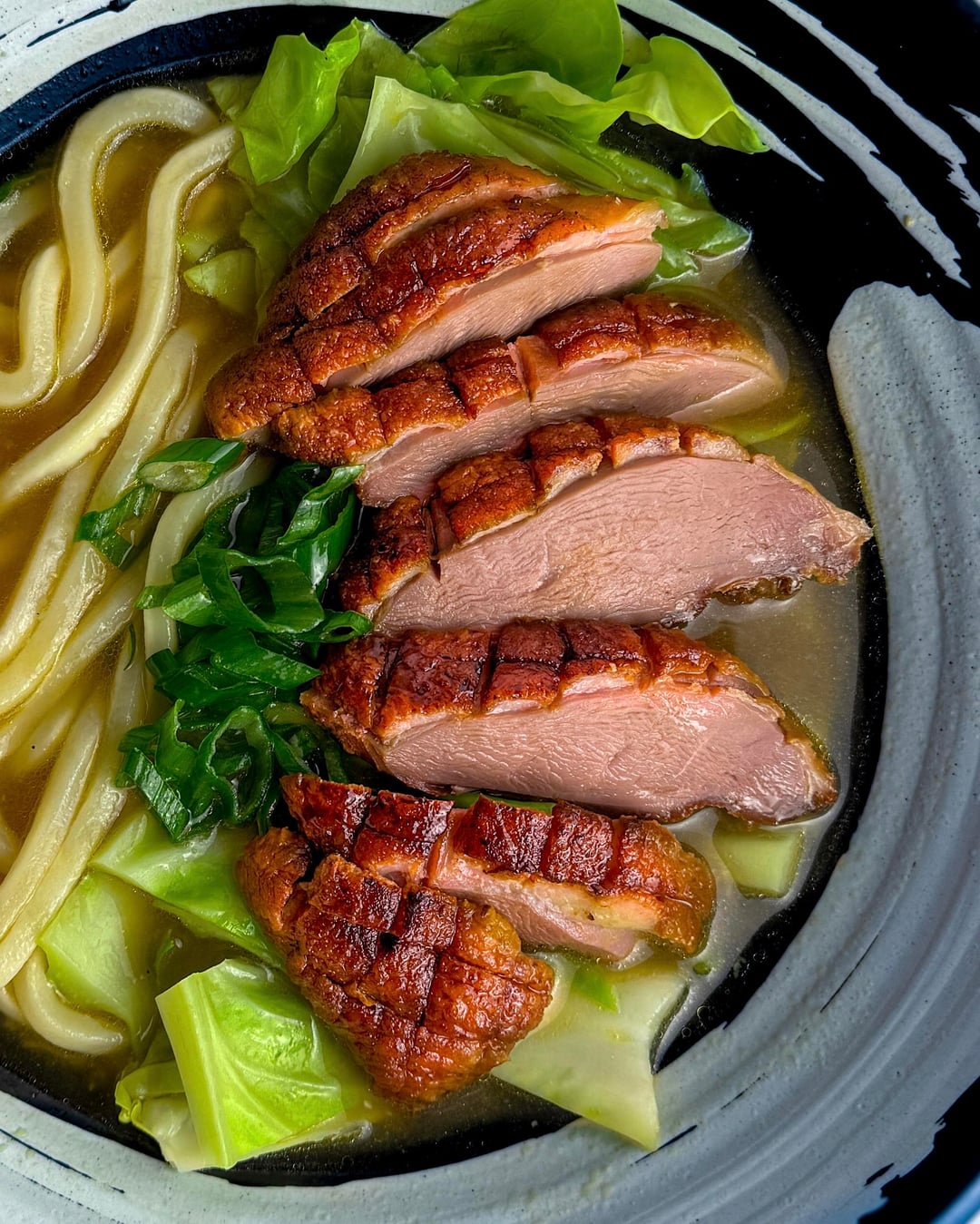
2. Remove from the packaging and pat dry with paper towels. Gently score the fat of the duck breast in a ½ inch cross-hatch pattern (as pictured). Take care not to cut past the fat and into the meat as you score.
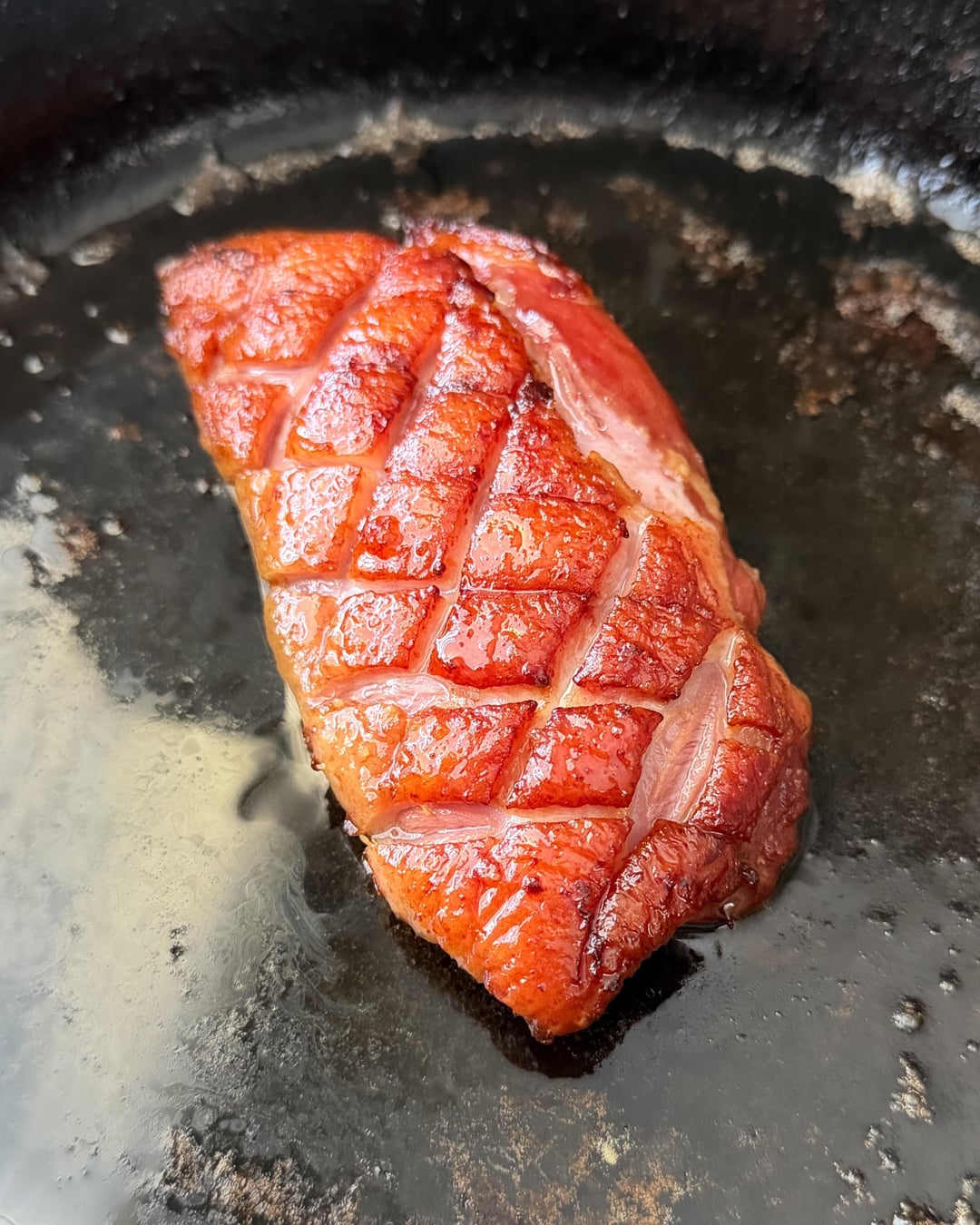
3. Place the smoked duck breast fat-side down in a cold cast-iron pan, then set it over medium-low heat. Cook until the duck is warmed through, the fat has rendered, and the fat cap has turned golden brown, about 7-10 minutes.
4. Flip the duck so the lean side is down, and cook for 2 more minutes, then remove to a cutting board and tent with foil to keep warm.
5. Keep the duck fat in the skillet and continue with the “To continue” section below.
*To prepare using raw duck breast (not smoked):*
1. Remove from the packaging and pat dry with paper towels, then season all over with salt. Gently score the fat of the duck breast in a ½ inch cross-hatch pattern (as pictured). Take care not to cut past the fat and into the meat as you score.
2. Place the duck breast fat-side down in a cold cast-iron pan, then set it over medium-low heat. Cook until the fat is deeply golden brown and much of the fat has rendered, about 15 minutes, then flip.
3. After flipping so the lean side is down, cook for 4–6 more minutes for medium-rare (130–135°F internal temperature), then remove to a cutting board and tent with foil.
4. Keep the duck fat in the skillet and continue with the “To continue” section:
*To continue:*
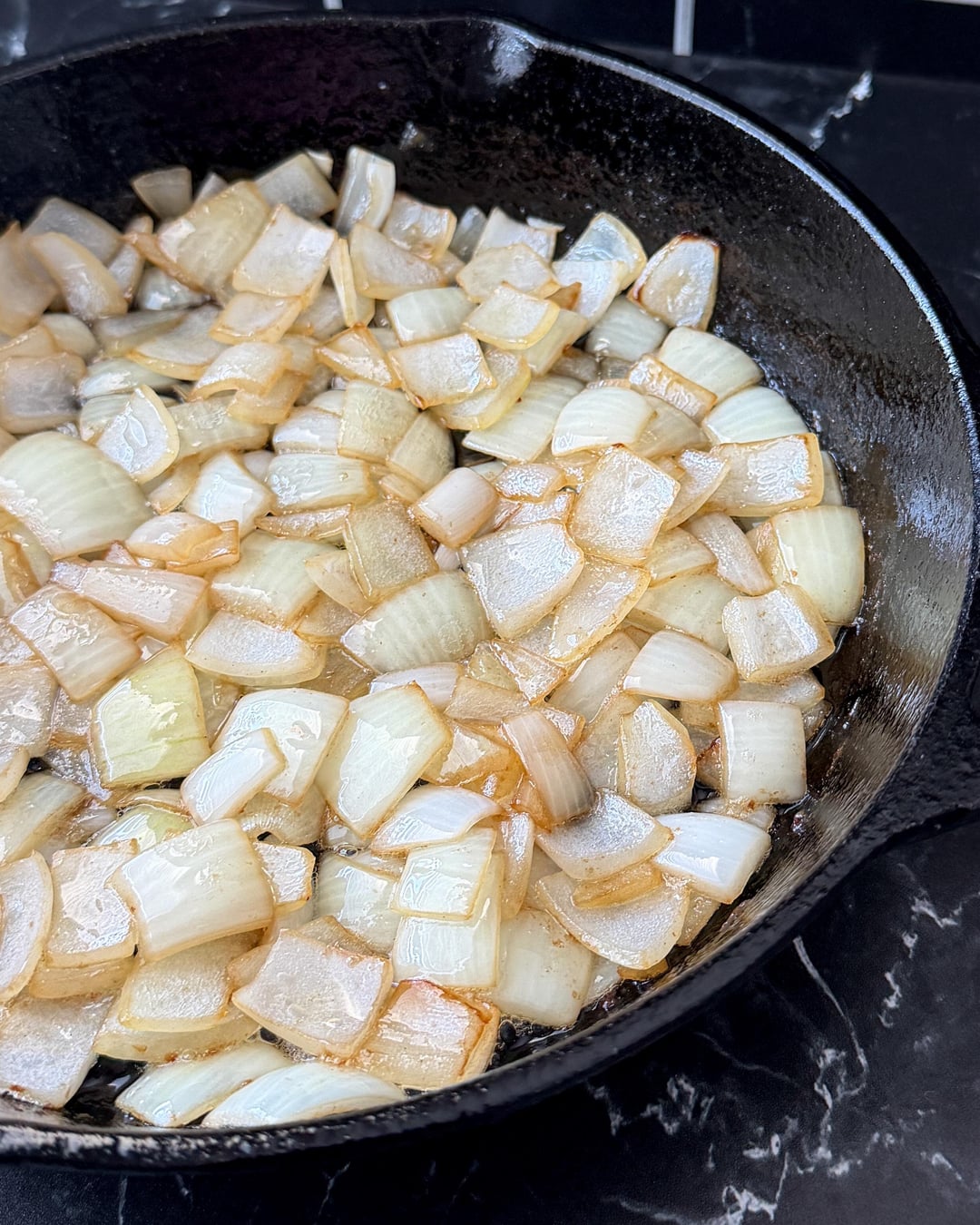
1. Add the onion to the pan with the duck fat and cook over medium heat, tossing frequently, until golden and wilted, about 8 minutes.
2. As the onions cook, place the stock in a medium-sized saucepan over medium-high heat.
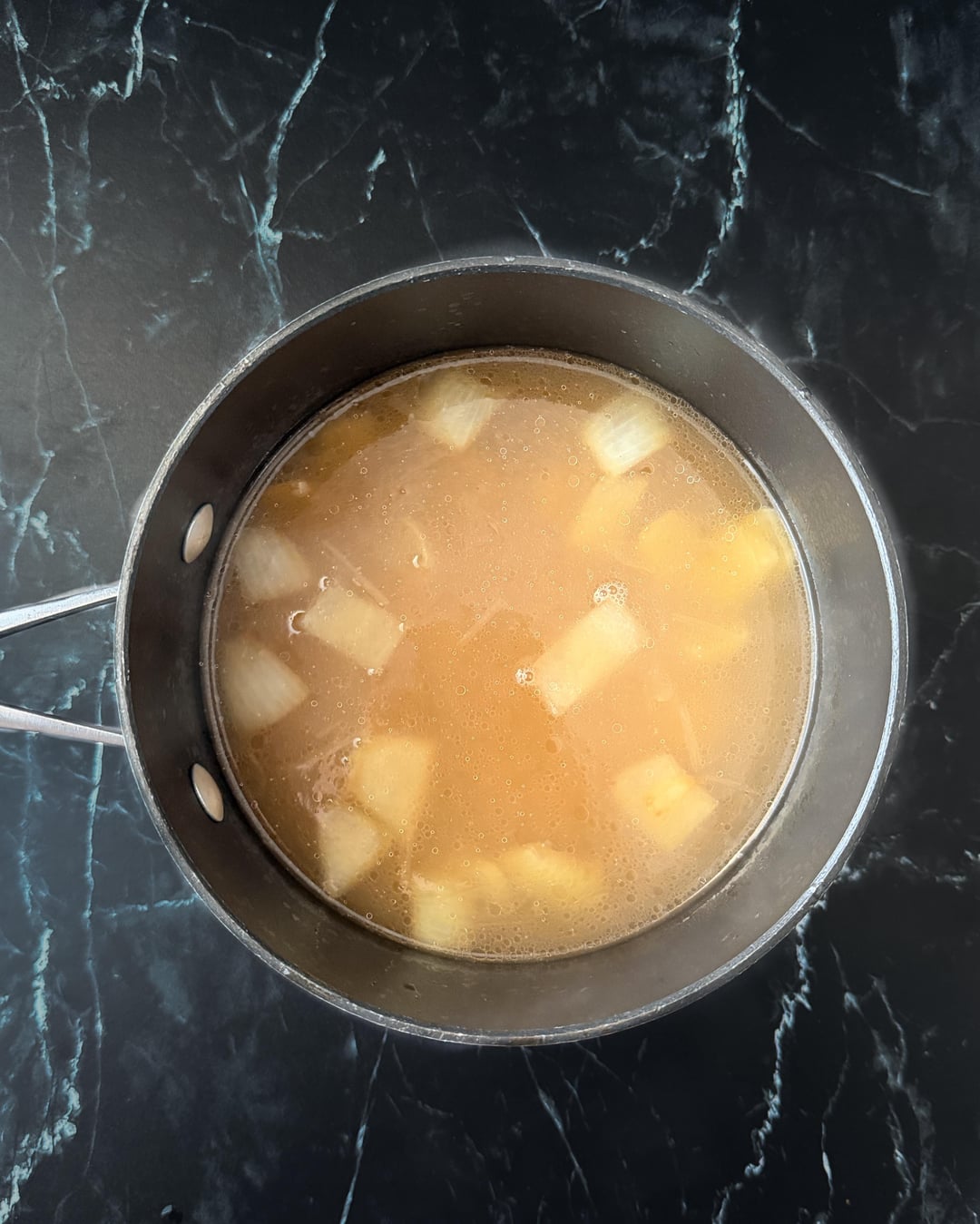
3. When the onions are ready, transfer them into the chicken stock, leaving excess drippings behind in the pan. Once the stock is simmering, reduce the heat to low and cover.
4. Let the onions simmer in the stock for at least 15 minutes to allow their flavor to infuse into the soup.
5. Meanwhile, bring a large pot of water to a boil for the noodles and cabbage.
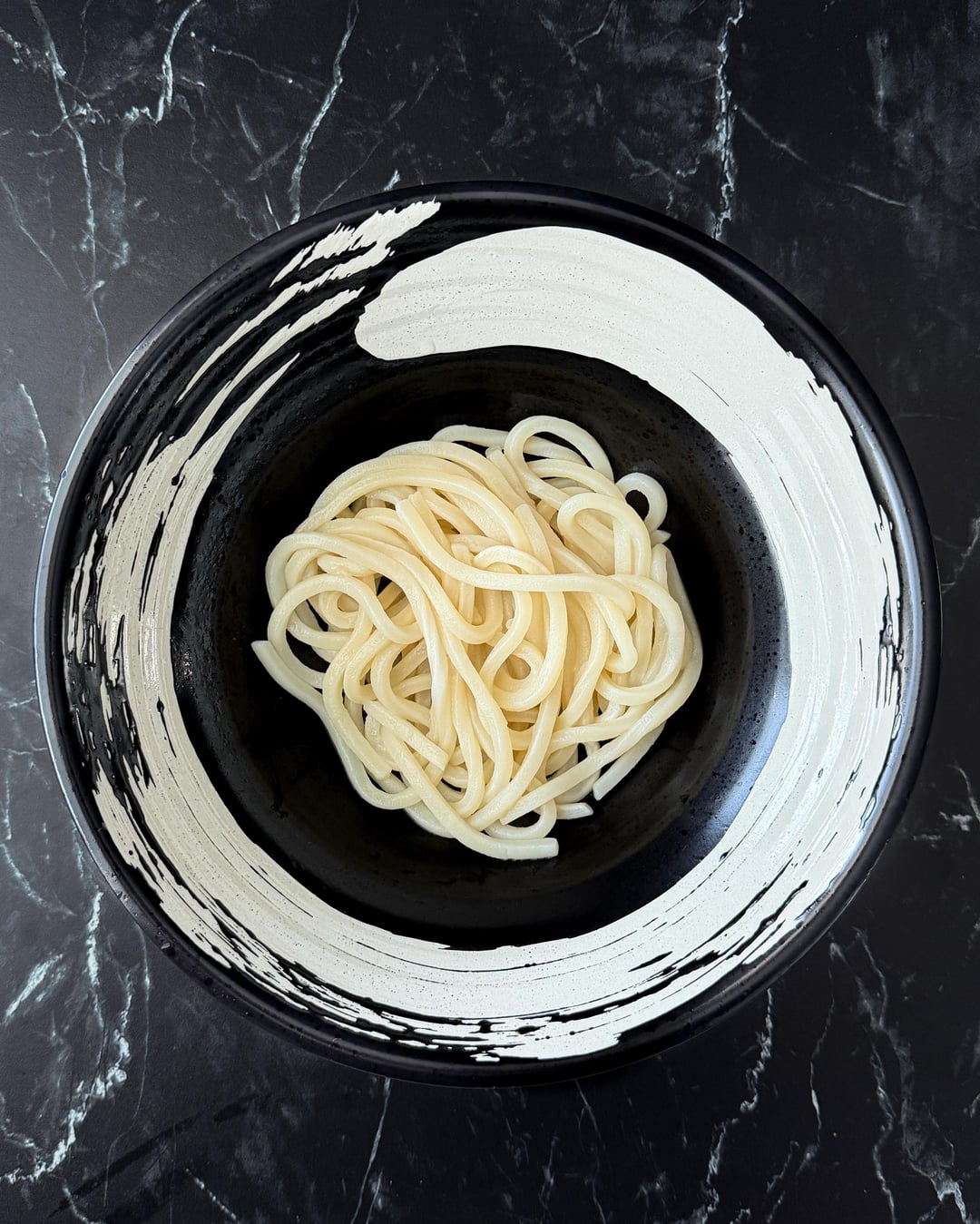
6. Add the frozen udon noodles and cook according to package directions, usually 1–2 minutes, until the noodles separate and are heated through. Transfer the noodles to the serving bowls and keep the hot water in the pot.
7. Add the cabbage to the boiling water and boil until bright green and slightly wilted, about 5 minutes, then transfer to the serving bowls as well. (Adjust cabbage cook time to personal preference, shorter for crunchier cabbage, longer for softer cabbage.)
8. Meanwhile, slice the duck breasts into thin pieces as pictured.
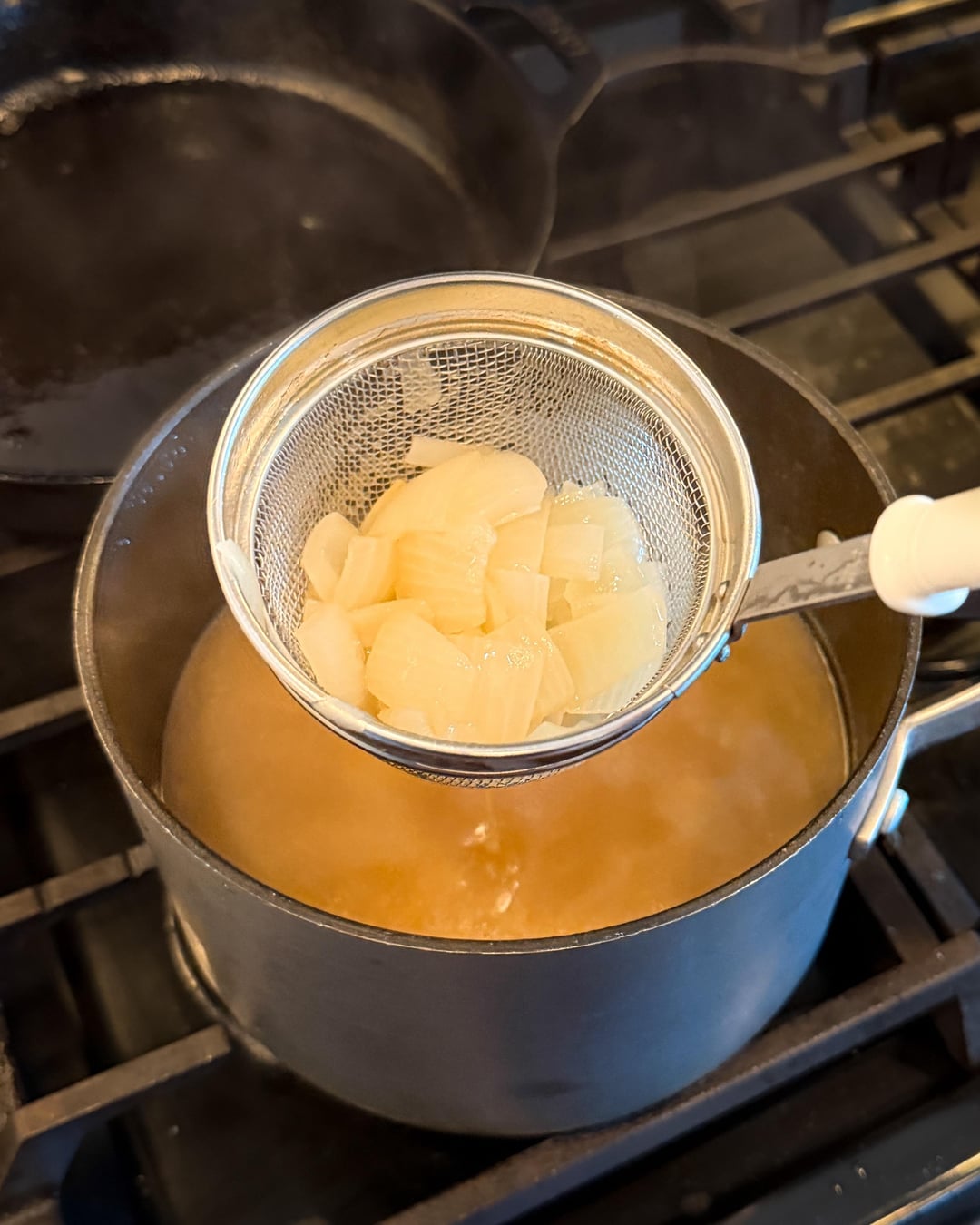
9. Scoop the onions out of the soup broth and discard them (I do this with a small mesh strainer). *Note, simmering the onions in the broth infuses sweetness and depth while keeping the finished soup clear and clean-tasting.*
10. Add the miso paste and whisk until dissolved. If using a mesh strainer, you can place the miso directly in the strainer and whisk it into the broth to help break up any lumps. Taste and add salt as needed (this is usually not necessary).
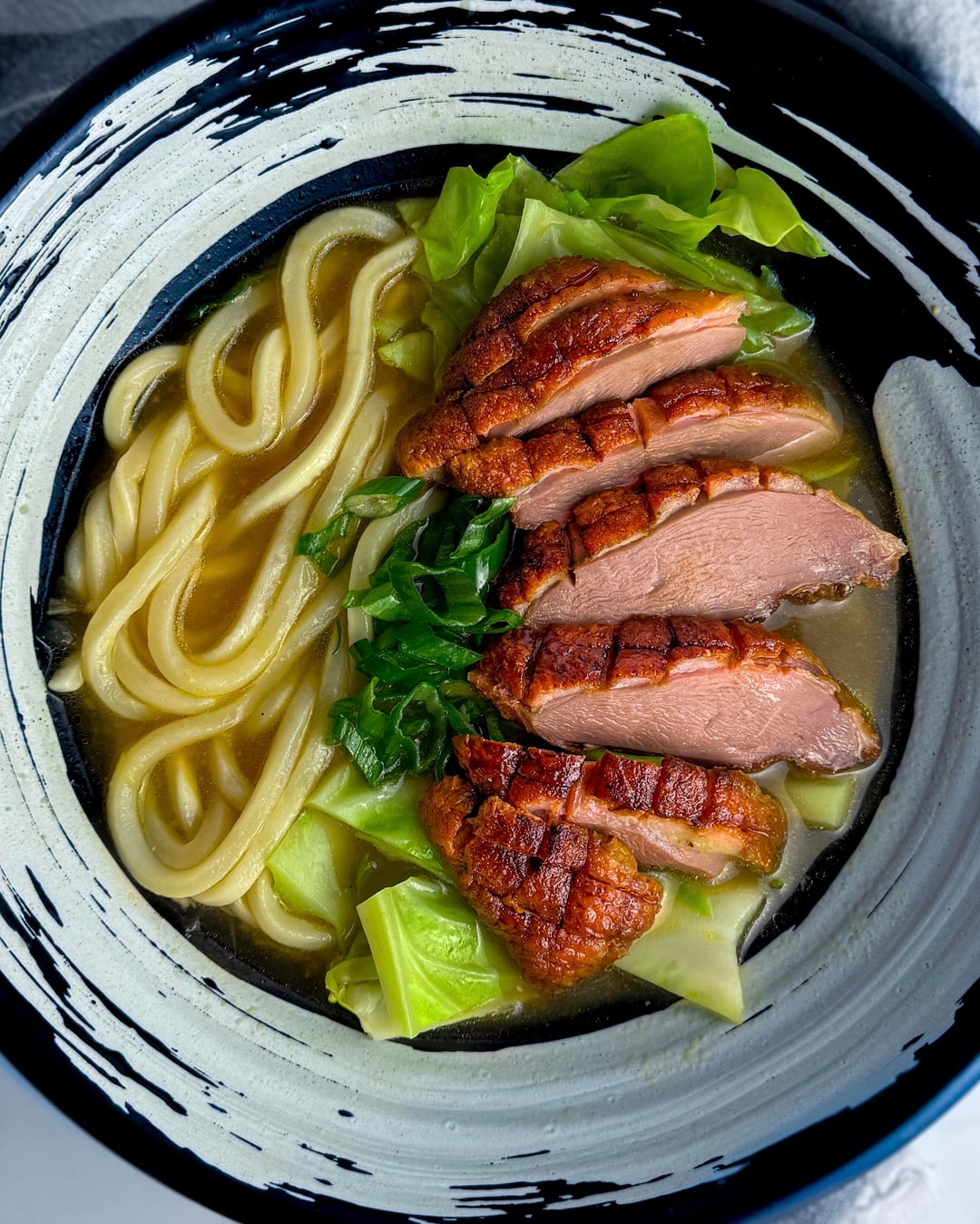
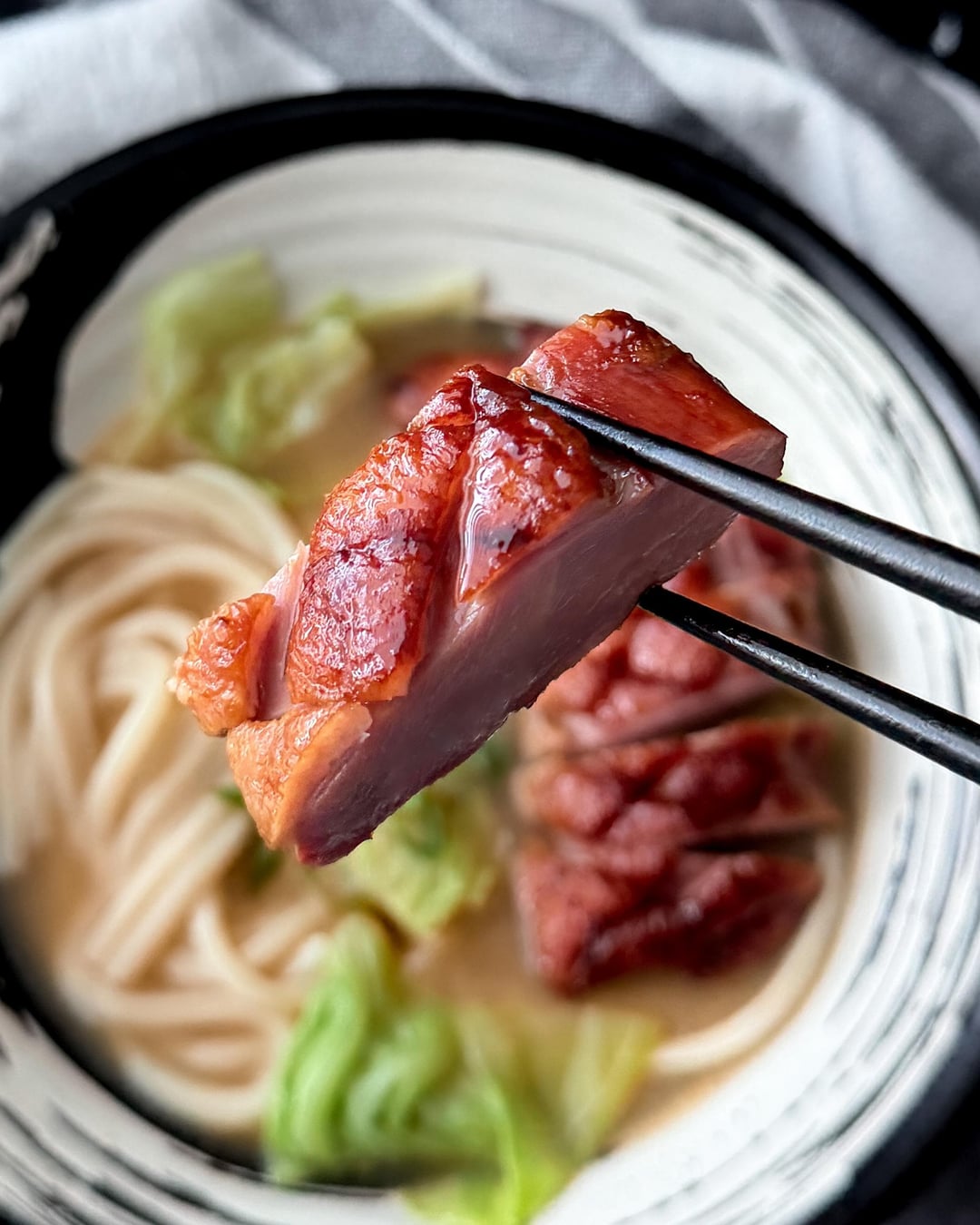
11. Pour the prepared soup into the serving bowls over top of the cabbage and noodles. Top with the sliced duck breast and garnish with green onions. Serve immediately.
*Notes*
* **Duck:** I typically prepare this recipe with frozen, pre-smoked duck breasts from Culver Duck, purchased through Wild Fork Foods. If desired, you can prepare this recipe with regular raw duck breast that is more readily available (but it will not have the smoky flavor). The recipe includes instructions for preparing raw duck breast! I’d like to develop my own smoked duck breast recipe, so that may be coming to the site sometime soon!
* **Udon:** Frozen udon noodles can be found at Japanese grocery stores (and many other Asian grocery stores) in the US. They’re much higher quality than other packaged udon noodle options, such as dried. The frozen udon noodles I buy (package pictured in the main website post) are just as good as those in many restaurants! You can substitute other noodles or pasta in this recipe if you don’t want to use frozen udon. This recipe should work well with 6-8 ounces of dried pasta or noodles per batch!
* **Miso:** I typically prepare this recipe with aged red miso, which is a little bolder and funkier than white miso. White miso, which is smoother and milder, is another great option, though. Really, any miso paste will pair nicely here.
* **Cabbage:** My go-to here is green cabbage, but this recipe also works great with baby boy choy. Sometimes I use both! Other crunchy veggies like lotus root also make a great addition to this soup.
DRBassett on
This looks amazing. I genuinely thought it was an AI photo at first. I’ve never had duck, but I’d be willing to try it if I had a bowl of this!!
m1halich228 on
This looks great 😋
I_Make_Food_Often on
Damn that looks great
Schnawsberry on
I’ve never cooked farm duck but have eaten hundreds of wild birds. A word of caution, the more you cook it, the more it will taste like liver (the gamey taste the people describe). I’ve found that duck breast tastes best when cook to rare/medium rare.

6 Comments
**The r/Food mod applications for 2026 are now open:** [Apply Here](https://www.reddit.com/r/food/comments/1tlftpe/rfood_mod_applications_2026_now_open/)
*I am a bot, and this action was performed automatically. Please [contact the moderators of this subreddit](/message/compose/?to=/r/food) if you have any questions or concerns.*
# Smoked Duck Udon
Original Recipe: [Smoked Duck Udon (Duck Noodle Soup)](https://www.craftycookbook.com/smoked-duck-udon-duck-noodle-soup)
I’ve been working on this recipe for the past year, and I’m excited to finally share it! This one is a little different because it calls for a hard-to-find ingredient, pre-smoked duck breasts (the exact product is linked on the main website post for this recipe). Because of that, I have also included recipe instructions to make this with normal raw duck breast, but it will not have the same smoky flavor. I plan to develop my own smoked duck breast recipe to accompany this one later this year.
This dish is loosely inspired by Gion Duck Noodles in Kyoto, Japan. I loved the combination of rich duck meat and brothy soup and went for a similar effect here (though overall quite different in flavor profile).
**Ingredients**
* 2 smoked duck breasts, or raw duck breasts; *see notes*
* 1 medium yellow or white onion, roughly diced
* 4 cups chicken stock, or similar
* 2 250 g packs premium frozen udon noodles, or similar, see notes
* 6 oz green cabbage, or baby bok choy, roughly chopped
* 3 tablespoon miso paste (I use red miso paste, but other kinds are ok!)
* 2 green onions, green portion sliced thin
**Instructions**
*To prepare using pre-smoked duck breast:*
1. This recipe uses duck breast that has been smoked at a temperature where the meat is cooked, but the fat has not rendered. I use frozen smoked duck breasts, but if you can’t find these or something similar, you can still make this recipe with raw duck breast; just scroll down to the next section in this recipe. Make sure the smoked duck breasts are fully defrosted before following this recipe.
2. Remove from the packaging and pat dry with paper towels. Gently score the fat of the duck breast in a ½ inch cross-hatch pattern (as pictured). Take care not to cut past the fat and into the meat as you score.
3. Place the smoked duck breast fat-side down in a cold cast-iron pan, then set it over medium-low heat. Cook until the duck is warmed through, the fat has rendered, and the fat cap has turned golden brown, about 7-10 minutes.
4. Flip the duck so the lean side is down, and cook for 2 more minutes, then remove to a cutting board and tent with foil to keep warm.
5. Keep the duck fat in the skillet and continue with the “To continue” section below.
*To prepare using raw duck breast (not smoked):*
1. Remove from the packaging and pat dry with paper towels, then season all over with salt. Gently score the fat of the duck breast in a ½ inch cross-hatch pattern (as pictured). Take care not to cut past the fat and into the meat as you score.
2. Place the duck breast fat-side down in a cold cast-iron pan, then set it over medium-low heat. Cook until the fat is deeply golden brown and much of the fat has rendered, about 15 minutes, then flip.
3. After flipping so the lean side is down, cook for 4–6 more minutes for medium-rare (130–135°F internal temperature), then remove to a cutting board and tent with foil.
4. Keep the duck fat in the skillet and continue with the “To continue” section:
*To continue:*
1. Add the onion to the pan with the duck fat and cook over medium heat, tossing frequently, until golden and wilted, about 8 minutes.
2. As the onions cook, place the stock in a medium-sized saucepan over medium-high heat.
3. When the onions are ready, transfer them into the chicken stock, leaving excess drippings behind in the pan. Once the stock is simmering, reduce the heat to low and cover.
4. Let the onions simmer in the stock for at least 15 minutes to allow their flavor to infuse into the soup.
5. Meanwhile, bring a large pot of water to a boil for the noodles and cabbage.
6. Add the frozen udon noodles and cook according to package directions, usually 1–2 minutes, until the noodles separate and are heated through. Transfer the noodles to the serving bowls and keep the hot water in the pot.
7. Add the cabbage to the boiling water and boil until bright green and slightly wilted, about 5 minutes, then transfer to the serving bowls as well. (Adjust cabbage cook time to personal preference, shorter for crunchier cabbage, longer for softer cabbage.)
8. Meanwhile, slice the duck breasts into thin pieces as pictured.
9. Scoop the onions out of the soup broth and discard them (I do this with a small mesh strainer). *Note, simmering the onions in the broth infuses sweetness and depth while keeping the finished soup clear and clean-tasting.*
10. Add the miso paste and whisk until dissolved. If using a mesh strainer, you can place the miso directly in the strainer and whisk it into the broth to help break up any lumps. Taste and add salt as needed (this is usually not necessary).
11. Pour the prepared soup into the serving bowls over top of the cabbage and noodles. Top with the sliced duck breast and garnish with green onions. Serve immediately.
*Notes*
* **Duck:** I typically prepare this recipe with frozen, pre-smoked duck breasts from Culver Duck, purchased through Wild Fork Foods. If desired, you can prepare this recipe with regular raw duck breast that is more readily available (but it will not have the smoky flavor). The recipe includes instructions for preparing raw duck breast! I’d like to develop my own smoked duck breast recipe, so that may be coming to the site sometime soon!
* **Udon:** Frozen udon noodles can be found at Japanese grocery stores (and many other Asian grocery stores) in the US. They’re much higher quality than other packaged udon noodle options, such as dried. The frozen udon noodles I buy (package pictured in the main website post) are just as good as those in many restaurants! You can substitute other noodles or pasta in this recipe if you don’t want to use frozen udon. This recipe should work well with 6-8 ounces of dried pasta or noodles per batch!
* **Miso:** I typically prepare this recipe with aged red miso, which is a little bolder and funkier than white miso. White miso, which is smoother and milder, is another great option, though. Really, any miso paste will pair nicely here.
* **Cabbage:** My go-to here is green cabbage, but this recipe also works great with baby boy choy. Sometimes I use both! Other crunchy veggies like lotus root also make a great addition to this soup.
This looks amazing. I genuinely thought it was an AI photo at first. I’ve never had duck, but I’d be willing to try it if I had a bowl of this!!
This looks great 😋
Damn that looks great
I’ve never cooked farm duck but have eaten hundreds of wild birds. A word of caution, the more you cook it, the more it will taste like liver (the gamey taste the people describe). I’ve found that duck breast tastes best when cook to rare/medium rare.