
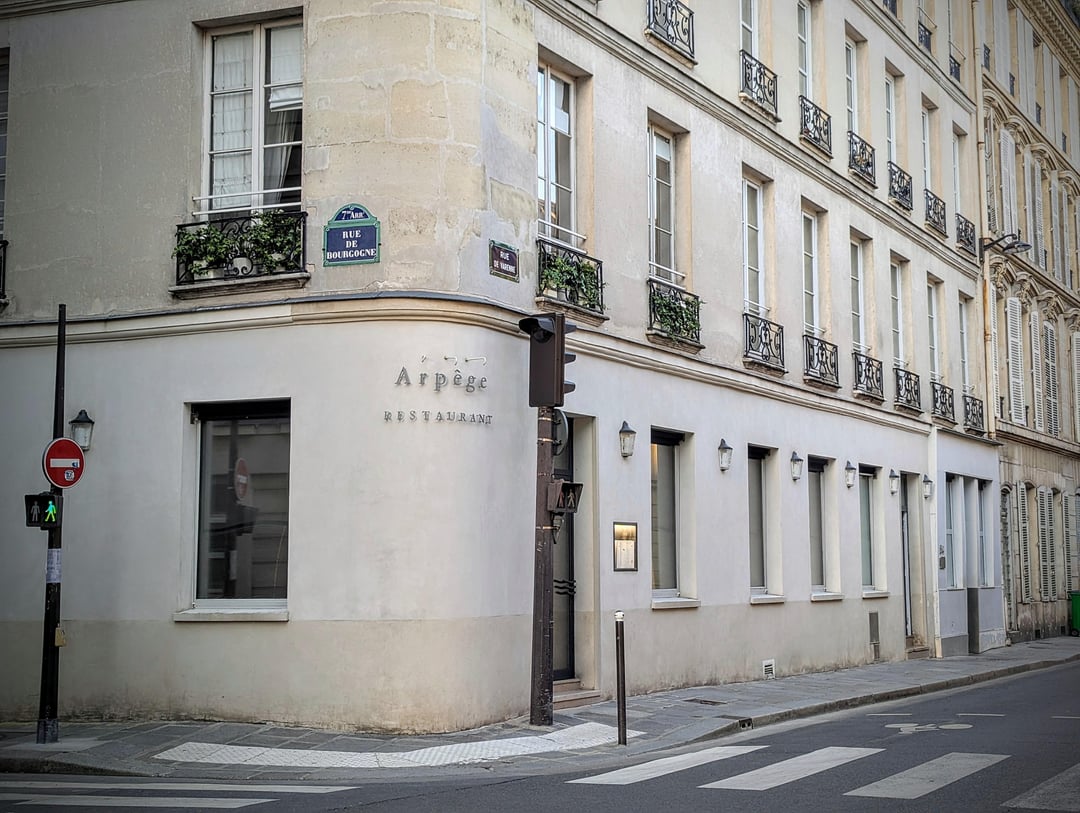
Here be vegetables. This is what Arpège has become primarily known for, even before the decision by head chef and owner Alain Passard to focus on an entirely vegetarian menu (it is almost vegan, but for the honey used) as of July 21st 2025. Back in 2001, Passard – for the first time in a 3-star restaurant in France – introduced a vegetarian menu. And while meat and fish would be reintroduced in small quantities in the convening years, vegetables have formed the central pillar of Passard's cooking for the best part of 25 years. Passard had a history of winning Michelin stars even before he bought and renamed Arpège from his mentor Alain Senderens, in 1986: first with Le Duc L'Enghien, for which he won two stars in 1980, and then with the Carlton in Brussels, in 1984. Arpège earned a star in its first year, but had to wait ten years for its third, which it has held ever since.
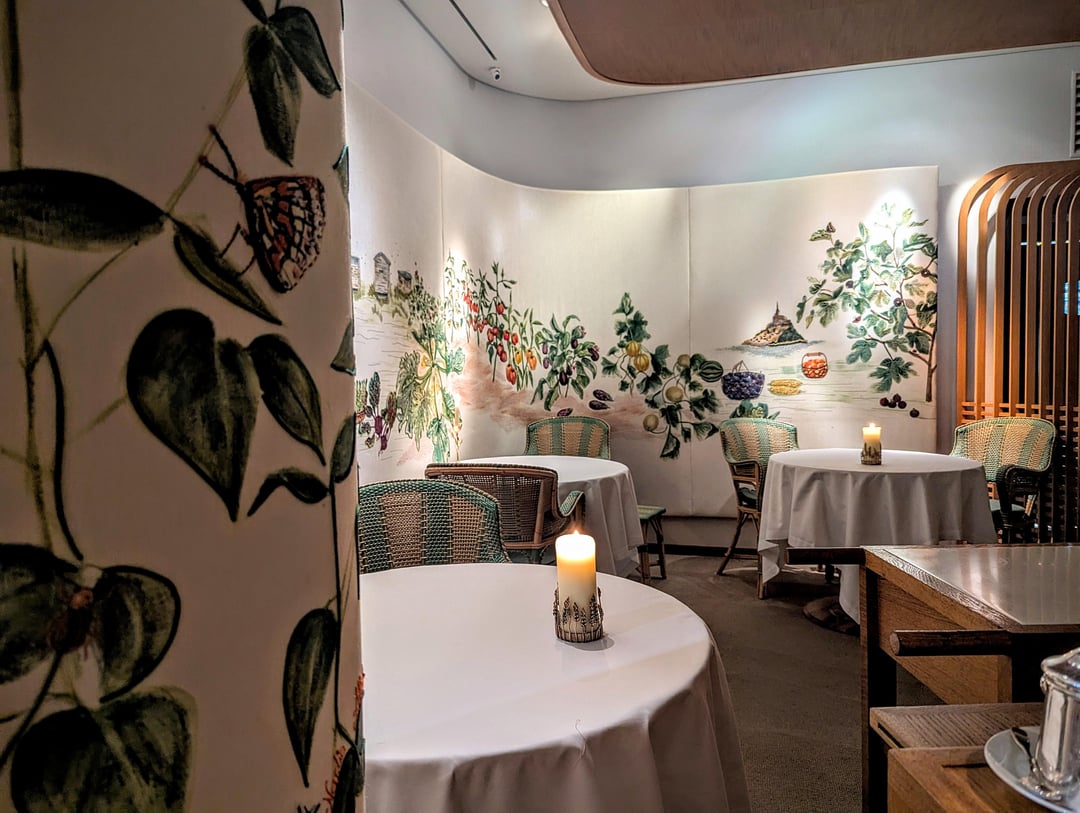
During COVID, Arpège's interior underwent a redesign; embroidered wall panels showing bucolic scenes from each of Passard's three gardens were created by a friend of Passard's, taking eighteen months to create. This interior design, strengthened with wicker seating, gives Arpège a strong sense of place, and matches perfectly with the cuisine on offer; step out of the city and into the countryside, where the harvest is plentiful and readily at hand.
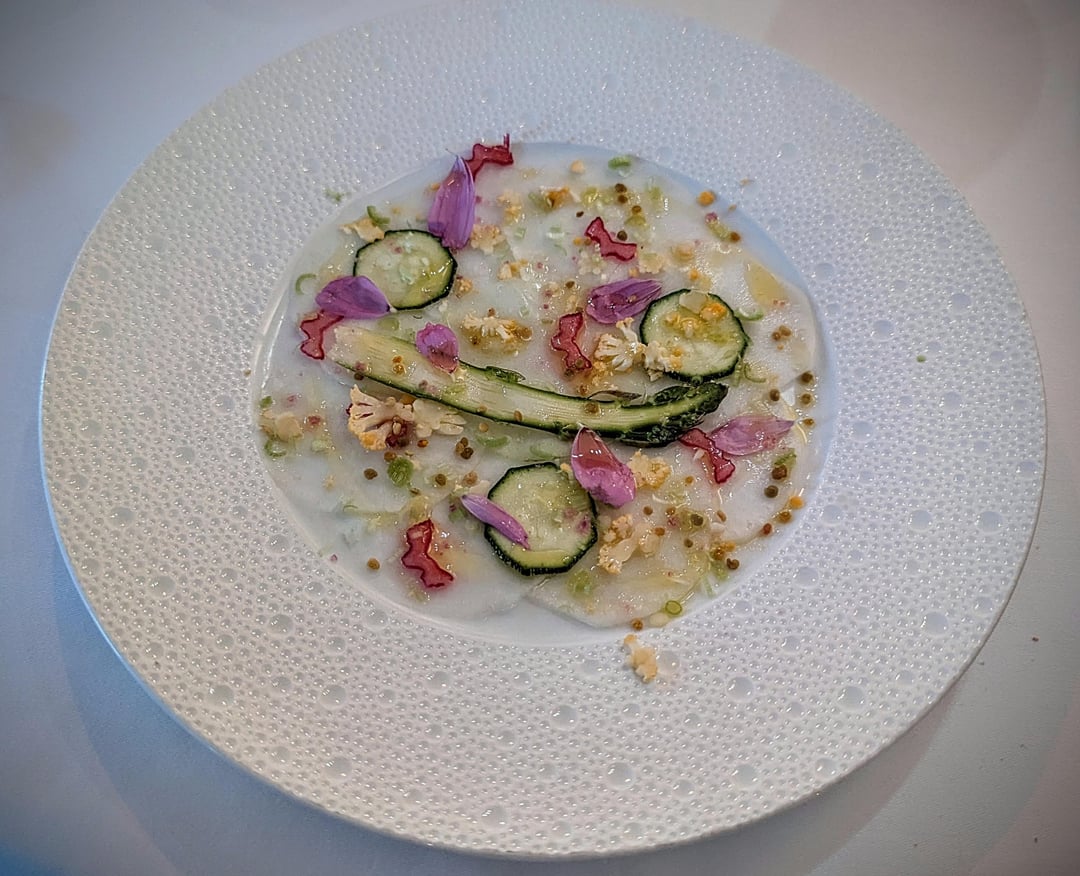
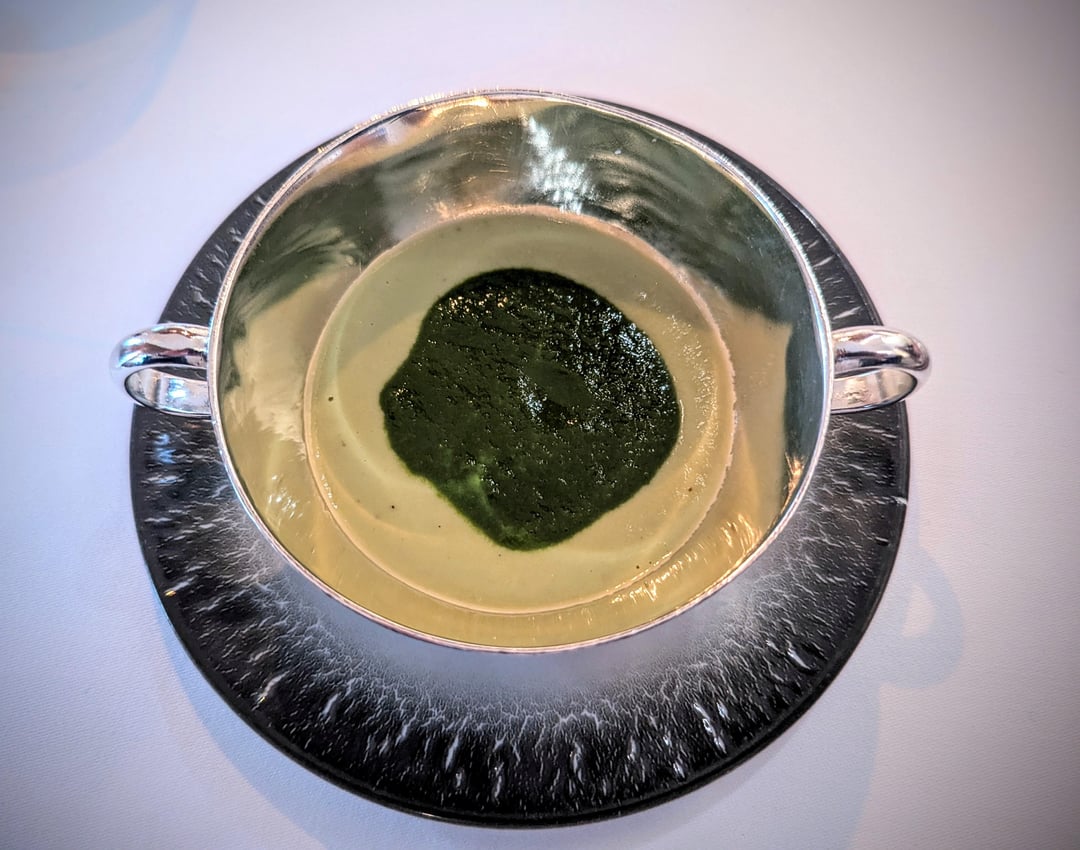
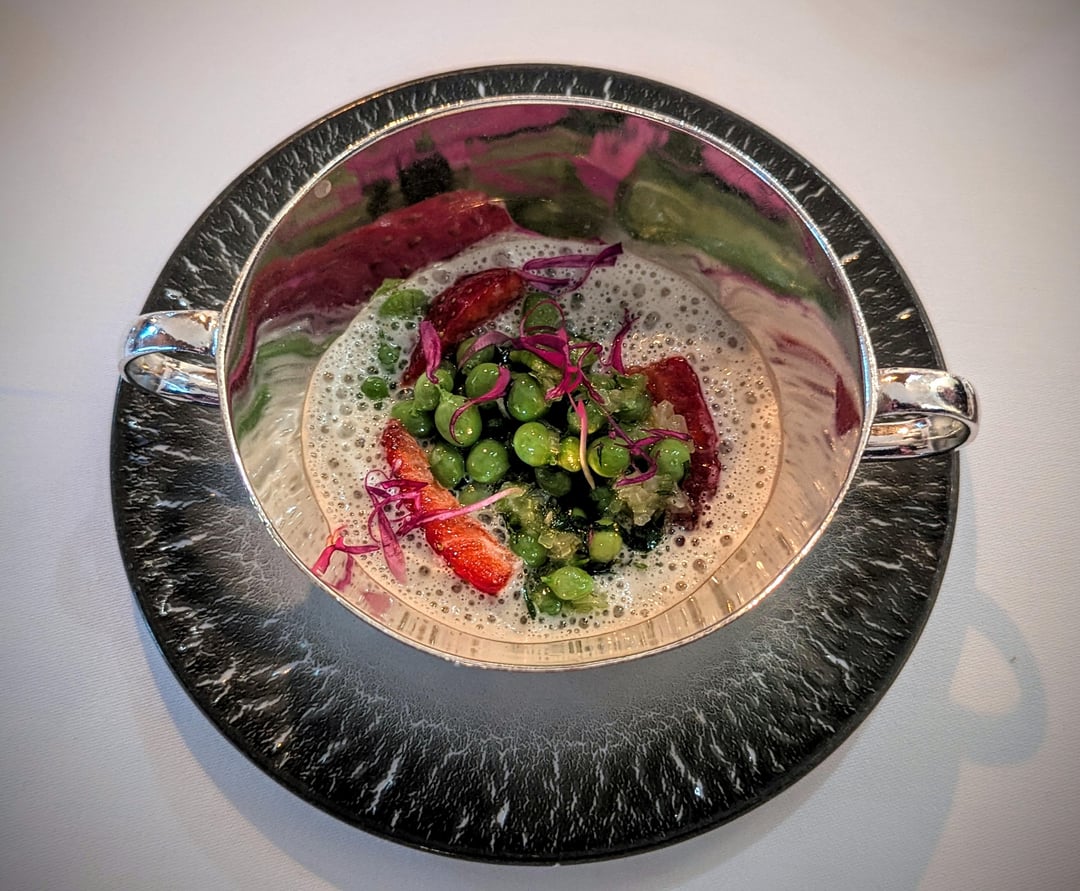
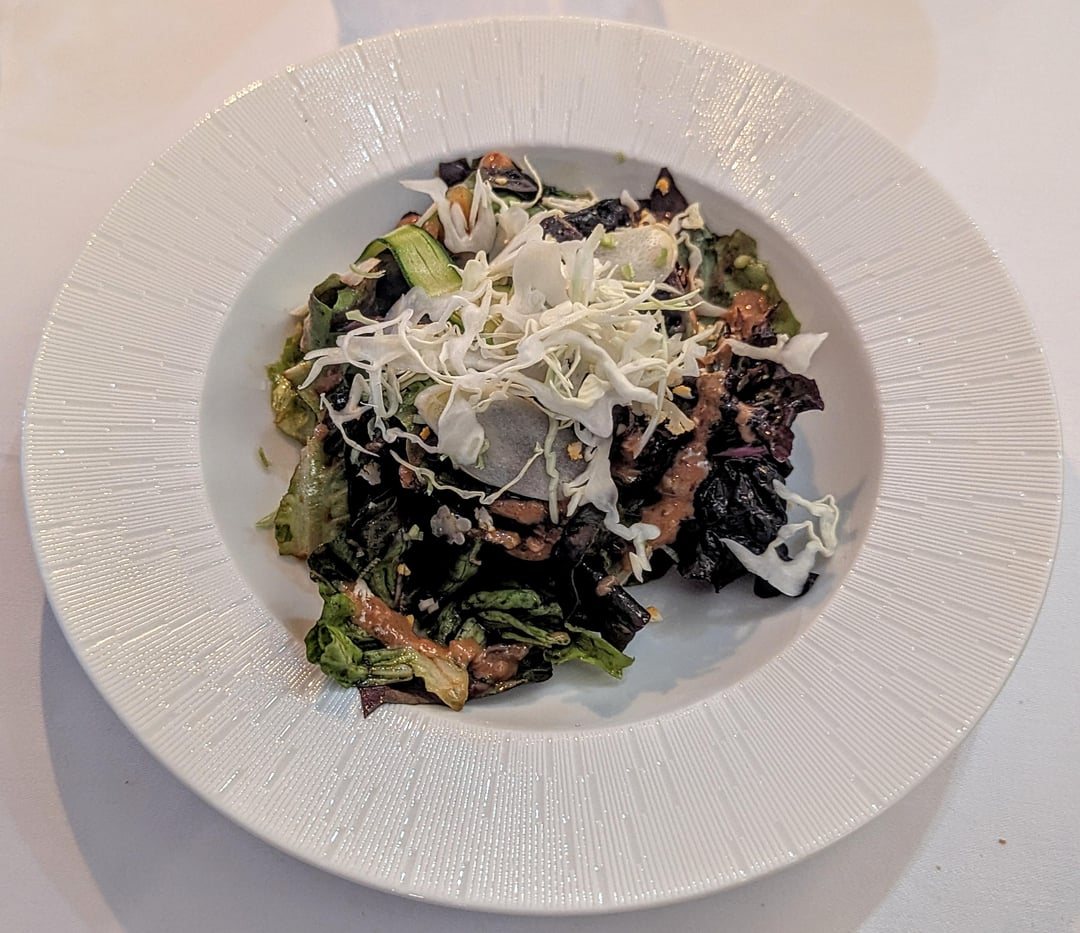
Shipments from Passard's gardens arrive daily, with the menu being an ever-changing beast, dependent as it is on availability (as well as what Passard wants to cook). We attended a dinner service last week on the first full day of our Paris trip, and opted for the 'Cuisine de la Terre', the tasting menu, consisting of around 12 courses. The first course, a gazpacho made from white and green asparagus, was wonderfully fresh, vibrant and creamy, the latter being an aspect evident in a number of dishes, due to the incorporation of a soy or nut milk (given that butter is not used). This was followed by a very pretty dish of thinly sliced turnip and kohlrabi, with zucchini, asparagus and flower petals laid atop them. A dish with a simple taste profile, most prominent was the slight salinity of the marinade and the textural crunch of the ingredients. The next dish was one of the highlights of the meal: petits pois with Cirafine strawberries and lemon verbena. An excellent combination, the sweetness of the strawberries and that of the peas was balanced nicely by the tart citrus element, both alone and together. Another highlight of the meal then followed, and though not much to look at, again the quality of the ingredients was in evidence, the cabbage and greens accentuated by the rich almond dressing.
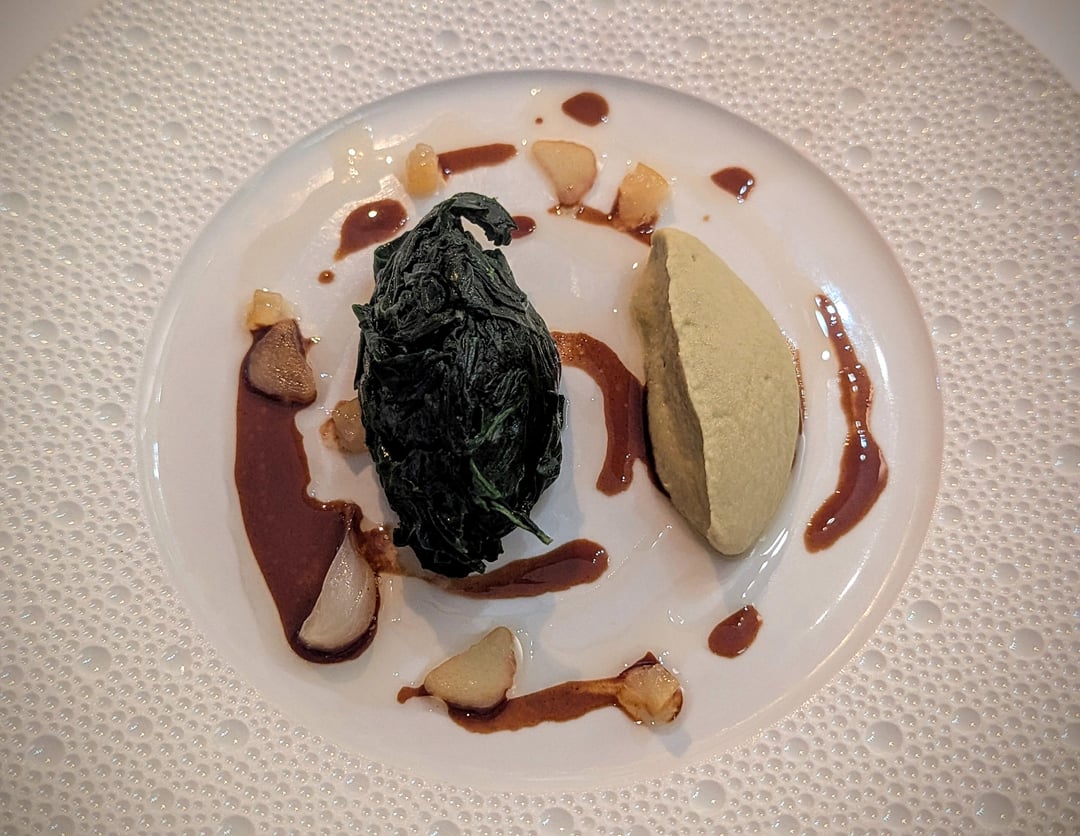
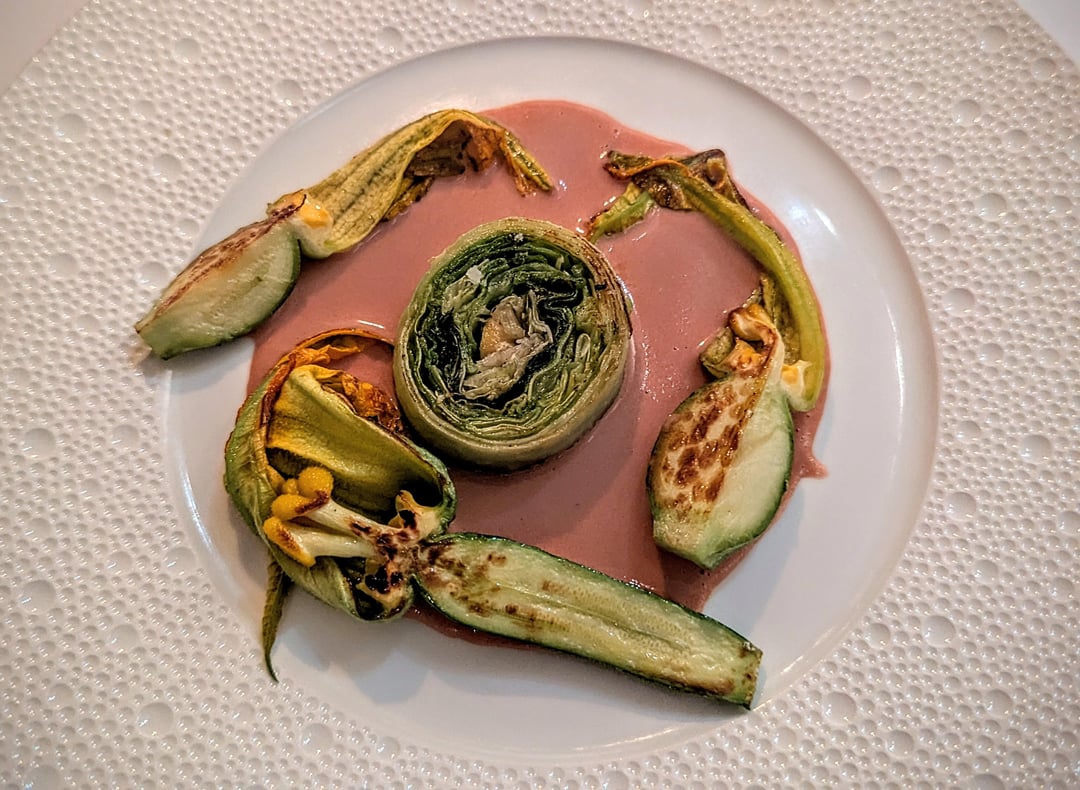
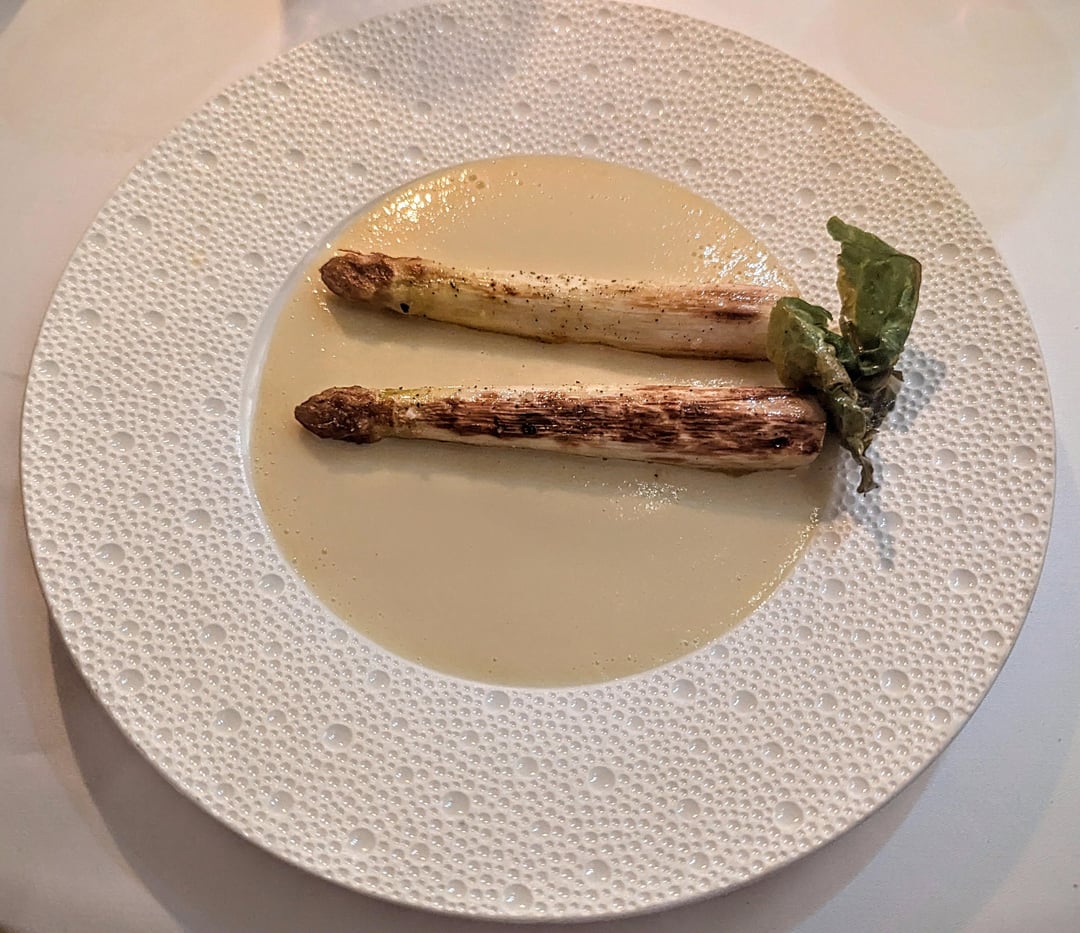
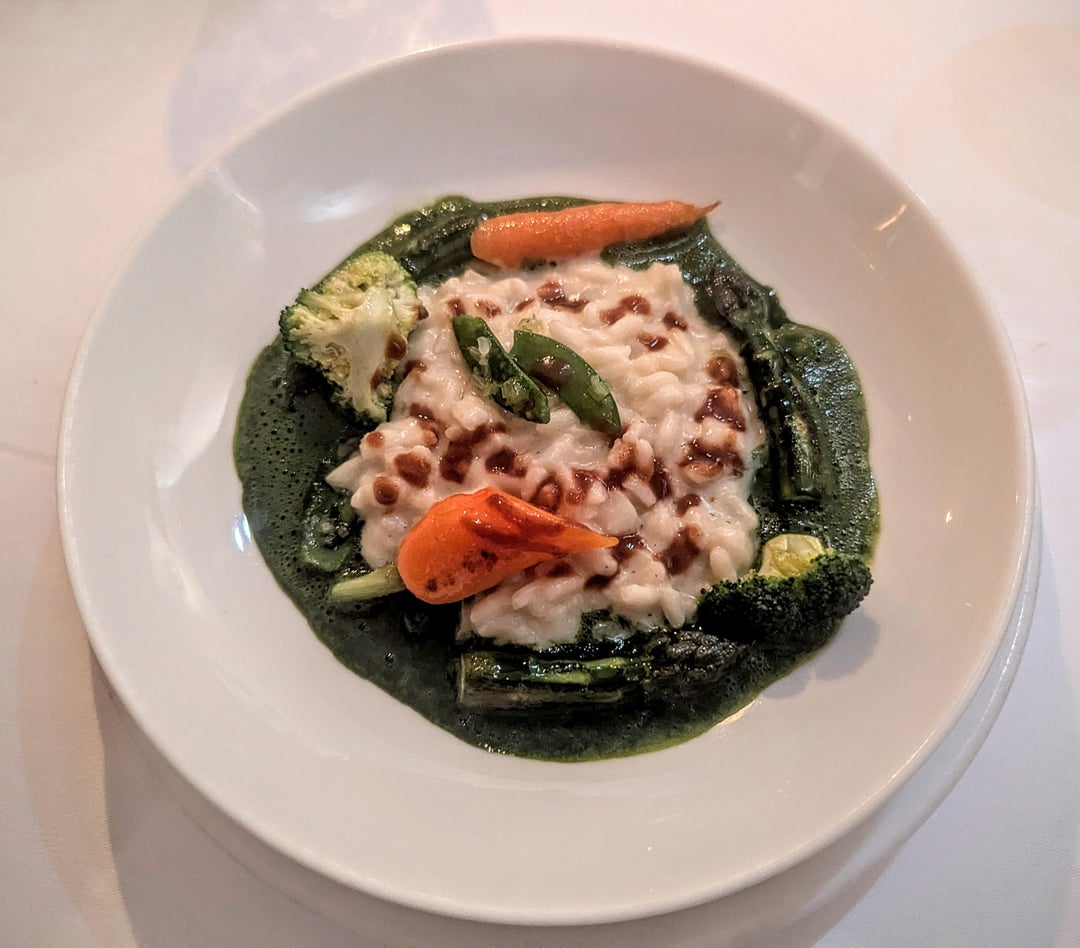
Then came a spinach dish, accompanied by garlic cloves and a pea and mustard mousse. Sadly not more than the sum of its parts (the mousse added only a slight spiciness to the spinach, which is an accent it didn't particularly need), this was nonetheless a fine spinach dish. The squash blossom dish that followed, with dill and a jus of dulse and rhubarb, was better, the sauce nicely coating and bringing a slightly salty tang to the vegetables. After this, the white asparagus, which had a mouth-watering sweetness from the char of the grill, and was accompanied by a yellow wine sauce, whose acidity unfortunately tipped the balance of the dish. The risotto that followed was another highlight of the meal, with the green asparagus providing the lion's share of the flavour. A soft and creamy mouthfeel from the rice, with some crunch provided by the carrots, asparagus and broccoli.
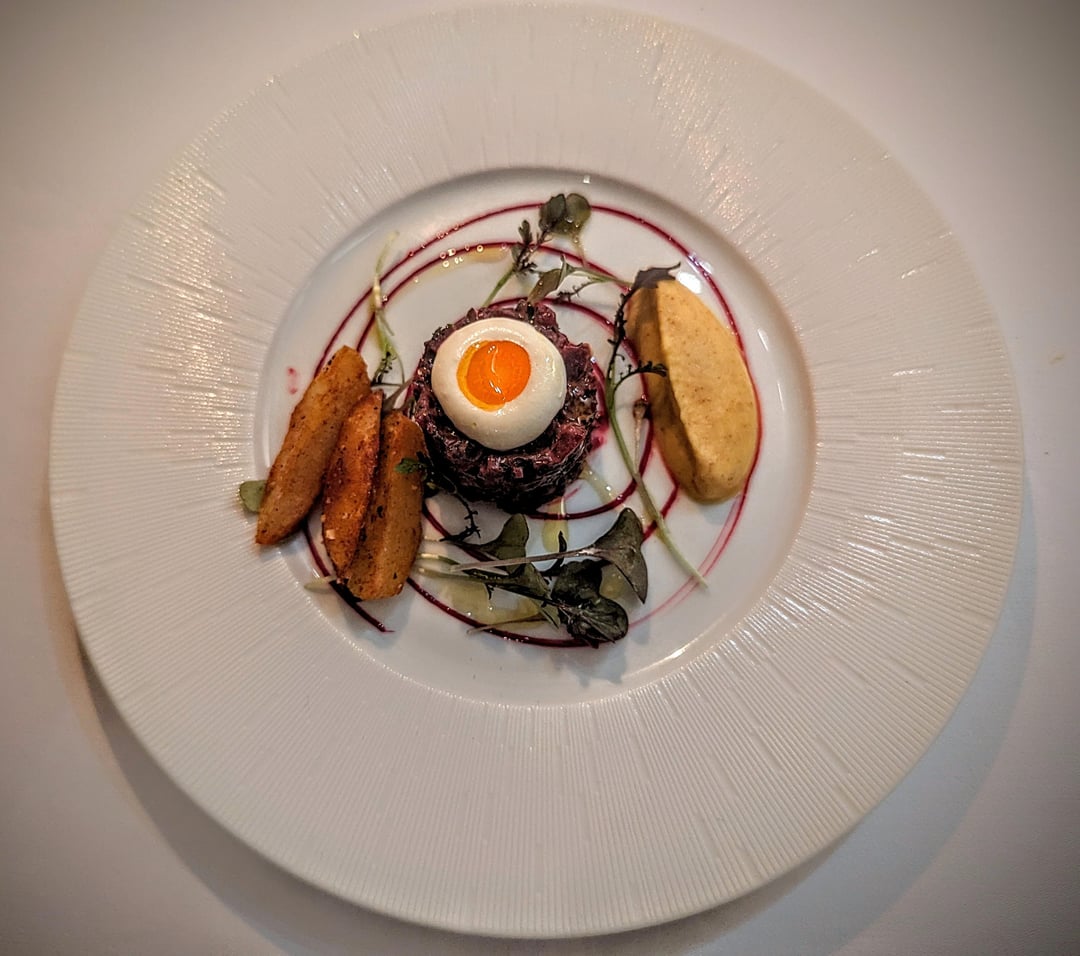
The penultimate savoury course was certainly the most creative of the evening: a steak tartare, where beetroot took centre stage, the usual sweetness being tempered in favour of more earthy notes that approximated the umami of ground beef. The apple mustard on the side added a welcome spiciness, and the "pomme frites" were excellent. The final savoury dish was the only one that didn't work for me: a tart filled with various nuts that had been ground into a paste, with a beetroot mousse on the side. The tart didn't have a particularly distinct taste by itself, and the beetroot immediately overpowered this regardless. A cream (sans butter) or more liquid filling would also have been appreciated, to avoid the pervasive dryness of the dish.
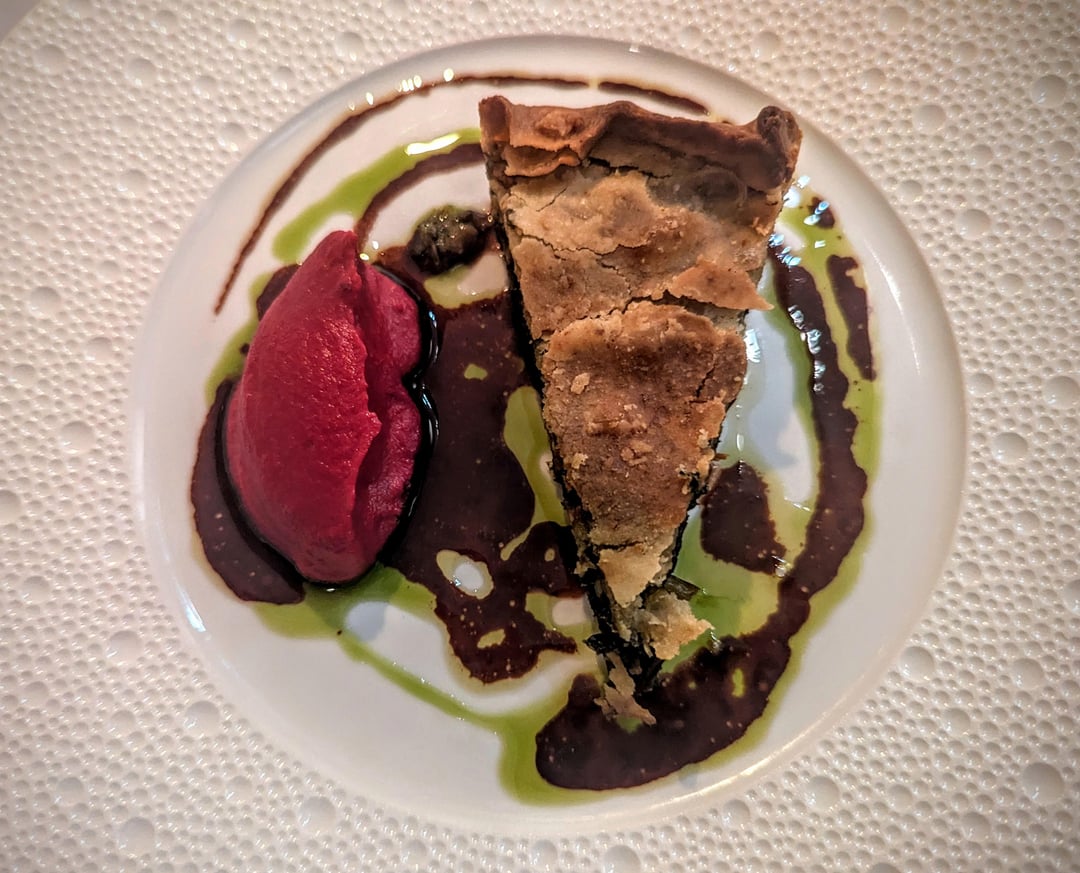
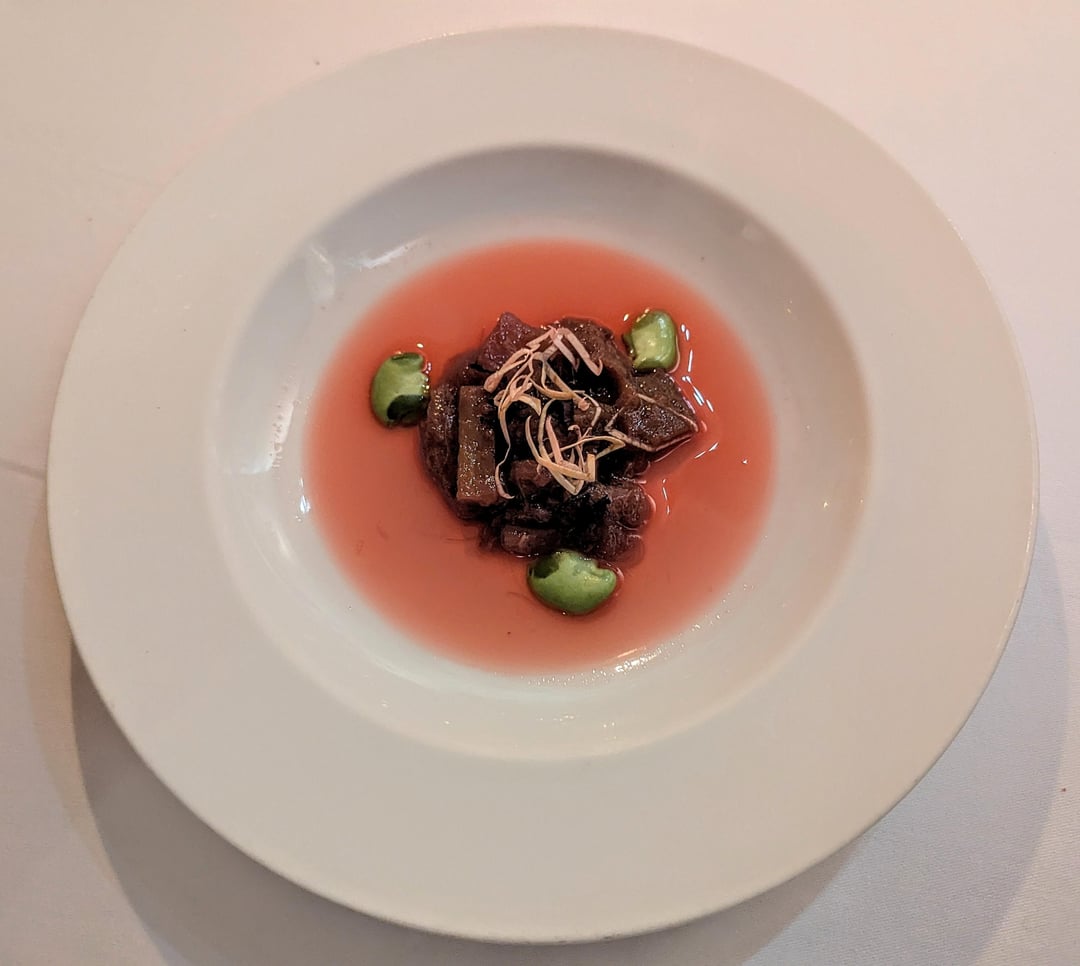
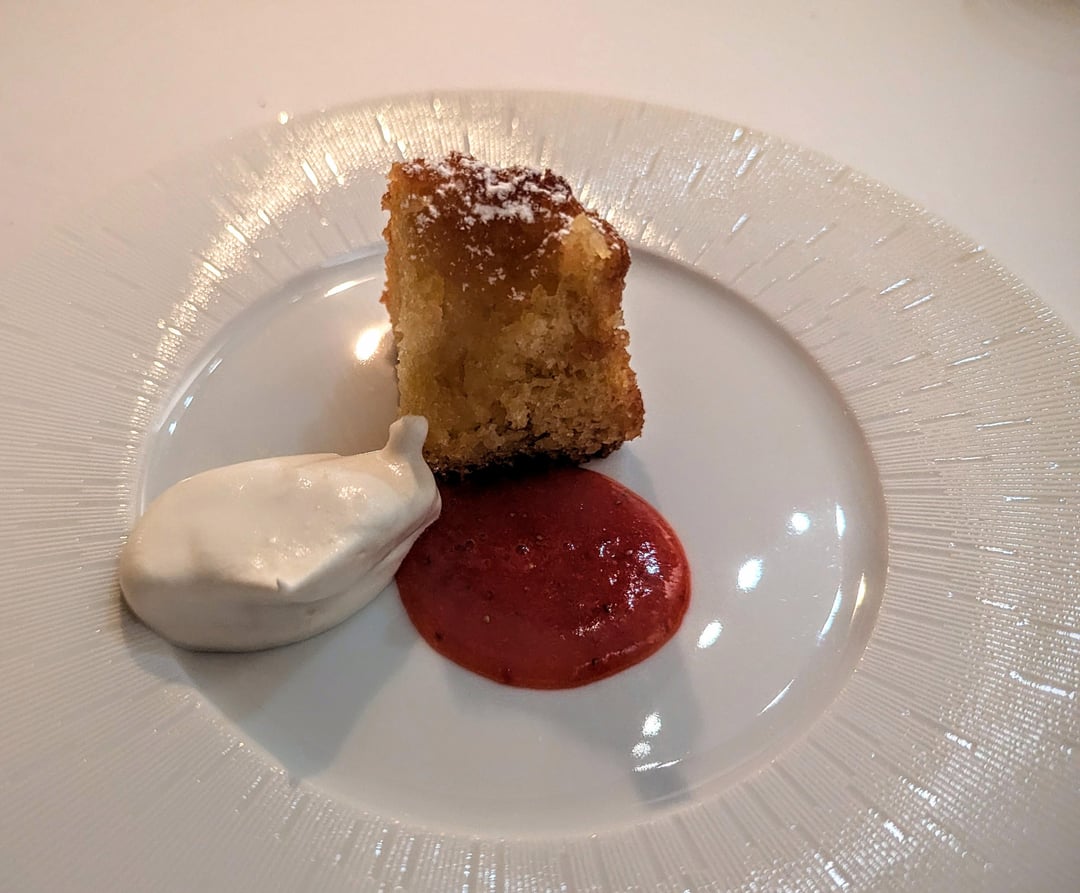
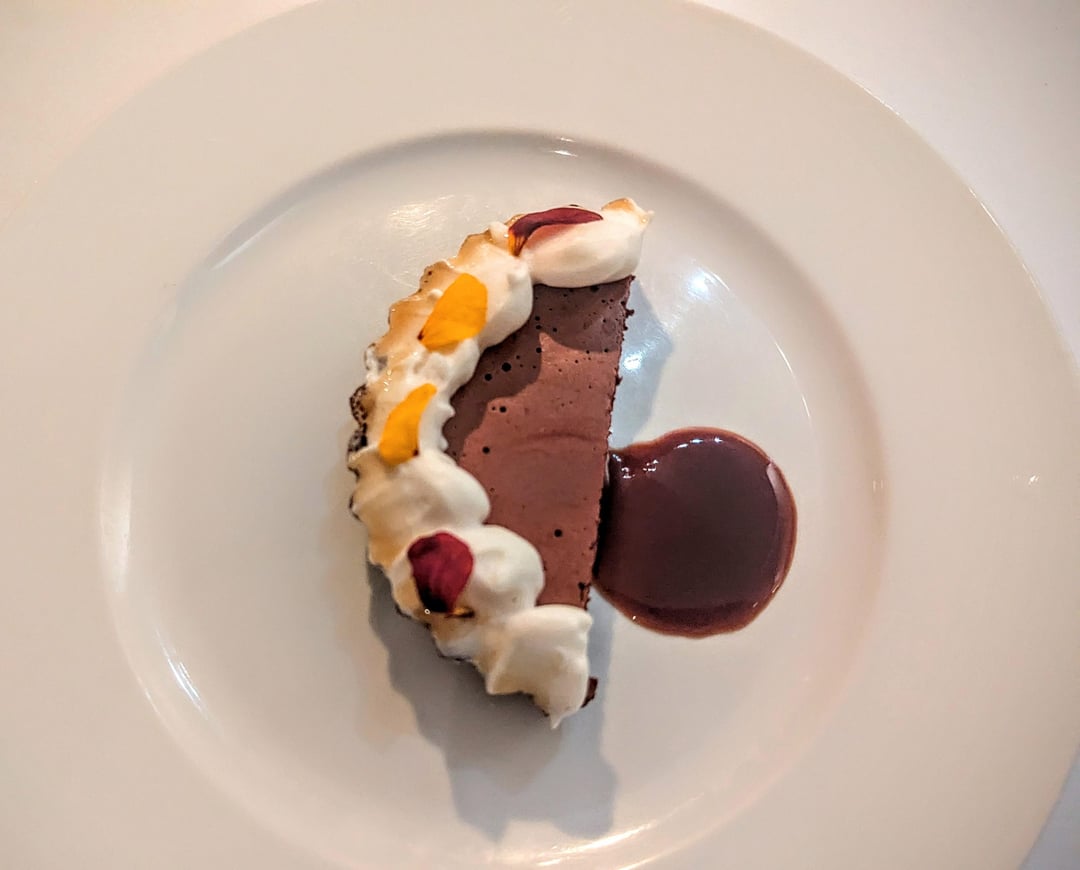
To end the meal, three desserts were offered. Contrary to what is listed on the menu (below), the rhubarb, shiso and fava bean dish came first, the rhubarb really leaning into its tartness, but with the fava beans adding a welcome savoury aspect. Then came a kouglof (a cake that originated in Germany, but made its way to the East of France to become a regional staple), with strawberry compote and a lentil Chantilly cream. This was not noted on the menu, but acted as a bridge to the final dessert: a tart of chocolate, soapwort, pistachios, and geranium. Chocolate pretty much all the way down, this dish had a pretty narrow taste profile, but was nonetheless a very good chocolate dessert, and a rich means of ending the meal.
Dining at Arpège in 2026 is all about vegetables, to the extent that dishes (at least those I had on the night I dined) tend to have rather narrow taste profiles: An asparagus dish will taste of asparagus, no matter what else is added. A spinach dish will taste of spinach. Other additions may accentuate, but typically the purpose of a dish is to highlight one central ingredient (other than the beetroot tartare, which is the only bit of alchemy undertaken here). Fortunately, these ingredients are excellent. Passard's cooking is crystal clear, and if you want cooking that focuses on excellent produce and presents this cleanly and simply, then Arpège is absolutely worth the visit. We left the restaurant full and happy, and looking forward to cooking more vegetable-led dishes.
Menu:
-
Ciel vert amande, nuage émeraude / Celtuce
-
Chou-rave céladon & navet Calisson / Fèves & pollen frais (pictured first)
-
P'tits pois Merveille de Kelvédon & fraises Cirafine / Verveine citronnelle
-
1000 feuilles du jardin à la coriandre / Amandes torréfiées à la fleur de sel
-
Épinards Palco perfume d'estragon & citron confit / Amandons d'ail
-
Chou nouveau spirale du potager & aneth / Dulse, fleur de courgette
-
Asperges blanches de la Vallée de la Sarthe confites boucanées au foin / Au vin jaune du Jura
-
Asperge verte, brocoli, carotte nouvelle & basilic / Risotto
-
Betterave rouge fleurie à la moutarde ancienne / Diamants Allians au paprika fumé
-
Tourte printanière / Louise Passard
-
Chocolat obscur, neige saponaire & pistaches de Bronte / Parfum glacé géranium riser
-
Rhubarbe rose acidulée, shiso / Verger du Bois Giroult
by MaaDFoXX