
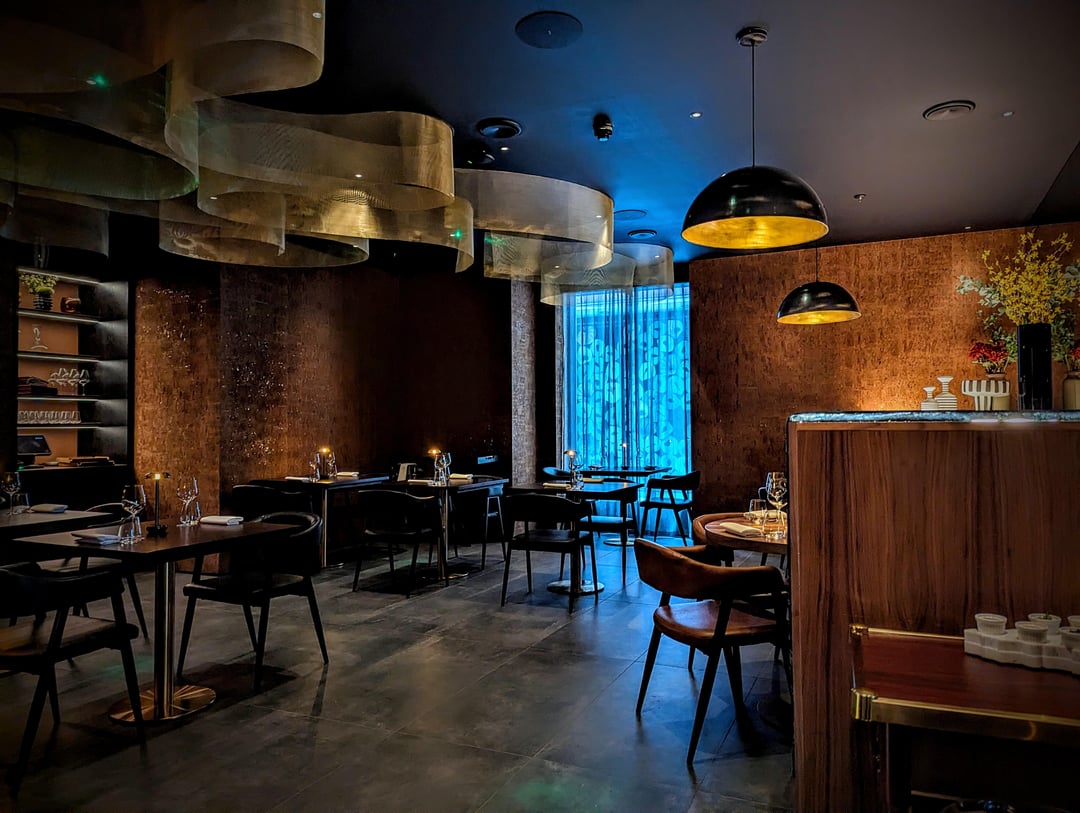
In 2025, Trèsind Studio (Dubai) became the first three Michelin star Indian restaurant. About a week ago (May 9th was their first service), Himanshu Saini brought his vision of modern Indian fine dining to Mayfair. Trèsind, led by chef Amit Bagyal – who was formerly a sous chef at Benares, head chef at Kanishka, and executive chef at Yaatra – serves around forty covers per dinner sitting (one at 5.30pm, the other at 7.30pm). The menu, which is slated at £125, was half-price for their first week of service.
The dining room won't be winning any awards on the design front, but the dim lighting and dark wooden tones are at least evocative of the type of rich, spicy food that one will eat at Trèsind. Service was solid throughout, with my main server providing much-appreciated context to the dishes. Water could have been kept a closer eye on, but it's not (yet) starred, and but a week into service to boot; some grace must be given.
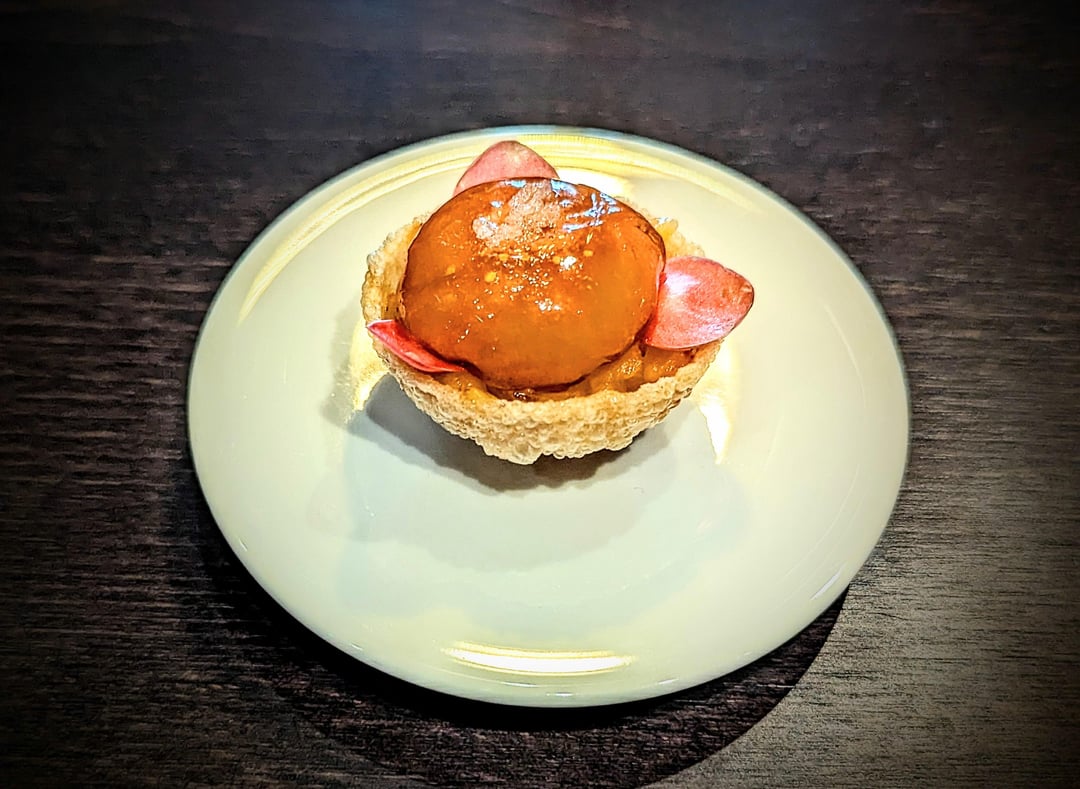
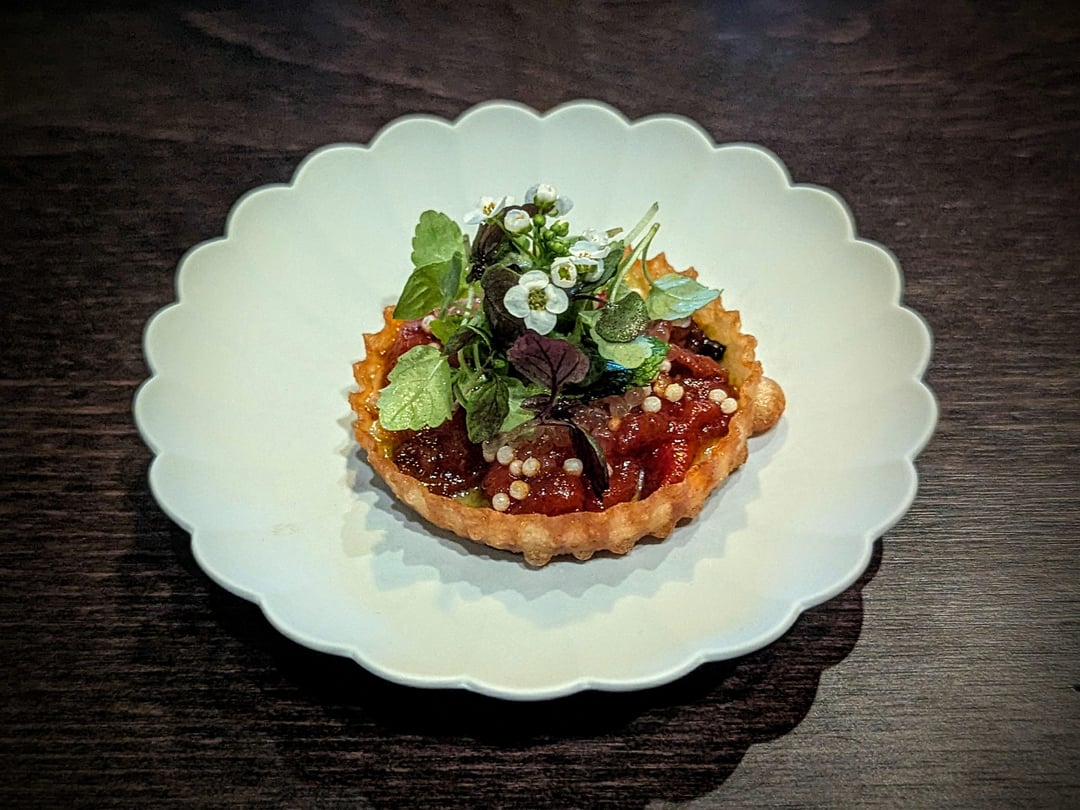
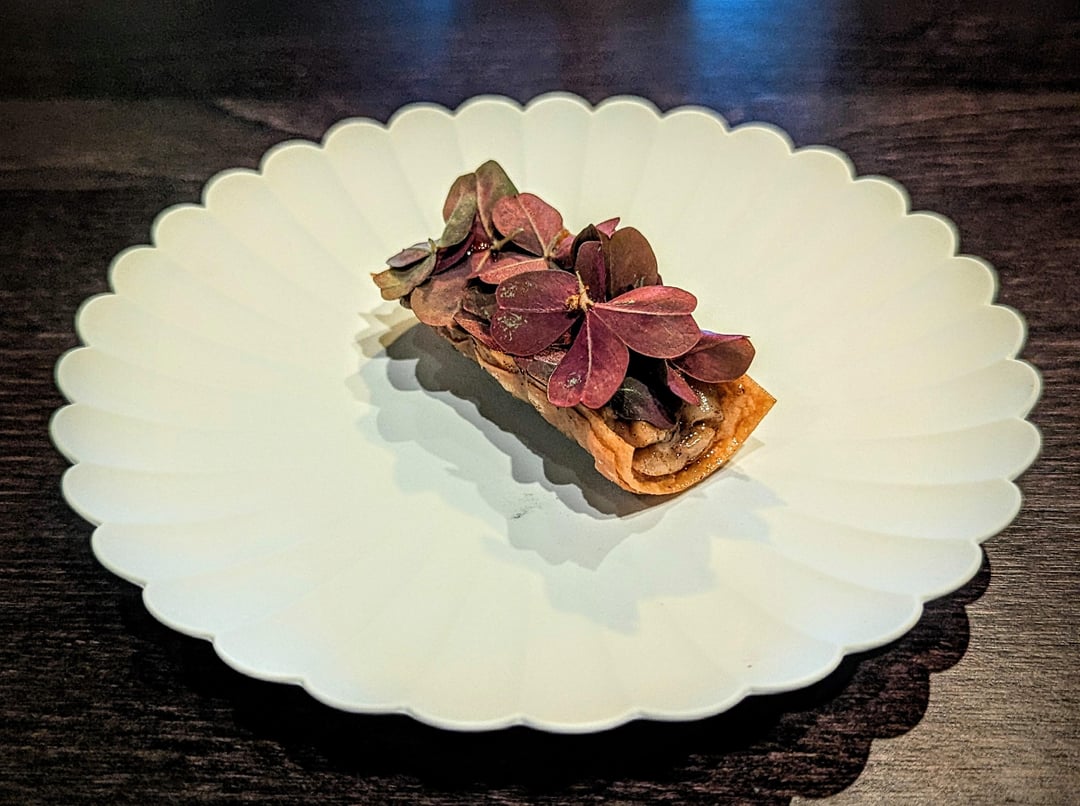
Onto the food, which was almost summarily excellent. Trèsind must be in prime position for a Michelin star come February next year. The three amuse-bouches were individually and collectively (the latter because of how the varying taste profiles complemented each other) some of the best I've had in recent memory; the pani puri that was quite literally bursting with a briny sweetness owing to the pickled pineapple, with a mustard heat running through it; the crispy tarlet atop which crisp watermelon and guntur chili (from Andhra Pradesh in India) sambal combined into sweet heat; and the artichoke shawarma, Trèsind's ode to Dubai, which was deeply savoury and had a drastically different flavour profile than the preceding amuse-bouches. An accomplished start to the meal.
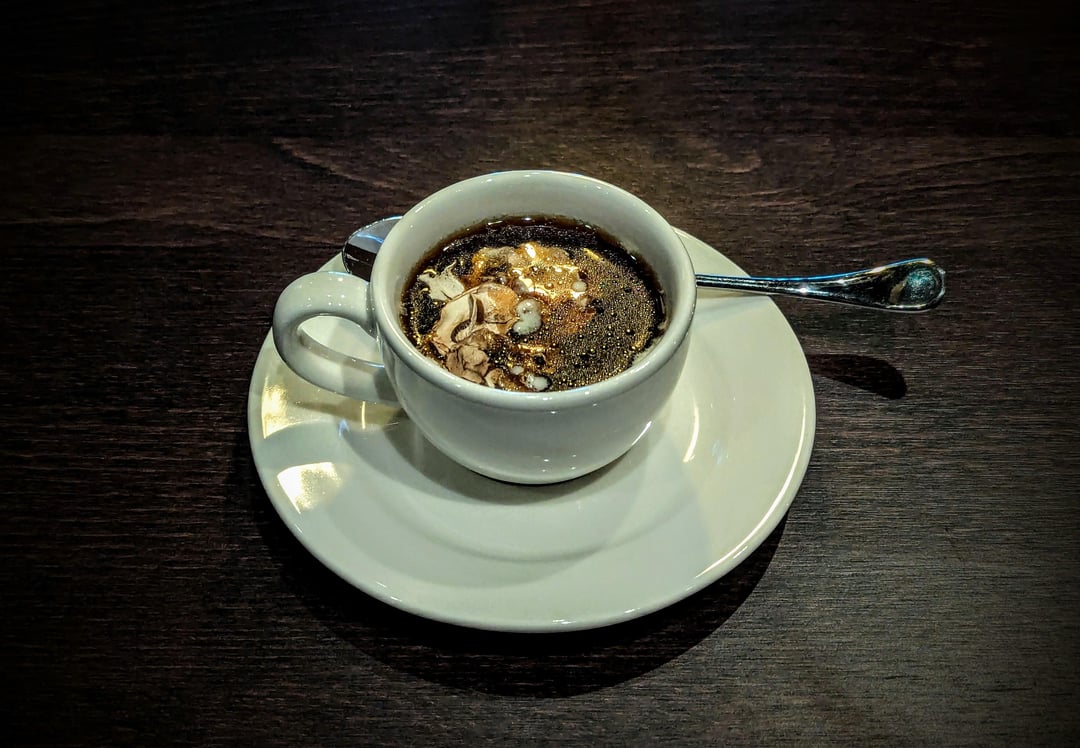
The first course was a mushroom chai. Presented as one would tea, dehydrated button mushrooms were said to be the tea leaf, whipped and frozen truffle oil the sugar, and a mushroom consommé the water. Though I can see that they were going for something fun and playful with this dish, the internal logic was pretty flawed; the mushroom consommé (which was delightful) almost entirely accounted for the flavour of the dish. So what are the "tea leaves" doing? Or the "sugar"? Next to nothing. If it must remain on the menu, I'd have put it at the top as a palate cleanser.
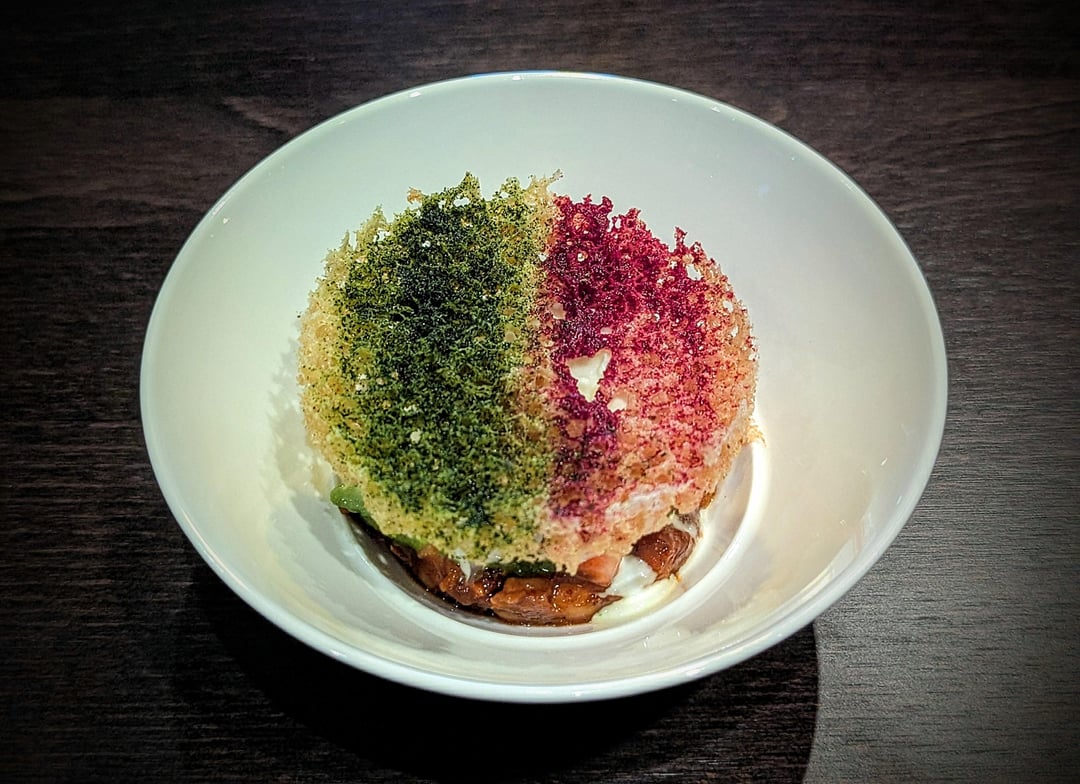
Back to the highs of the amuse-bouches with the next course, a ghewar chaat, the ghevar being a honeycombed sweet disc from Rajasthan, which is here to be broken into pieces and mixed with the rest of the ingredients of the chaat (tamarind, potatoes and yogurt being staples, as well as avocado, strawberry and pomelo used here). It is, admittedly, quite hard to come across bad chaats at fine dining restaurants, because of how well the core ingredients work together. That said, this rendition was clearly a cut above. Outstanding.
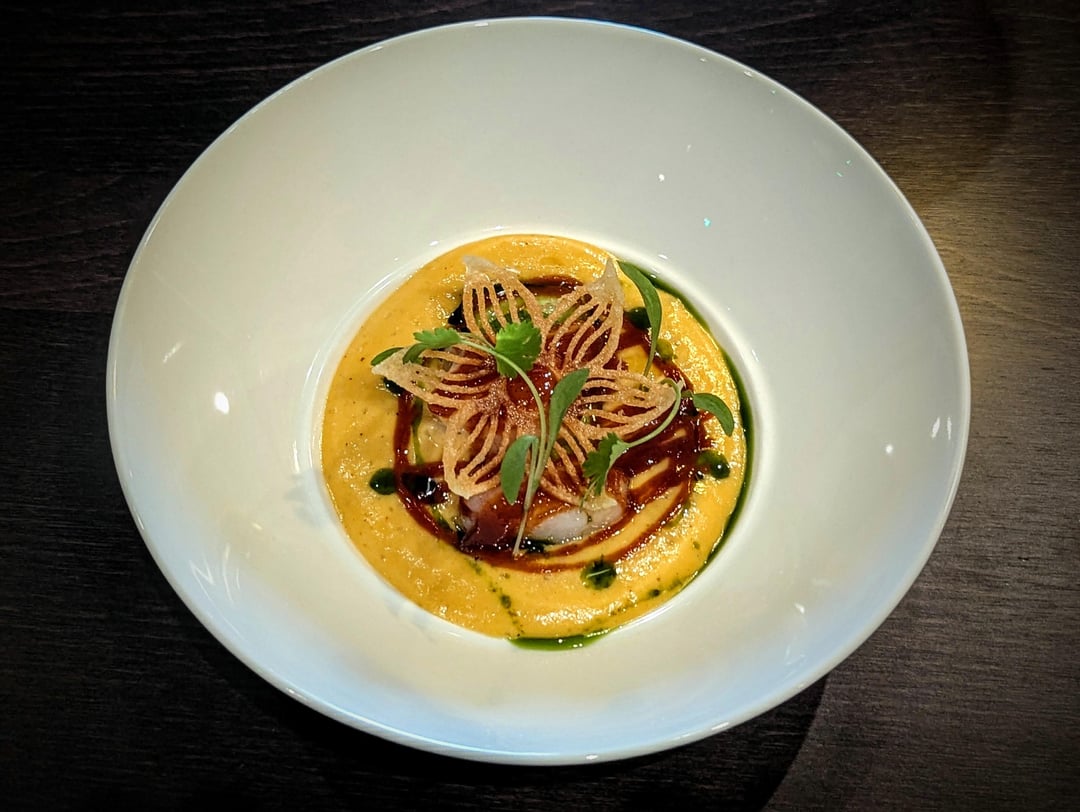
Next came the prawns with asparagus, in a potato espuma, with a dosa tuile and tomato rasam on the side. A southern Indian dish, the intention here was to take a spoonful of the prawns with asparagus, and then alternate with a sip of the rasam. This was indeed optimal, as the cumin (zeera) that laced the potato foam gave the dish dominant dry and earthy accents, which the tomato rasam (a soup made of tomatoes, aromatic herbs, spices and tamarind) lifted, adding a tang and sweetness to the dish as a whole. The dosa tuile also provided a much-needed textural component.
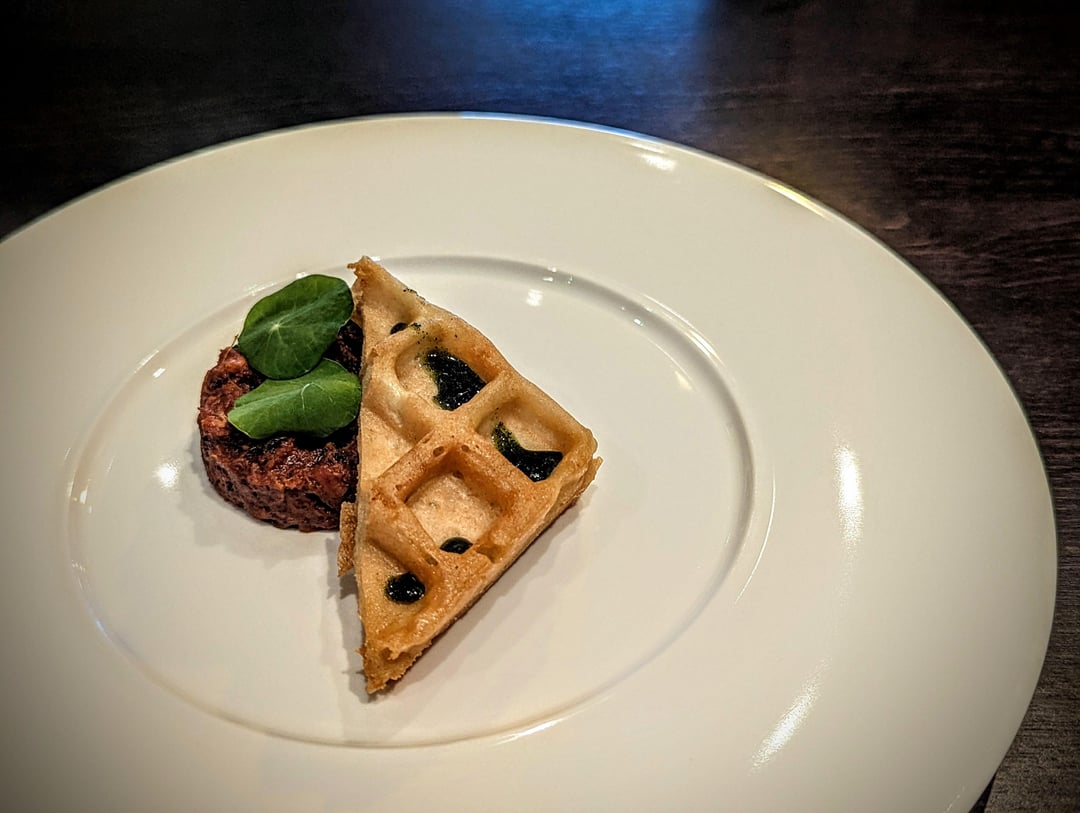
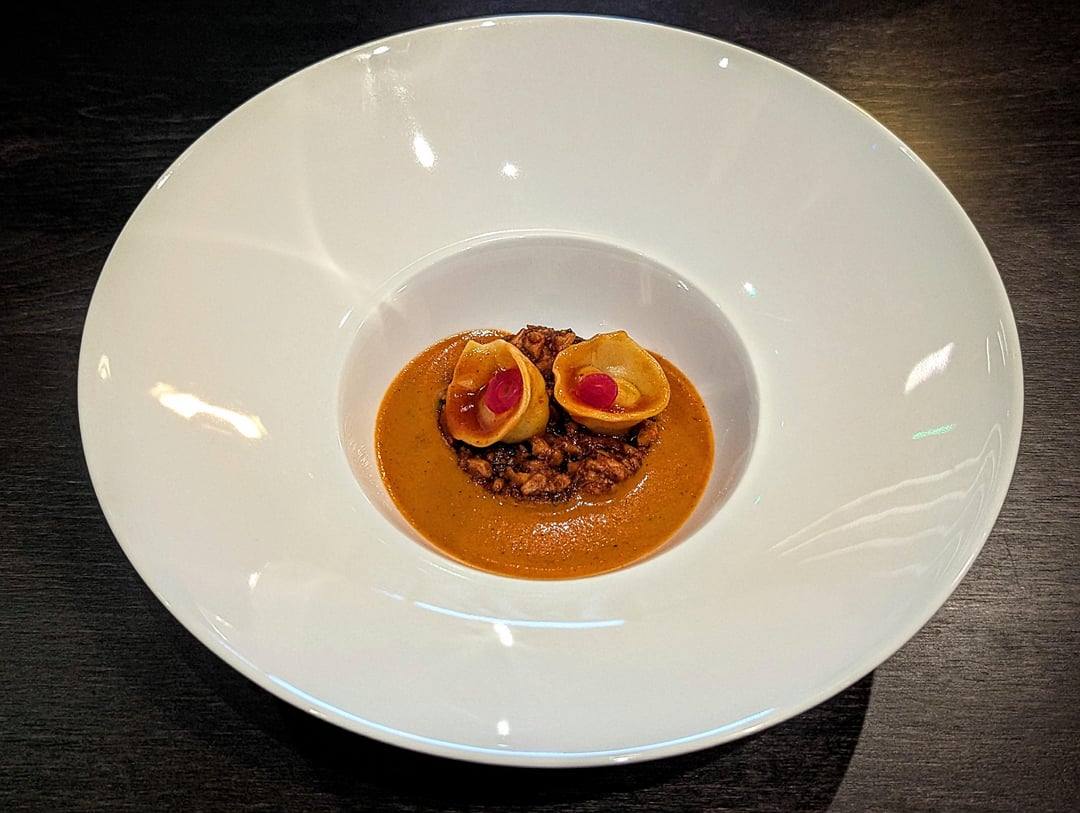
Trèsind's take on chicken and waffles followed, which saw a lentil waffle paired with crab in masala spices, with curry leaf honey drizzled over the waffle in lieu of maple syrup. While not much of a looker, this was a dense dish that worked very well, the crab in particular having packing a real punch of spice and dry flavour. Preferable to this dish, however, was the tortellini that followed. A mixing of Italian with Indian (I'm not sure of the reasoning, but I'll roll with it), the tortellini and interred gorgonzola dolce were more accents than the real stars of the show, which instead was the chicken makhani (butter chicken, from Delhi), rich and soothing, and a nice change from the constantly maintained spice levels up to that point in the menu.
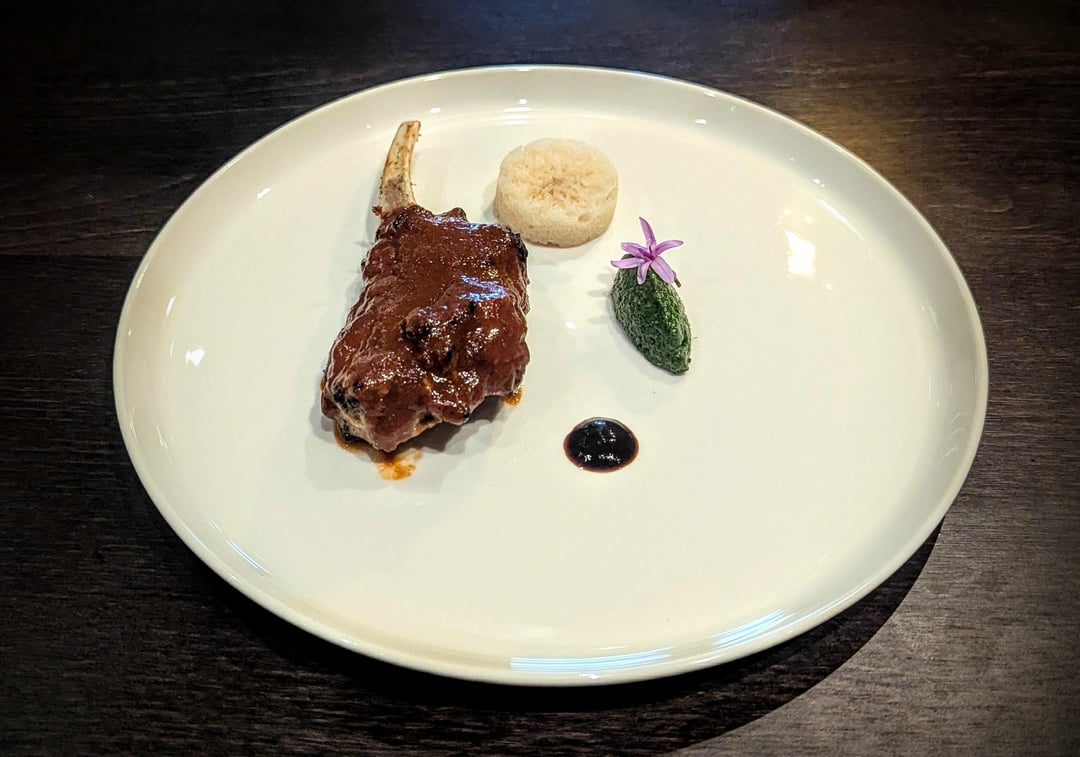
After this came what was billed as the "main course" of the savouries, in the form of a lamb chop slathered with a vindaloo curry sauce (from Goa), replete with sanna (steamed rice dumpling), chimichurri chutney, and a spot of black garlic reduction. All of the flavours worked well together, and indeed better than individually; the lamb chop desperately needed the bright herbaceous notes from the chimichurri. The sanna was said to contain comté, but I couldn't detect much of this. Along with the mushroom chai, this dish could do with a rethink.
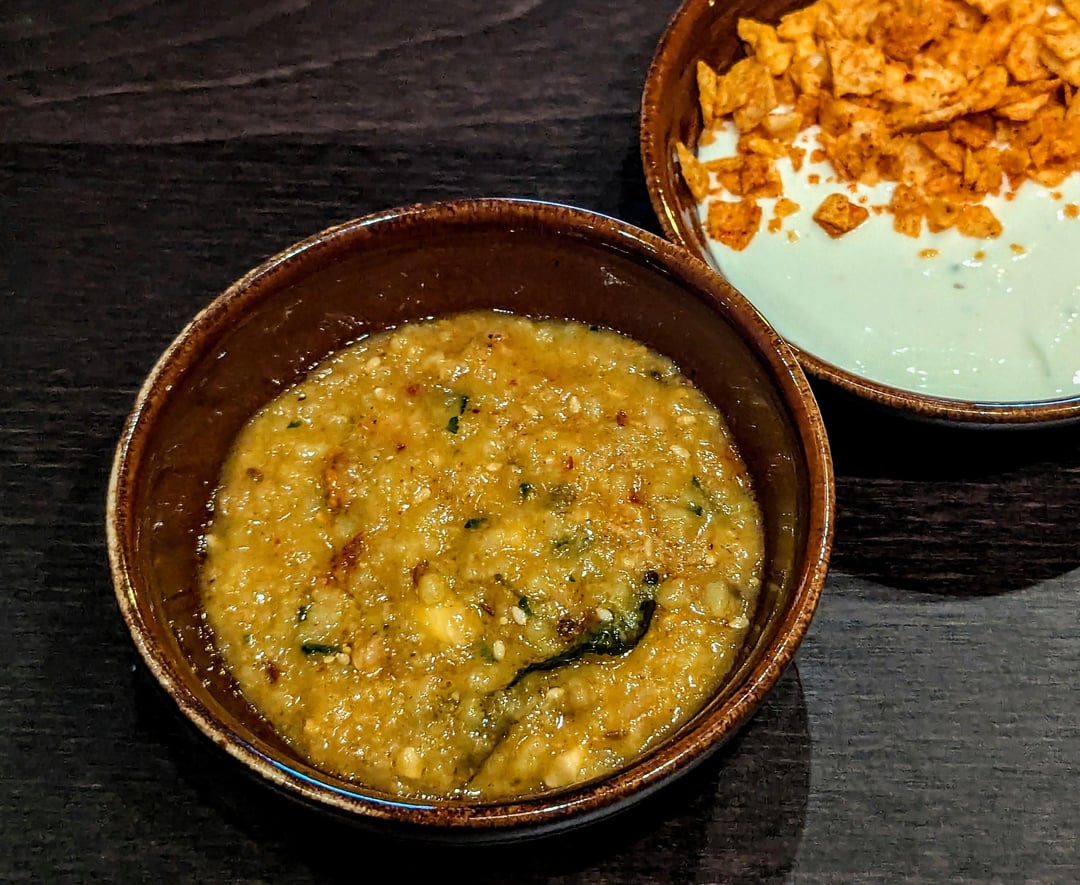
To complete the savoury courses, a 3D and all-white map of India was wheeled out, atop which sat around 20 pots containing ingredients found throughout the nation. The "Khichdi of India" is one of the only constants in a country where so much changes – from language to skin tone to economy – with every 100km, as rice and lentils (the two core ingredients) can be found throughout the country. Here, a bubbling pot of the porridge is brought out, and the presented ingredients are placed into the pot one after the other. Once stirred, a bowlful of the Khichdi is presented along with a bowl of raita (seasoned yogurt). A very soothing dish, the cool raita makes for an apt accompaniment, though I would have liked for the added ingredients to get to know each other for longer in the pot; the Khichdi, for all that was added to it, still felt too muted. Similar to the mushroom chai, this is a course that was more to be appreciated with the eyes than the tongue.
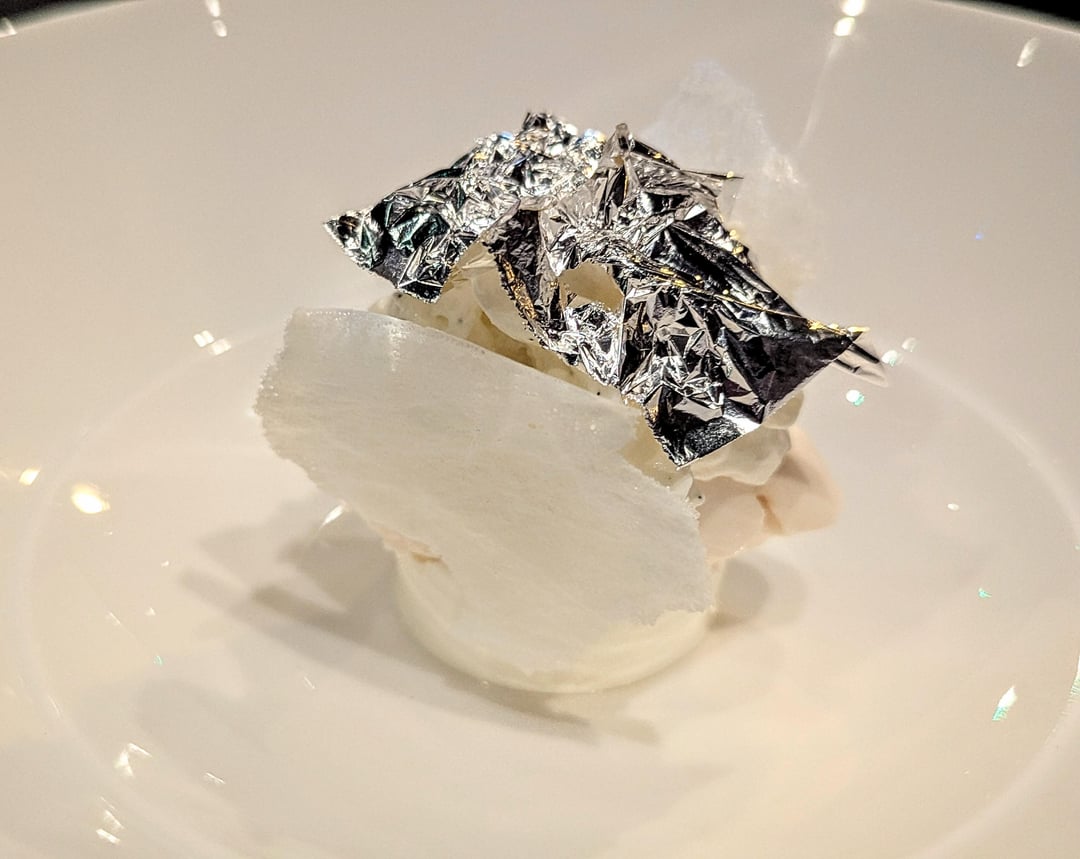
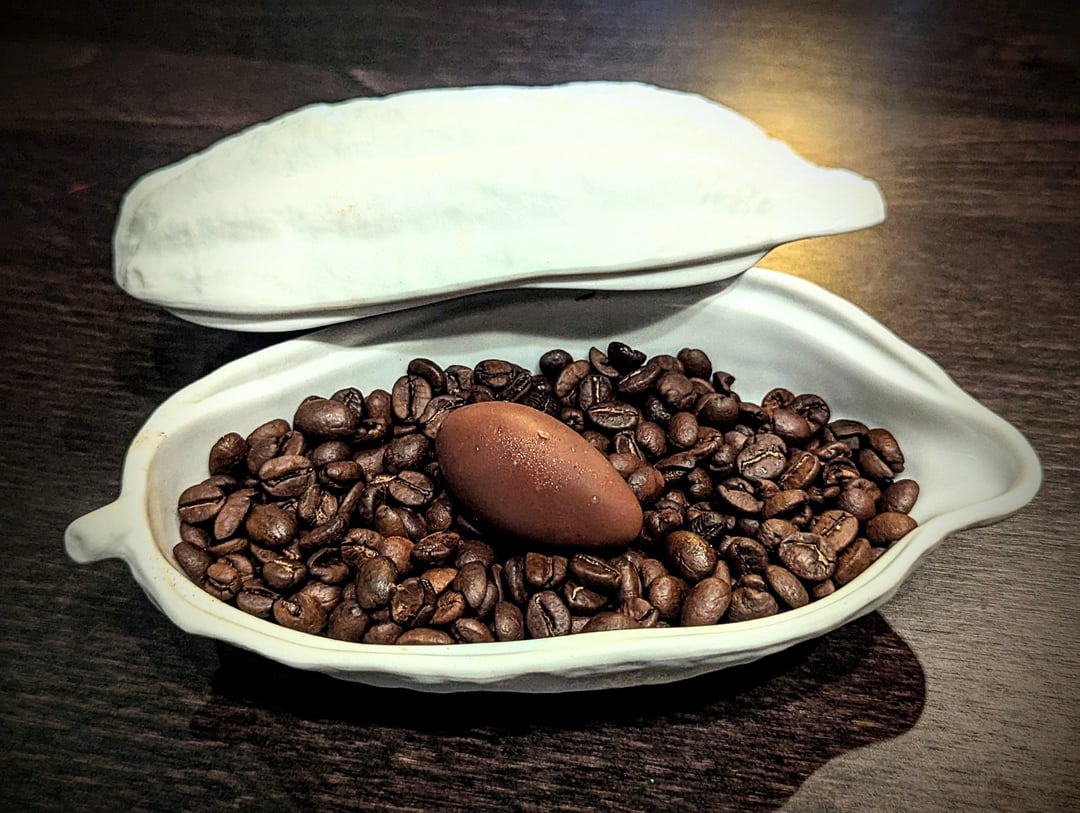
To finish the menu, a pandan dessert, seemingly hewn from a snowy mountain peak, such was the startling whiteness of the dessert. The pandan did not overwhelm, and given the rich throughline of the savoury courses, the soft, milky aspect of this dessert was a solid choice. The final bite was a mirror to the first, the pani puri replaced by a thin chocolate shell encapsulating coffee (which was not overly bitter, and once again showed keen judgement in delivering balanced flavour). A fun surprise when one expects a solid petit four, but one that makes sense in the wider context of the menu.
Trèsind is unstarred by virtue of its recent opening. I'd put it on the level of Akoko and Plates (both solid London 1-stars), and think it also gives Opheem a run for its money in the flavour department (if not the plating). It should be a shoo-in for a star next year based on current performance.
Menu:
-
Pani puri, carrot kanji, pickled pineapple
-
Watermelon, guntur chili sambal, petit herbs
-
Artichoke shawarma, crispy zaa'tar saj
-
Mushroom chai
-
Ghewar chaat, avocado, strawberry, pomelo, yogurt ice cream (pictured first)
-
Prawns and asparagus, zeera aloo espuma, tomato rasam
-
Crab, ghee roast masala, dal vada waffle, curry leaf honey
-
Tortellini, gorgonzola dolce, smoked chicken makhani, chili jam
-
Lamb chop, rosemary vindaloo, sanna, chimichurri chutney
-
Khichdi of India
-
'Pandan payesh' vanilla yogurt, sour milk ice cream, milk crisp
-
Coffee stone
by MaaDFoXX