
"OVERVIEW"
•Restaurant: YUN
•City: Seoul
•Accolades: 1 Michelin star
•Menu: Lunch Tasting Menu
•Price: 120,000₩ p.p. (approx. US $82) before drinks
•Course Duration: 1.5hrs
•Visited: Dec 2025
"NOTE"
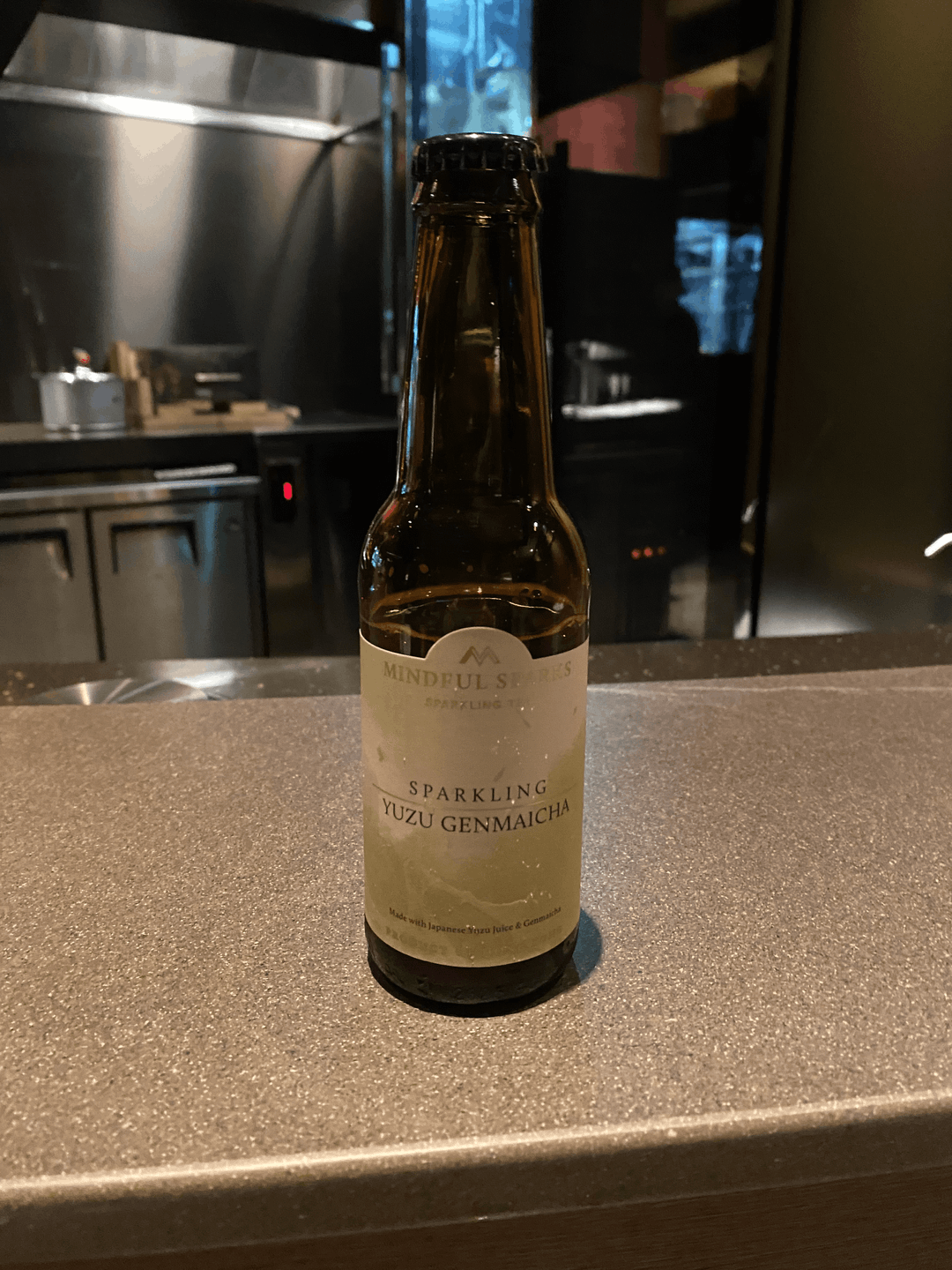
•Ordering any kind of beverage is mandatory, thus I ordered "Mindful Sparks Sparkling Yuzu Genmaicha" (in case anyone in Korea is curious about this drink, you can order at https://artistbottleclub.com/).
•Fans of the Culinary Class Wars would recognize the owner chef, Doyun Kim, who appeared on both seasons as white spoon chef. Chef/Judge Anh remarked chef Doyun Kim as creditable chef who has been substantially contributing towards the advancement of Korean culinary industry.
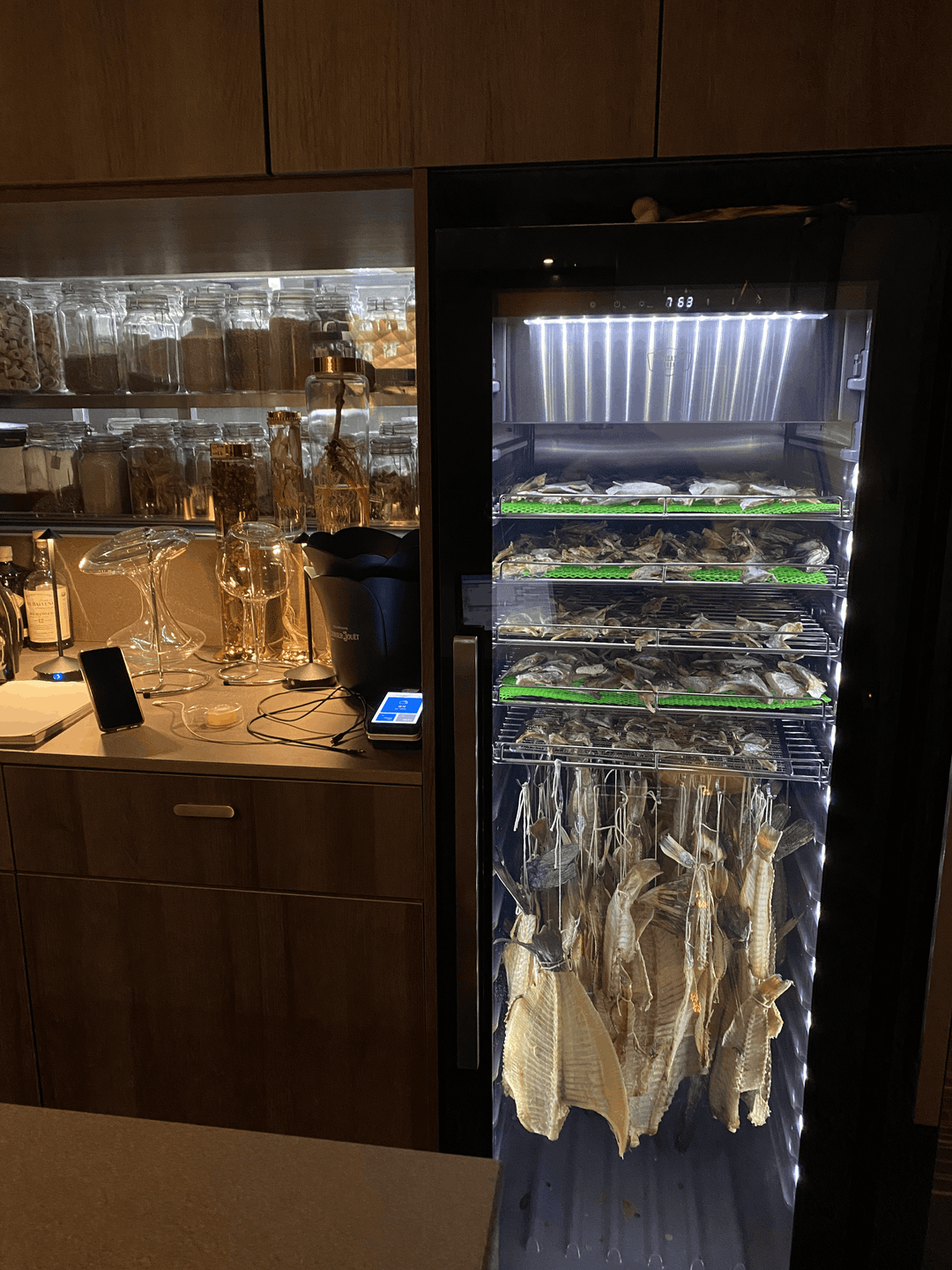
•Chef Doyun Kim is renowed for accommodating more than 500 kinds of native Korean ingredients through fermentation, aging, and drying techniques, including house-made noodles crafted from native wheat, refined over 17 years of research following traditional methods.
"PHOTO DESCRIPTIONS"
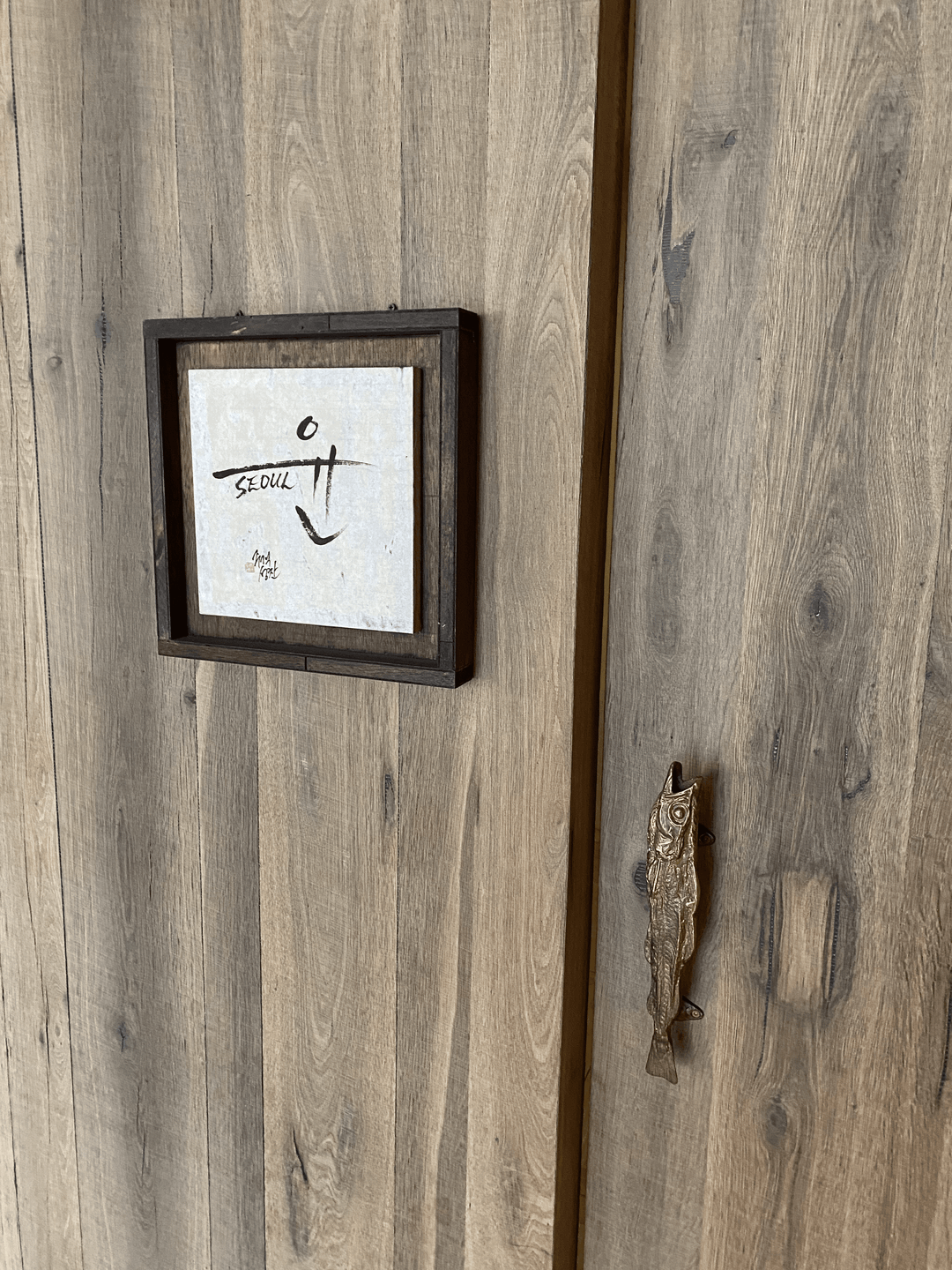
•1st [Entrance]
•2nd [Dry-aging ingredients]
•3rd [Sparkling Yuzu Genmaicha Bottle]
Toasty and fragrant drink with a subtle touch of green tea essence. Had almost zero sweetness. This drink safely paried well with every dish of the course.
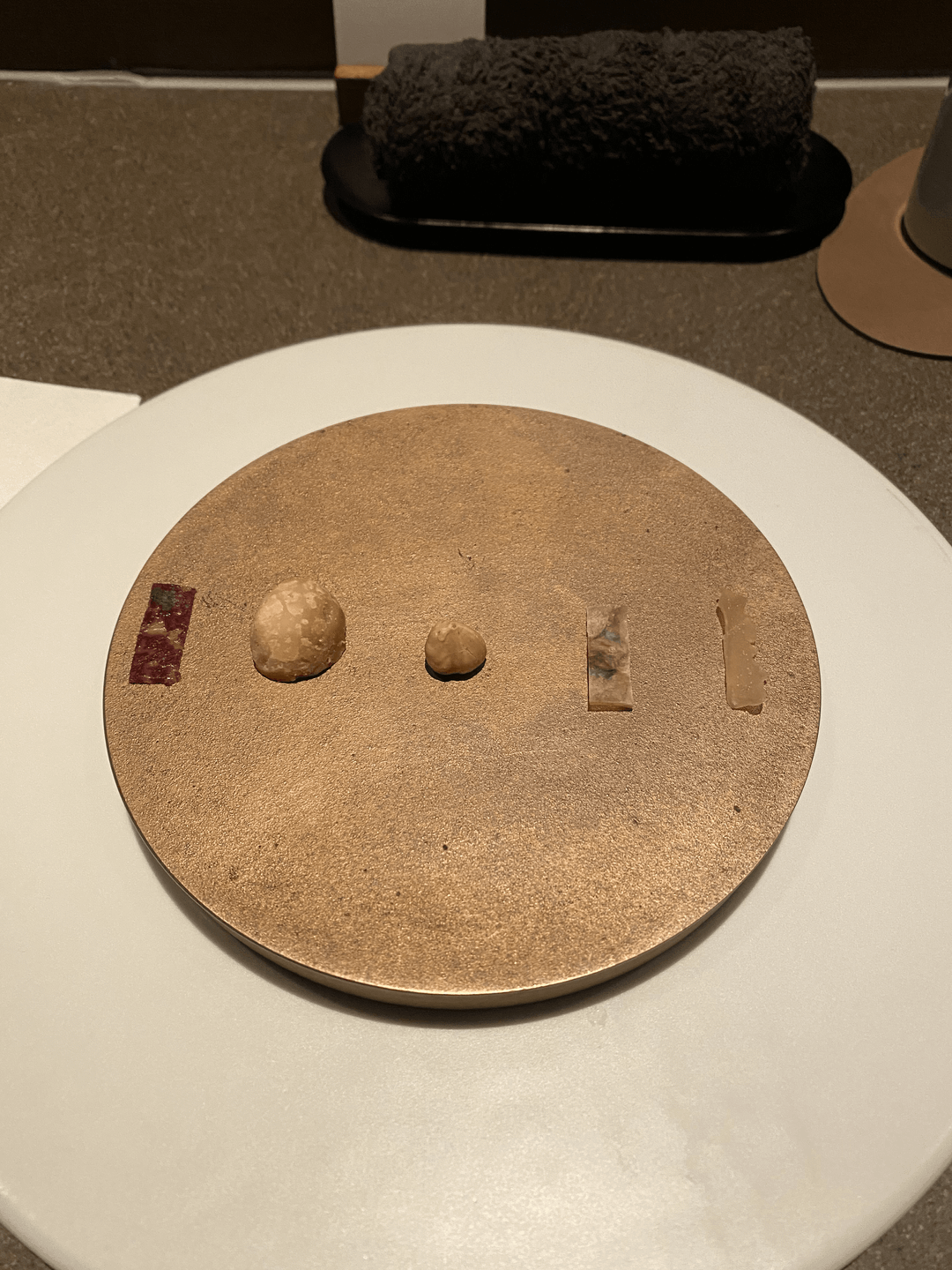
•4th [Amuse-Bouche]
I was advised to eat from right to left, being dry-aged scallop, dry-aged shrimp, hazelnut, macadamia, then beef jerky.
Having every piece dried or dry-aged was somewhat refreshing, as this shared nature allowed extra sensitivity for my palate to pay better attention to each bite's texture as well as flavour.
Dry-aged scallop and beef jerky stood out. The former packed strong seafood umami with gentle fragrance and no fishiness, while the latter had juicy fats oozing out with heavy beefy aroma.
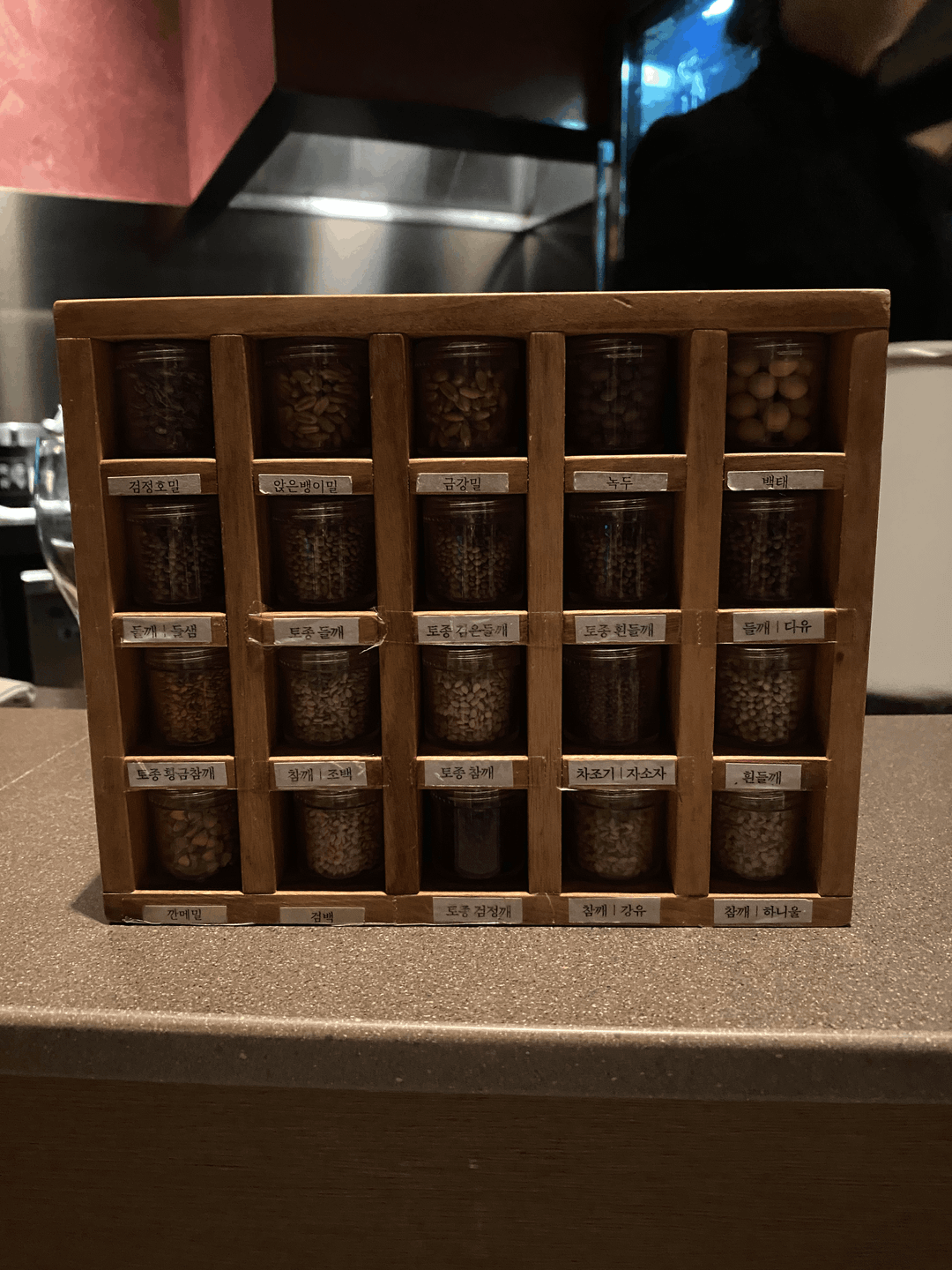
•5th [Ingredients for noodle and oil]
Waitress guides you through the native kinds of perilla seeds, sesame seeds, beans, and wheats , then points at specific ingredients used for the following noodle course.
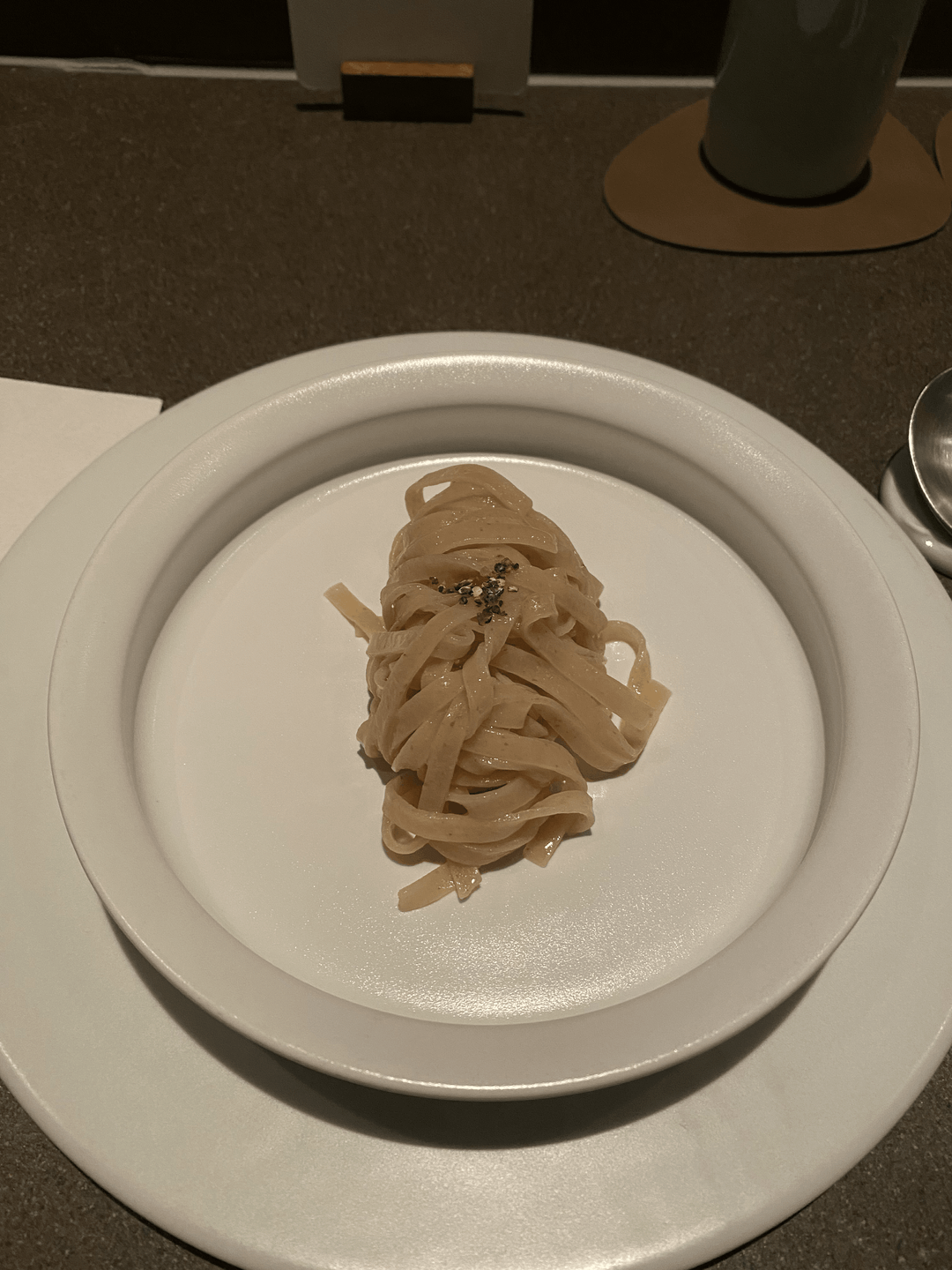
•6th [Noodle]
House-made noodle through blending white soybean, mung bean, etc. seasoned with perilla oil made out of Deulsaem perilla seeds and other native perilla seeds.
Not confident if this noodle has the exact same combinations of ingredients as the infamous noodle from the Culinary Class Wars Season 2, chef's finesse and confidence was noticeable by this dish through multi-layered scents as well as textures present within the noodles.
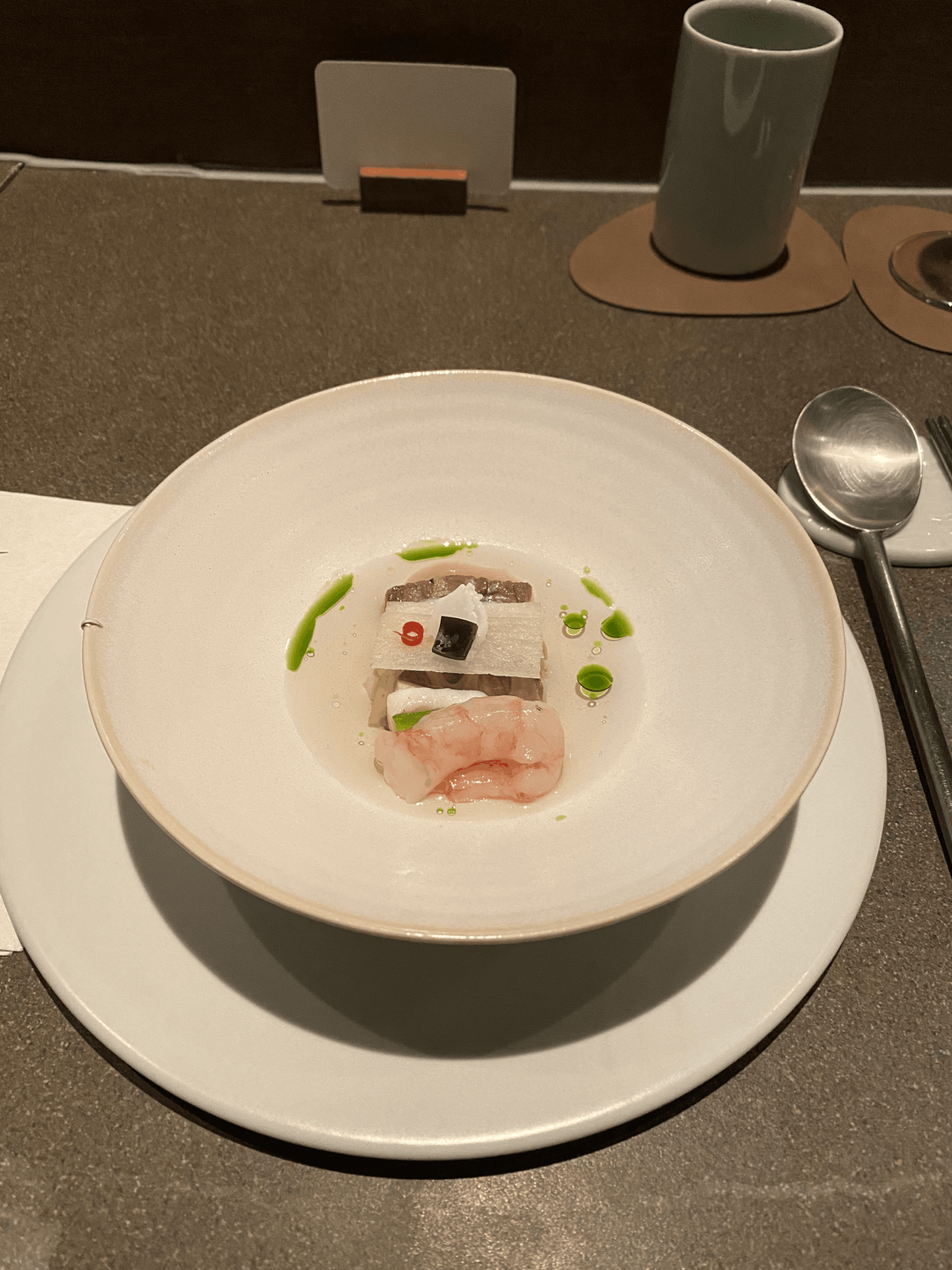
•7th [Seafood]
Sweet shrimp, giant pacific octopus, lotus root, raw aged-flounder, water celery oil, and dongchimi (radish water kimchi) based cold seafood broth.
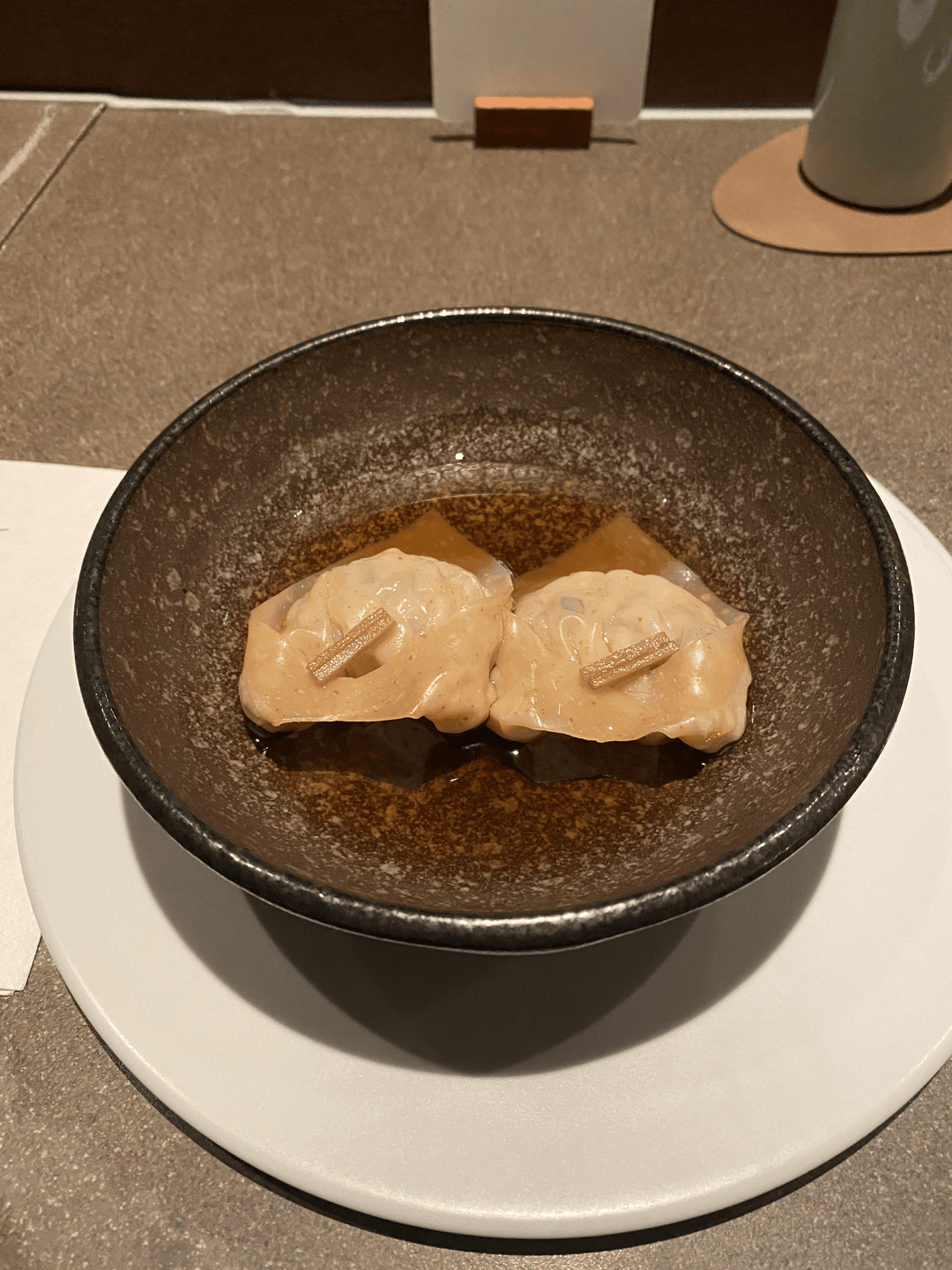
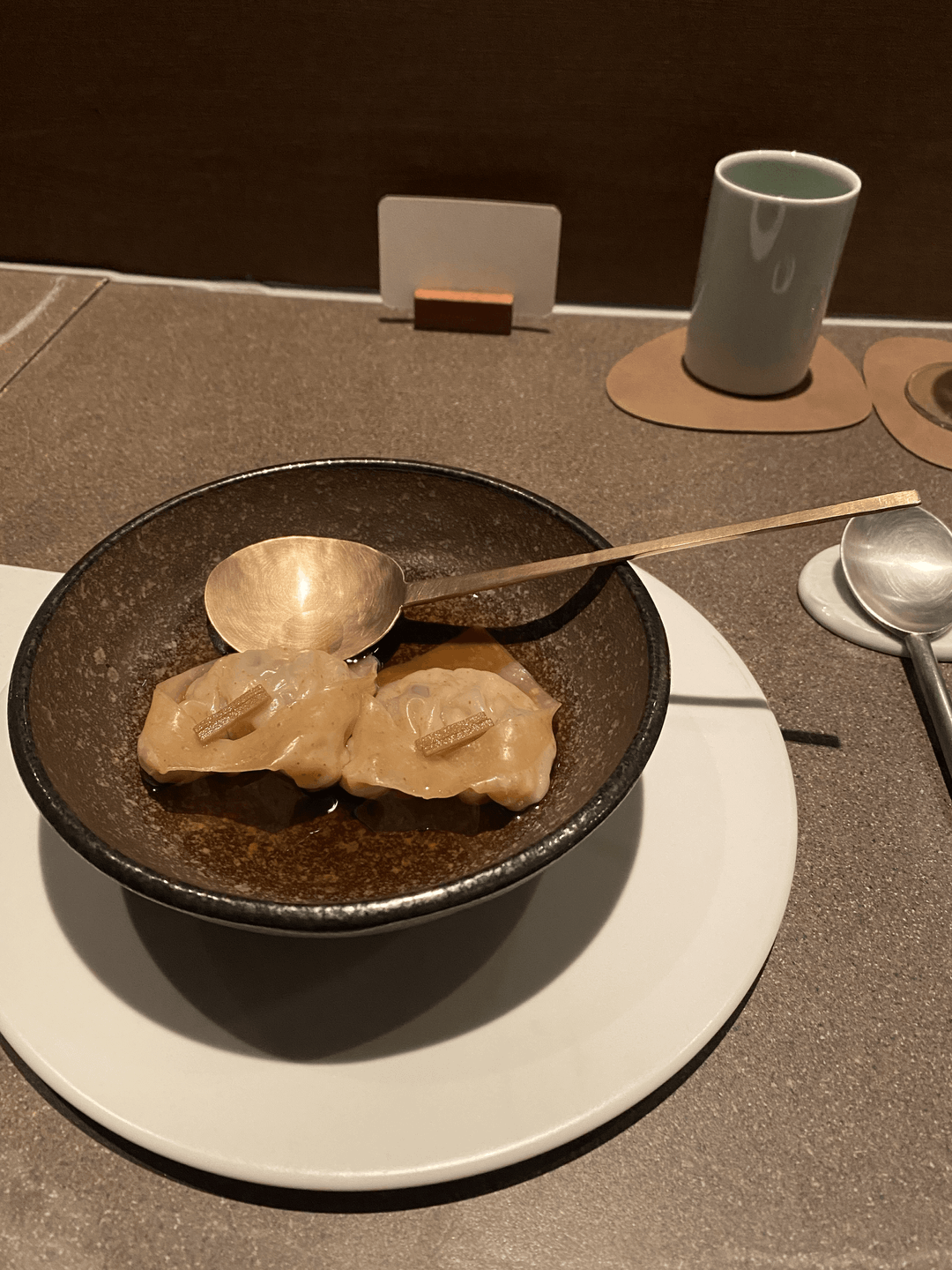
•8th [Mandu]
Mandu (Korean dumpling) had bite-sized pieces of abalone, Korean zucchini, and radish that were cooked to al dente as fillings. Broth was made from dried big-eye herring, beef brisket, and porcini mushroom. Lastly, burdock garnish on each mandu.
It was definitely refreshing to purposefully bite every single ingredient of the filling, unlike dishes of similar kinds including dumplings, dimsums, raviolis, etc., where fillings are mostly ground or chopped to tiny pieces. Mandu's fillings paired well with the earthy and neat broth. Despite their relatively small portion, the burdocks actually had huge impact with their acidity and earthy notes, adding another layers of flavours.
•9th [Spoon for Mandu]
Notable choice of cutlery that had bigger and flatter head, which allowed easy scooping of mandu and broth.
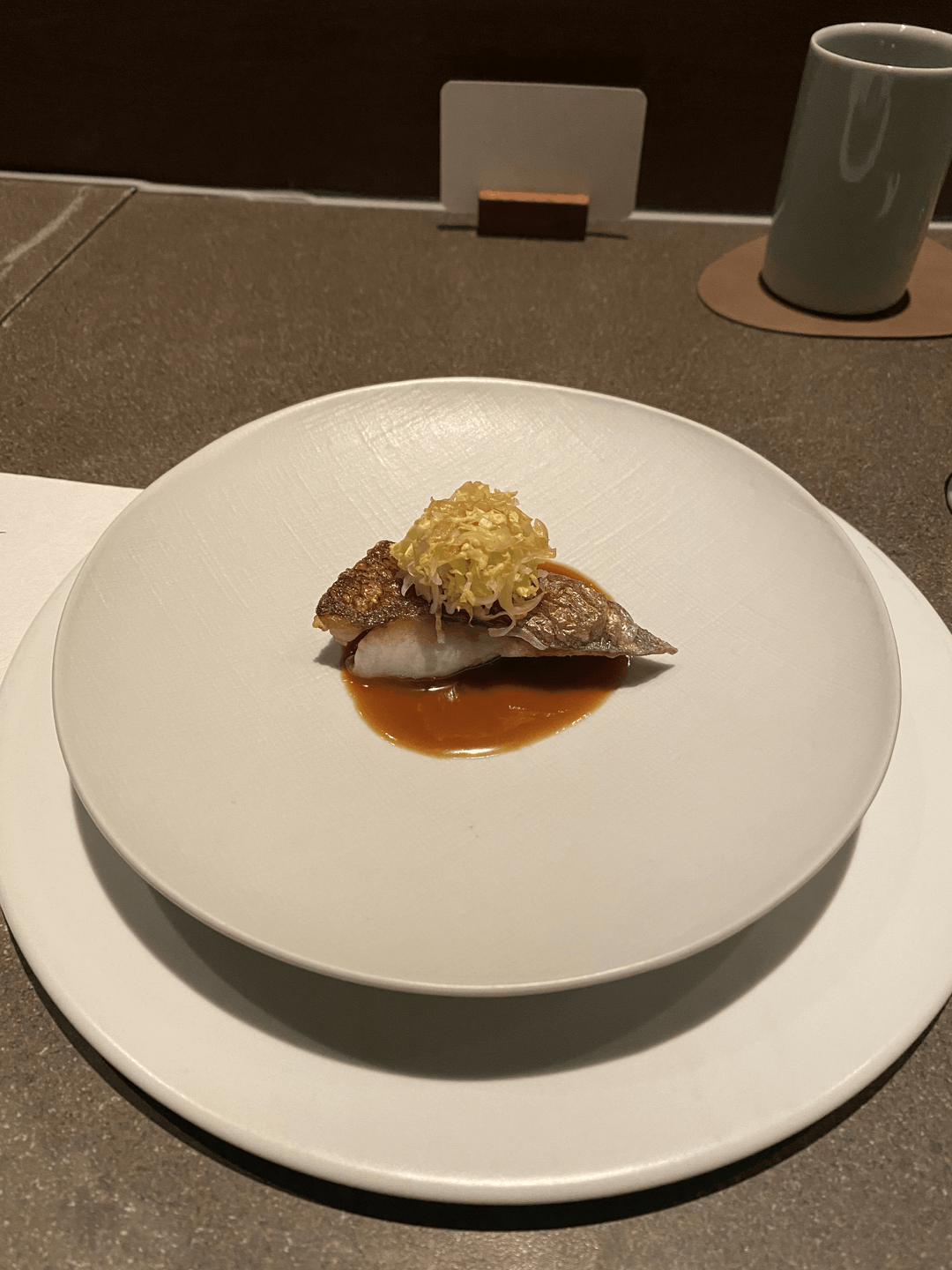
•10th [Fish]
Semi-dried white croaker (rinsed in green tea brine) cooked through pan-frying, paired with jus of dried-heads of different fishes, topped with perilla oil seasoned baekkimchi (white-kimchi).
Nothing particularly remarkable about the fish itself, however the fish-head jus elevated the dish considerably through its punchy flavour that sat somewhere between caramel and Southeast Asian oyster sauce (saus tiram).
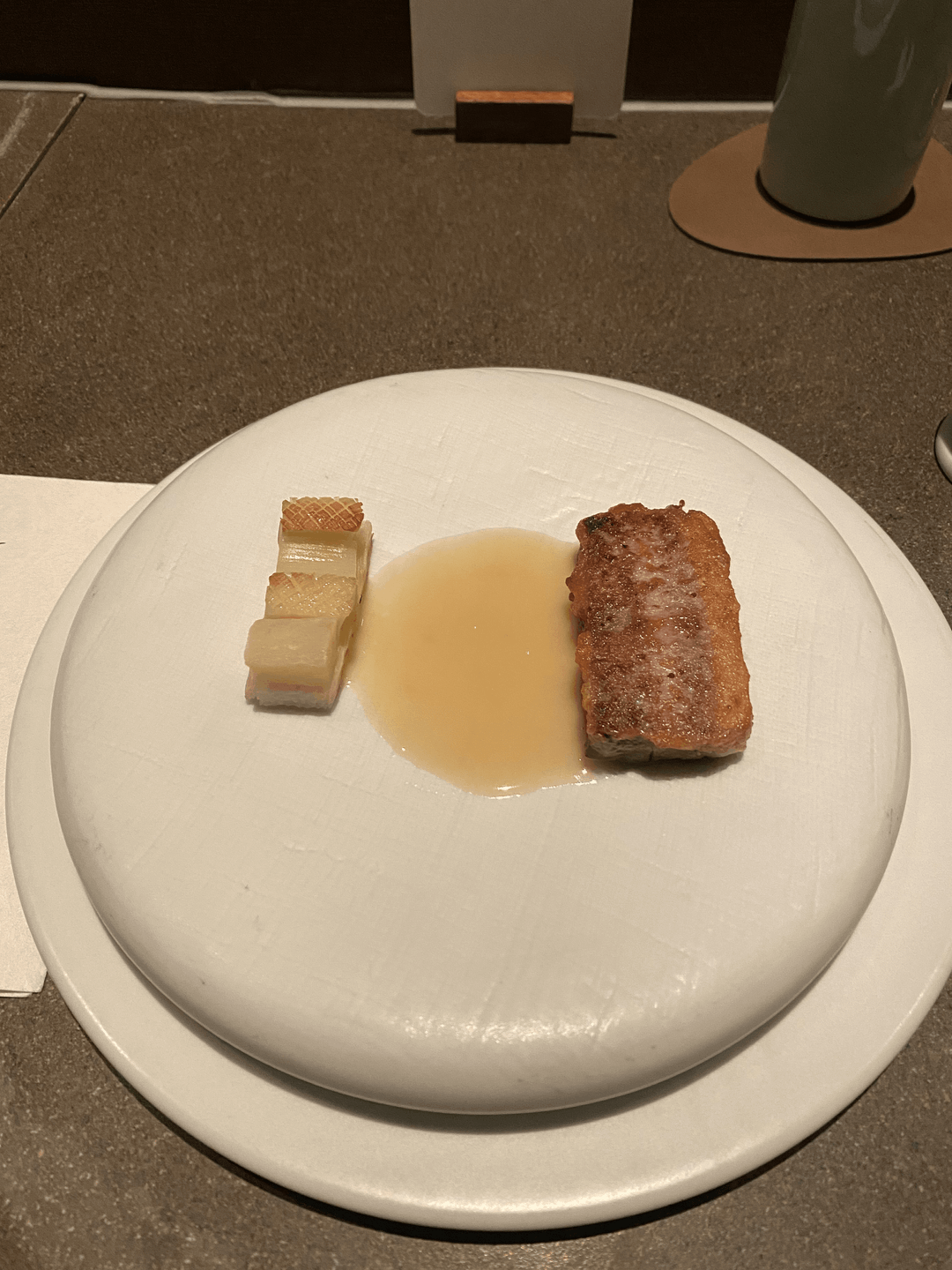
•11th [Sanjeok (Meat Skewers)]
Beef and shrimp skewer on the right; yam, scallion, oyster mushroom, and deodeok (lance asiabell) on the left; and beef jus in the middle.
Each ingredient of the left vegatable pile has been cooked separately, where the cookness of yam and deodeok were perfectly on point in terms of their textures and earthy sweetness.
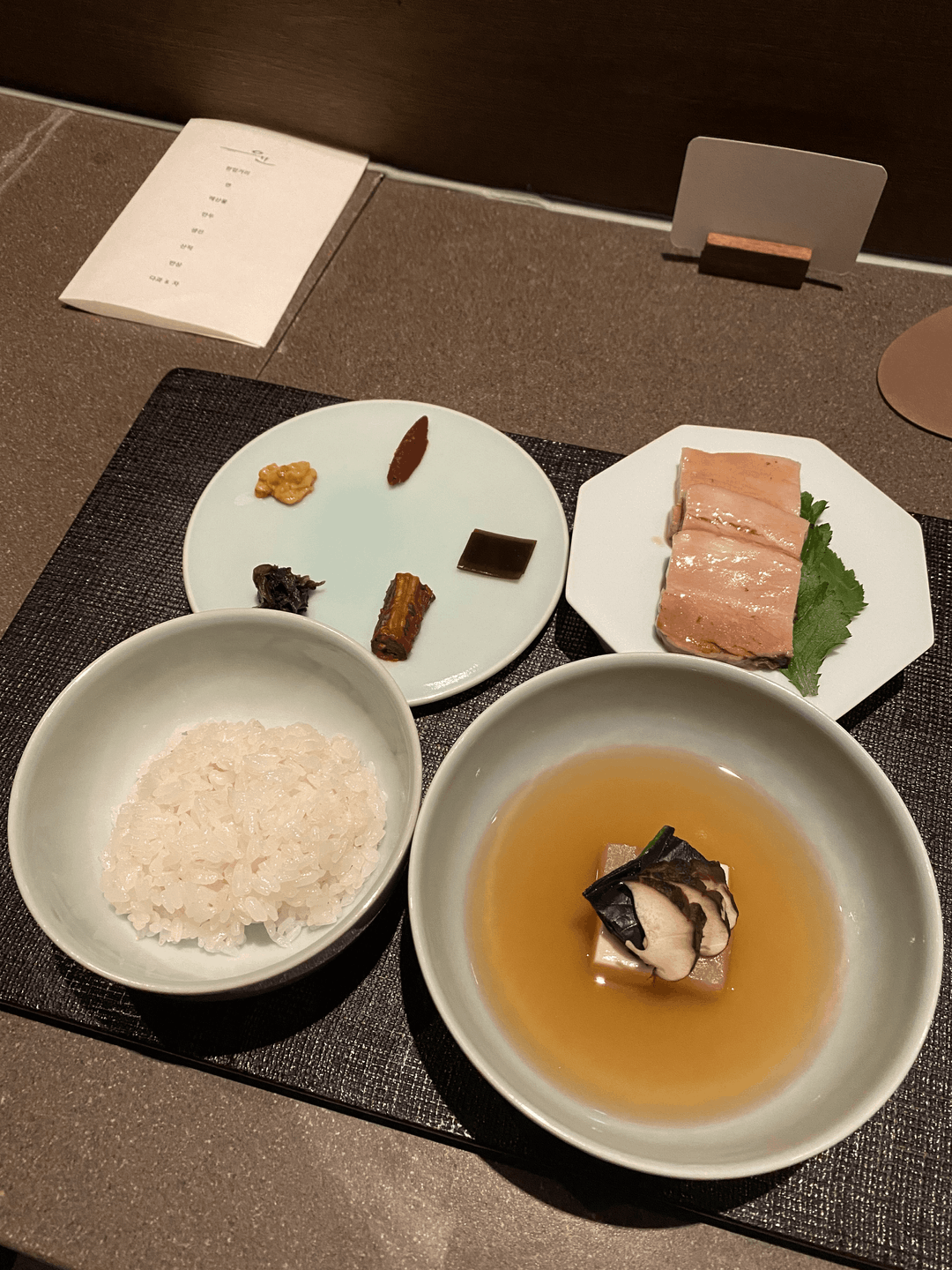
•12th [Bansang (Korean traditional table meal)]
Dragon's eye white rice from Taean area; soup made with 4-year-aged fermented soybean paste; chamnamul leaves with soy-marinated pork that had been braised; and 5 side dishes, being sweet savoury gochujang, soy-pickled kelp, sea squirt, chwinamul greens, and mustard leaf kimchi (side dishes named in clockwise direction from 12 o'clock point).
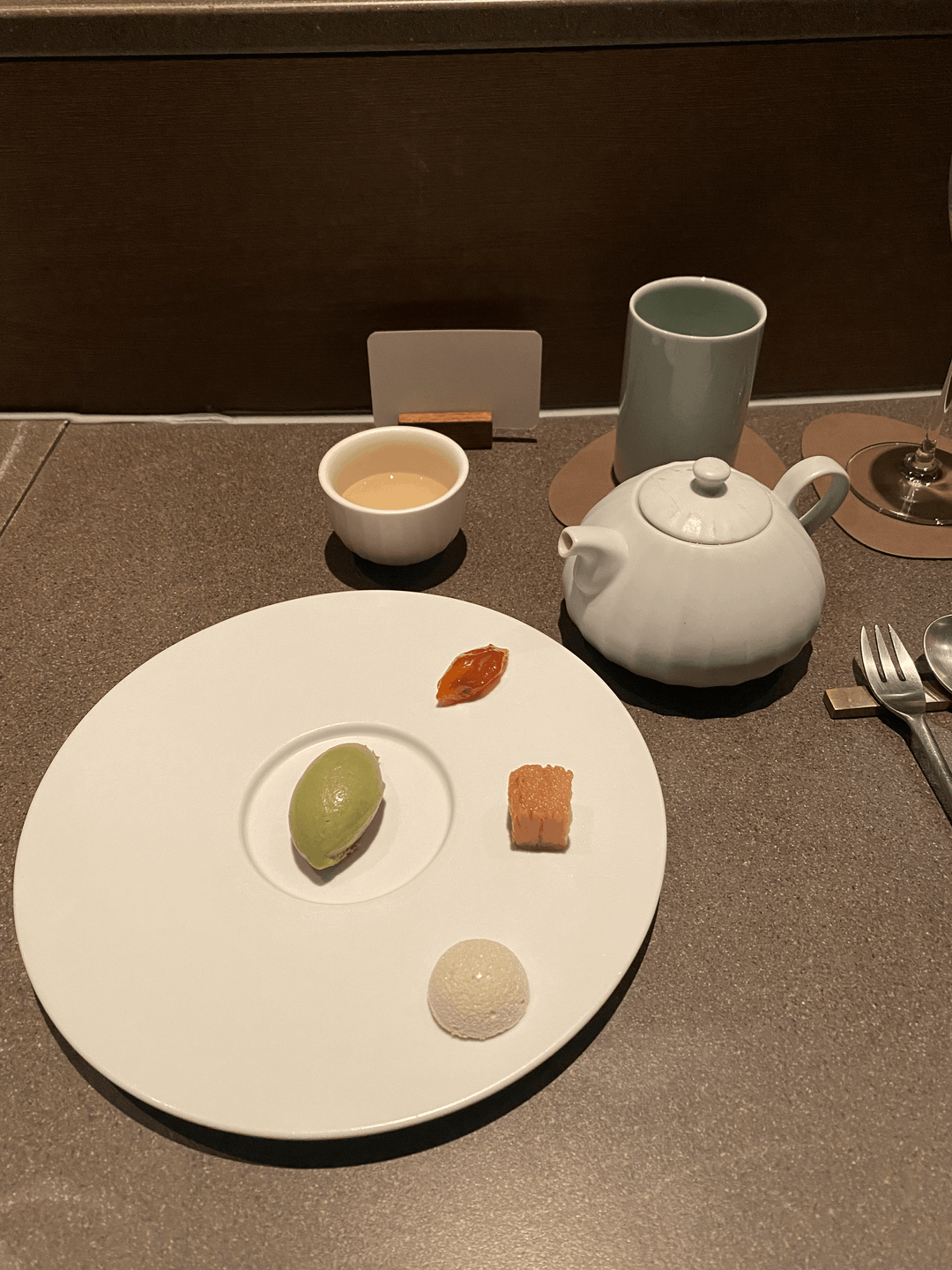
•13th [Dagwa (Refreshments) & Tea]
Angelica keiskei ice cream at the centre, candied kumquat at the top right, followed by gaeseong juak (Korean traditional deep-fried rice cake glazed with syrup), and meringue cookie made with mung bean and burdock powder.
The ice cream had almost zero sweetness to it, thus it felt extra fragrant and freshm as palate cleanser. Candied kumquat evoked healthy and refined approach to candies. Lastly, the meringue cookie had strong earthy scent of burdock's, which was delightful.
Tea served was fermented young green tea leaves, which was light and subtly sweet with no bitterness nor overly grassy flavour present. Since every guest was served with individually full teapots, I took generous amount of time closing my lunch at YUN by finishing up the whole teapot.
"VERDICT"
At approximately US $92($82 for the meal and $10 for the drink), I was able to wash off the pain incurred through visits at other Michelin-selected/recommended/plated restaurants in Korea that did not live up to their prices, despite being more costly than YUN.
Definitely an absolute steal and no-brainer for anyone willing to experience a Michelin-starred fine dining restaurant with strong Korean native characteristics. I strongly believe that YUN holds a unique position in South Korean fine dining industry, since only handful of fine dining establishments in South Korea label one's specialties as dry-aging, self-researched native ingredients, and traditional cooking techniques. Even my South Korean friends, who joined me for the lunch, were unfamiliar with many of the ingredients.
There were indeed noticeable drawbacks. To begin with, except for Mandu and Dagwa & Tea, the cutleries remained the same throughout the course. Moreover, the spacings between seats at the bar counter weren't wide enough for my liking, thus I felt rather confined and was somewhat forced to hear the exact same explanations for each dish continuously as one waitress was covering multiple teams of guests. Yet, to anyone asking if these drawbacks significantly affected my experience, I would answer "No". I enjoyed the dishes and the service was up to par.
Reflecting upon the calming and earthy-flavoured lunch I had, I would definitely pay a visit in future once chef Doyun Kim returns with an upgraded version of YUN.
Despite retaining its 1 Michelin star for the Michelin Guide Seoul & Busan 2026, chef Doyun Kim announced that YUN has suspended operations as of 1st Mar 2026, and entered a period of restructuring. YUN aims to evolve into more of a "laboratory-style restaurant", with a structure in which 6 months of the year are devoted to sourcing ingredients and another 6 months to service.
During the hiatus, the team plans to focus on developing new dishes, researching ingredients, and refining service, ultimately realizing chef's dream of running a restaurant that is conceived as a laboratory for exploring the essence of food through research-driven projects, documentation of Korean ingredients, practice of forgotten techniques, fermentation, aging, etc.
This was my first-ever Reddit post, thus I would really appreciate all kinds of feedback on how I can formulate future posts more readable and easier on the eyes!
Thank you for taking the time to read this post! Have a lovely day!!!
by WhatsInBoxWith3Holes