
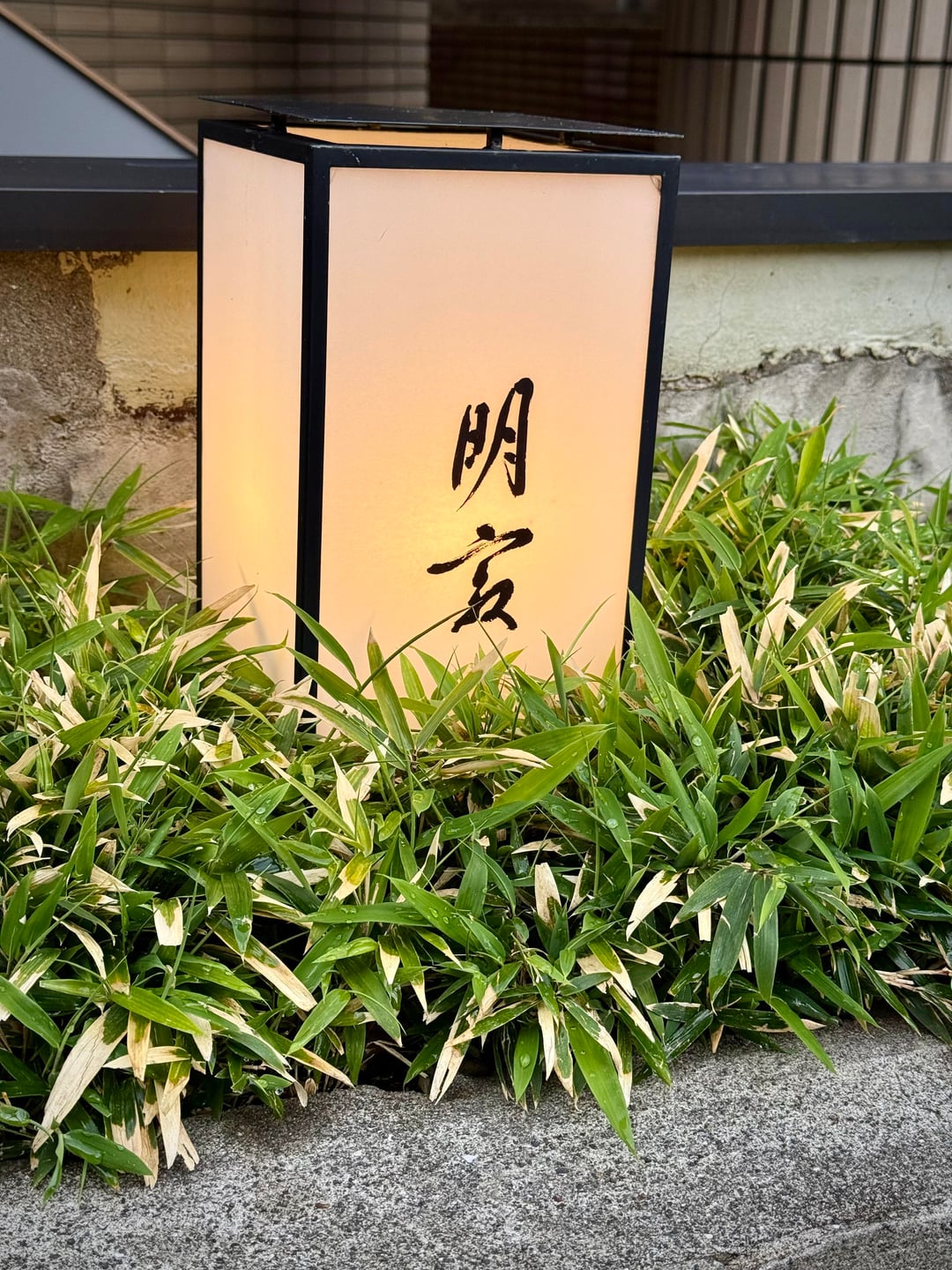
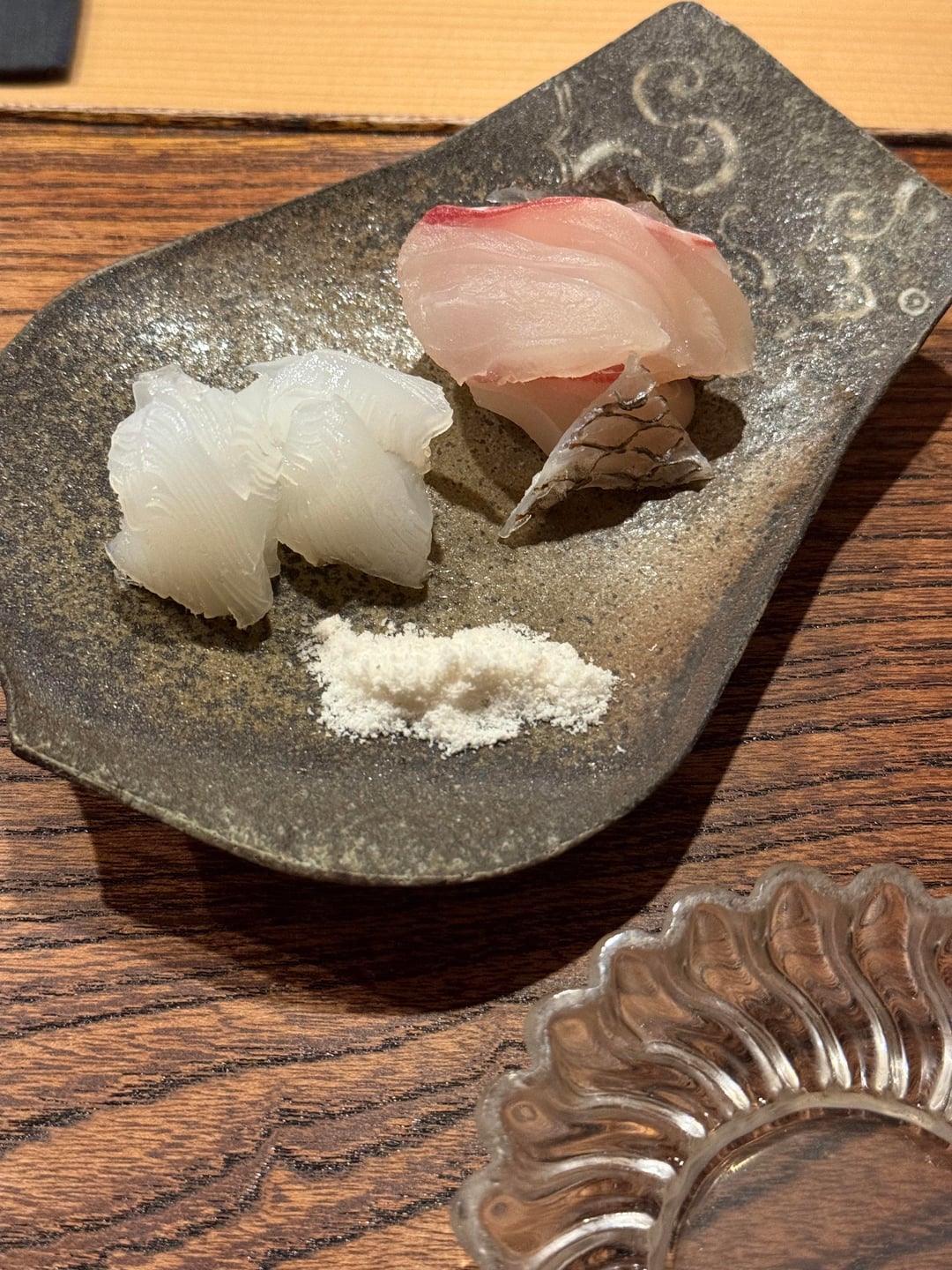
If the essence of Japanese kaiseki is dashi, then Myoujyaku is not kaiseki, at least not in the traditional sense. Dashi is hardly ever used here. Flavors of ingredients are reinforced by techniques to highlight its original flavors rather than the use of seasoning like kombu, katsuobushi or dashi. Take for example their squid sashimi. The dipping "salt" is made by salting squid, steaming, drying and then grinding it into a powder. His techniques are innovative, complex and time consuming but often times left unexplained. On my previous visits, these techniques are only explained when someone inquire about them and only in Japanese. Luckily, they have finally written down these details and there are now cards on the table to explain everything. For anyone with an interest in boundary pushing Japanese kaiseki, I would highly recommend a visit to Myoujyaku.
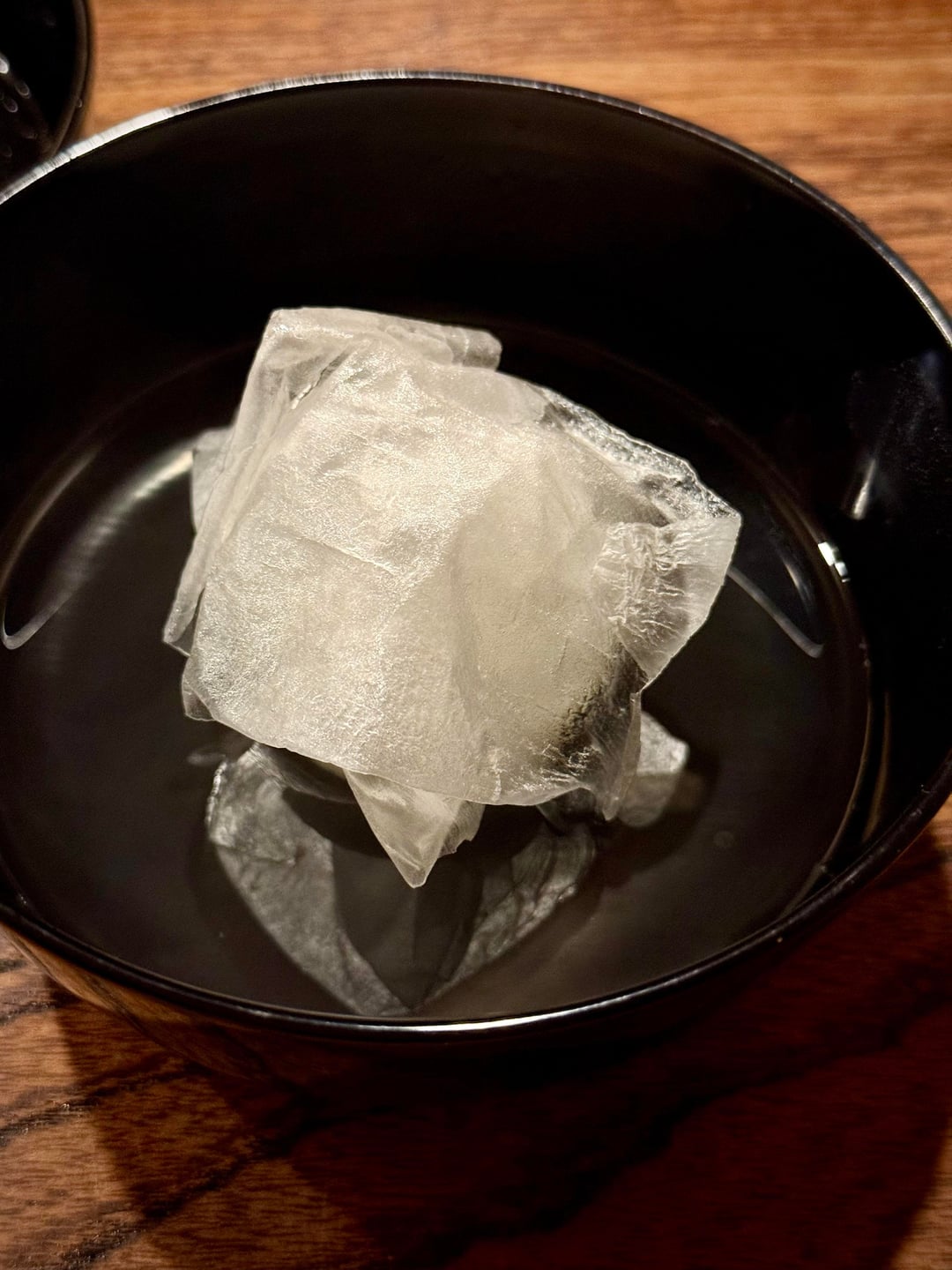
Shintamanegi, Sea Water
– dish has been further refined adding a layer of onion skin on top
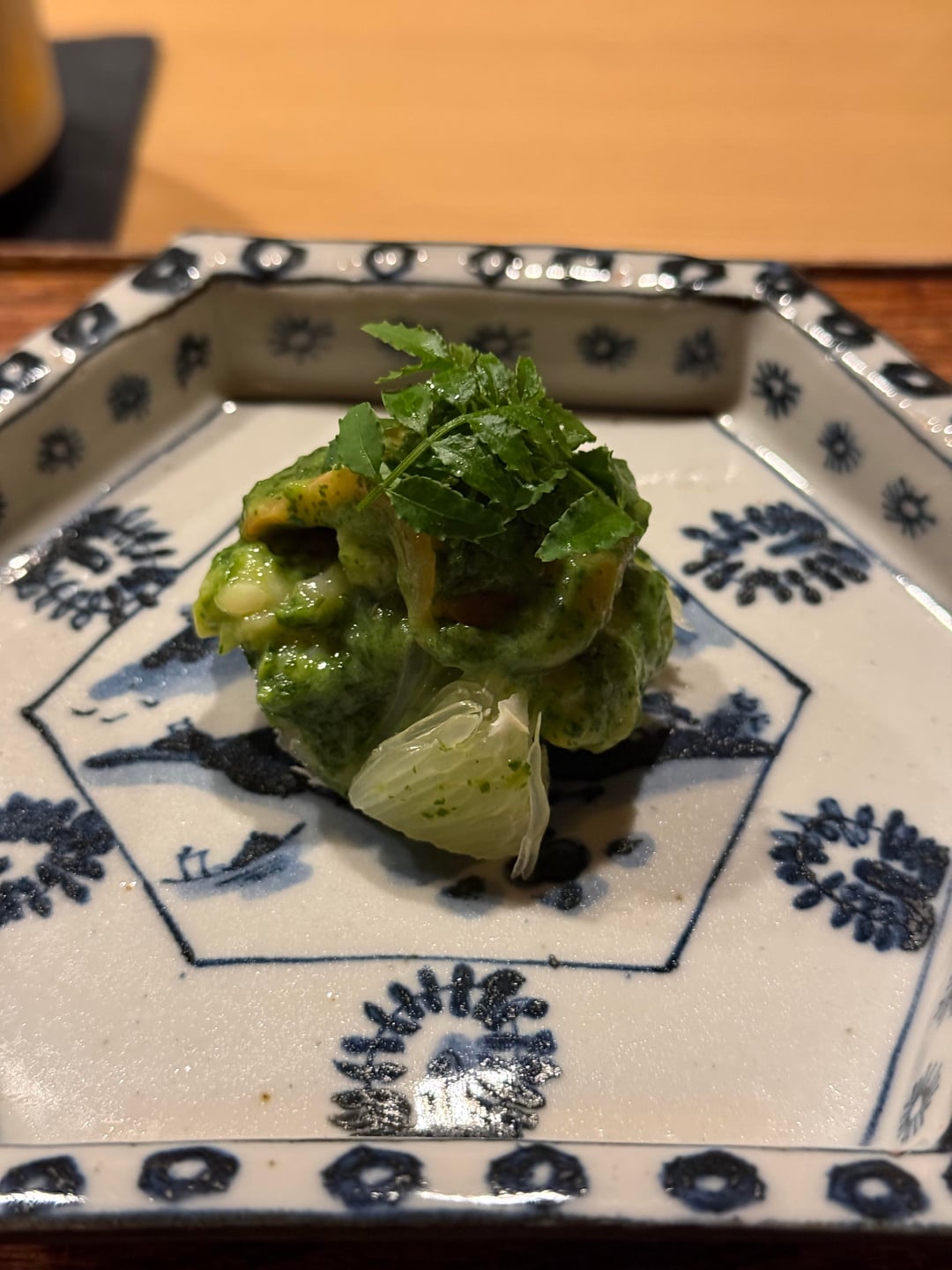
Akagai, Mirugai, Hokkigai, Kinome White Miso, Buntan
Otsukuri Madai (Akashi), Aori Ika
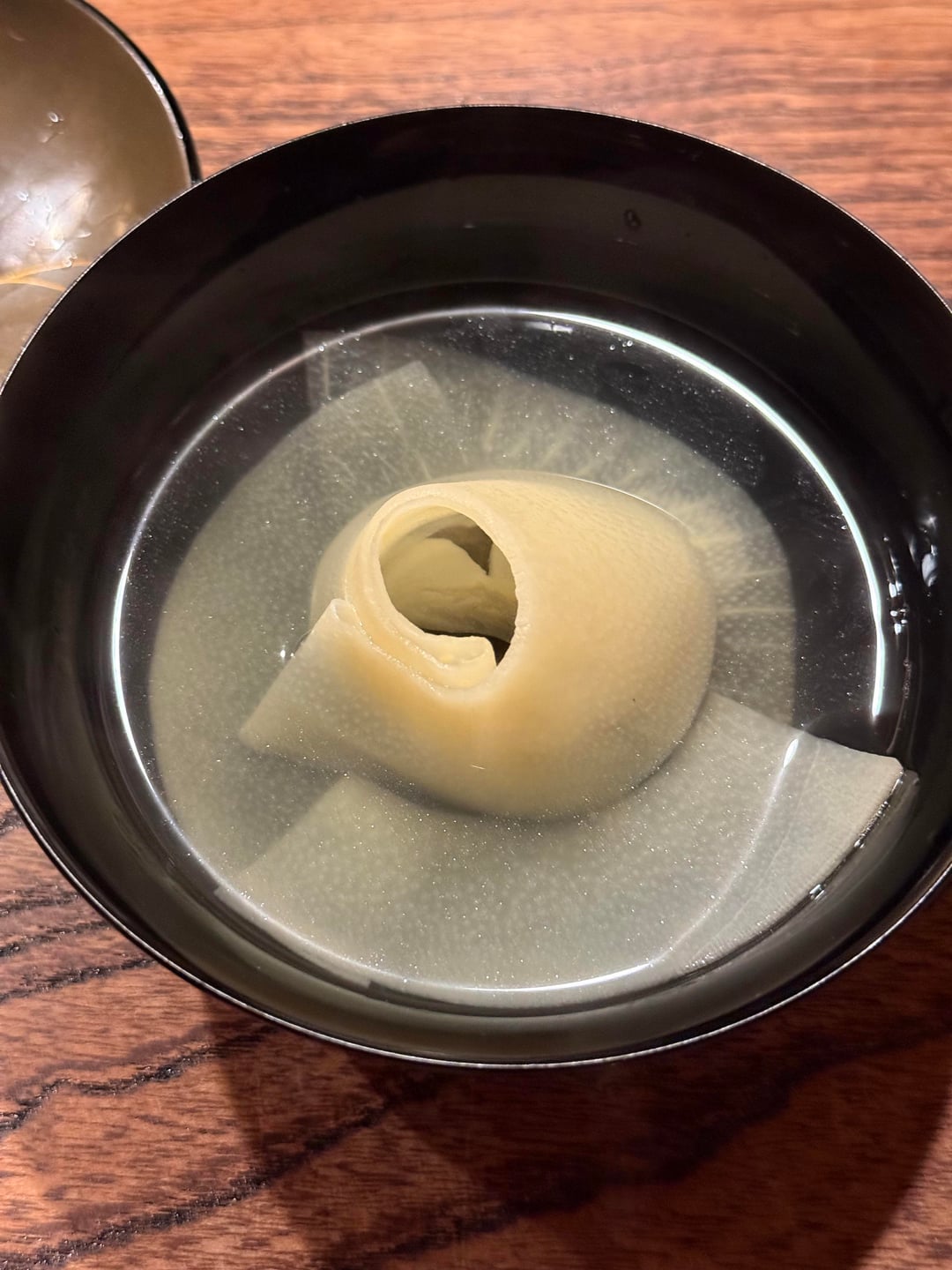
Takenoko, Suppon Owan
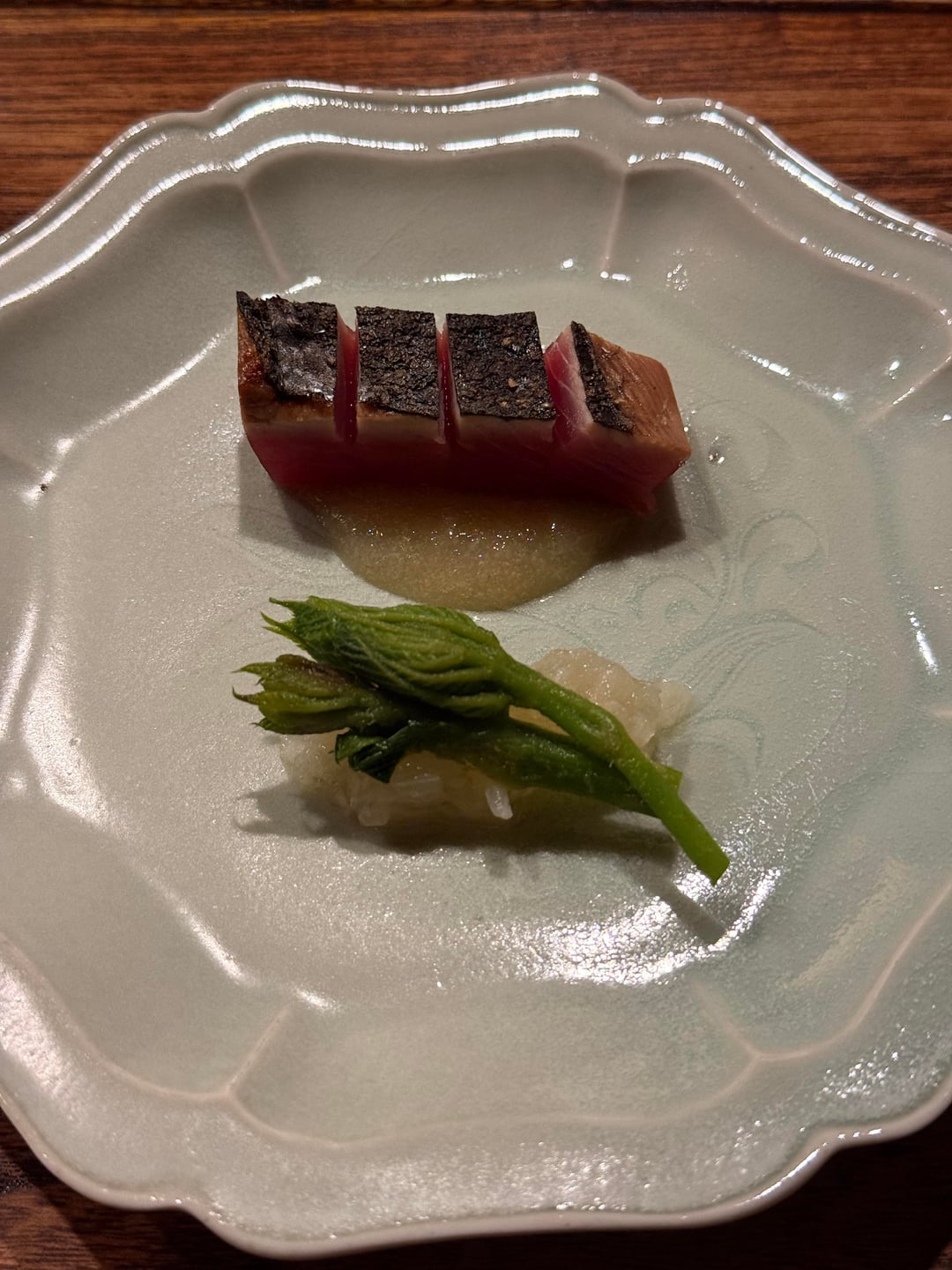
Hatsu Katsuo Warayaki, Udo, Udo Oroshi
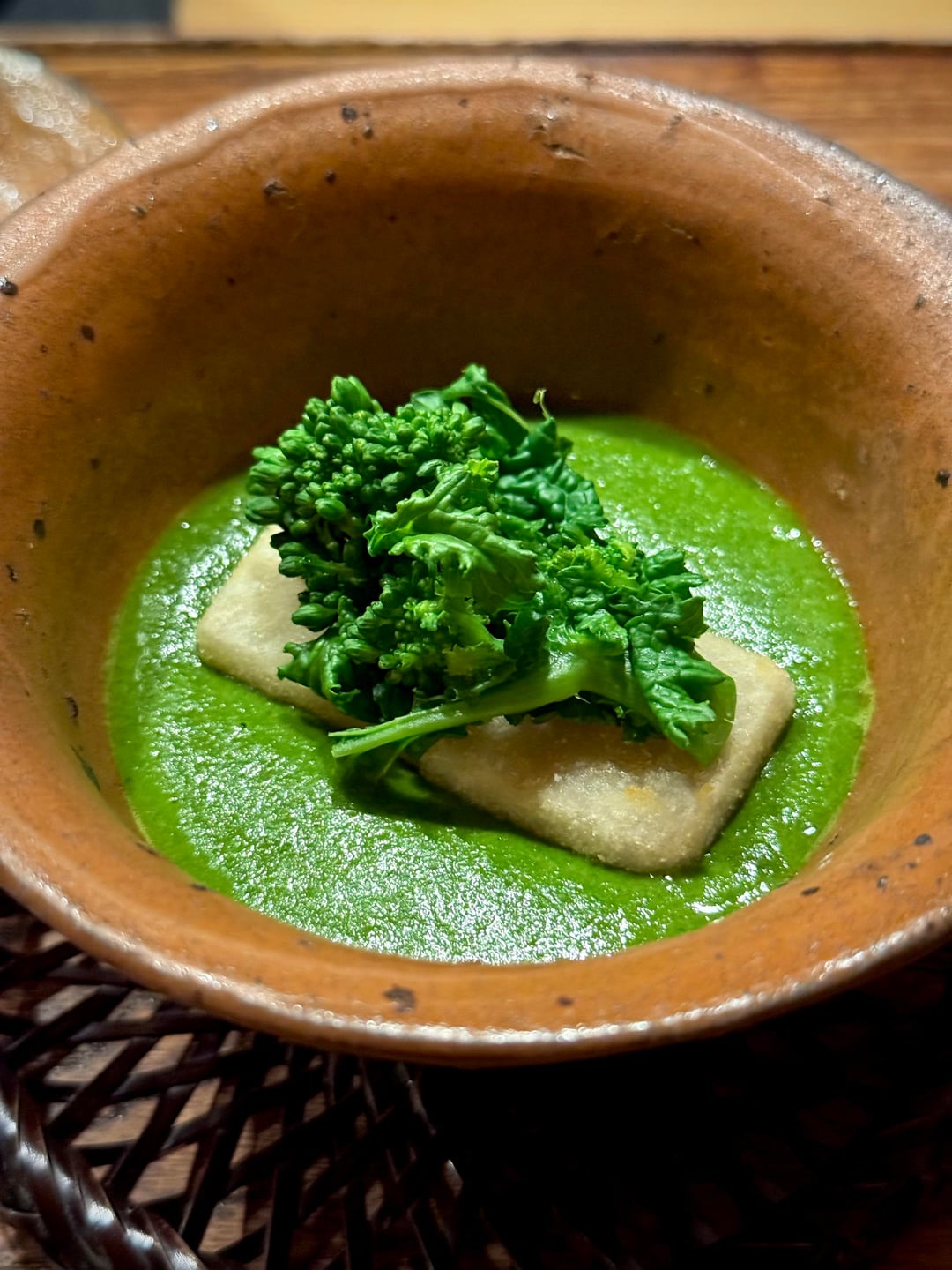
Ebi Imo, Nanohana, Nanohana Surinagashi
Moroko Kinumaki
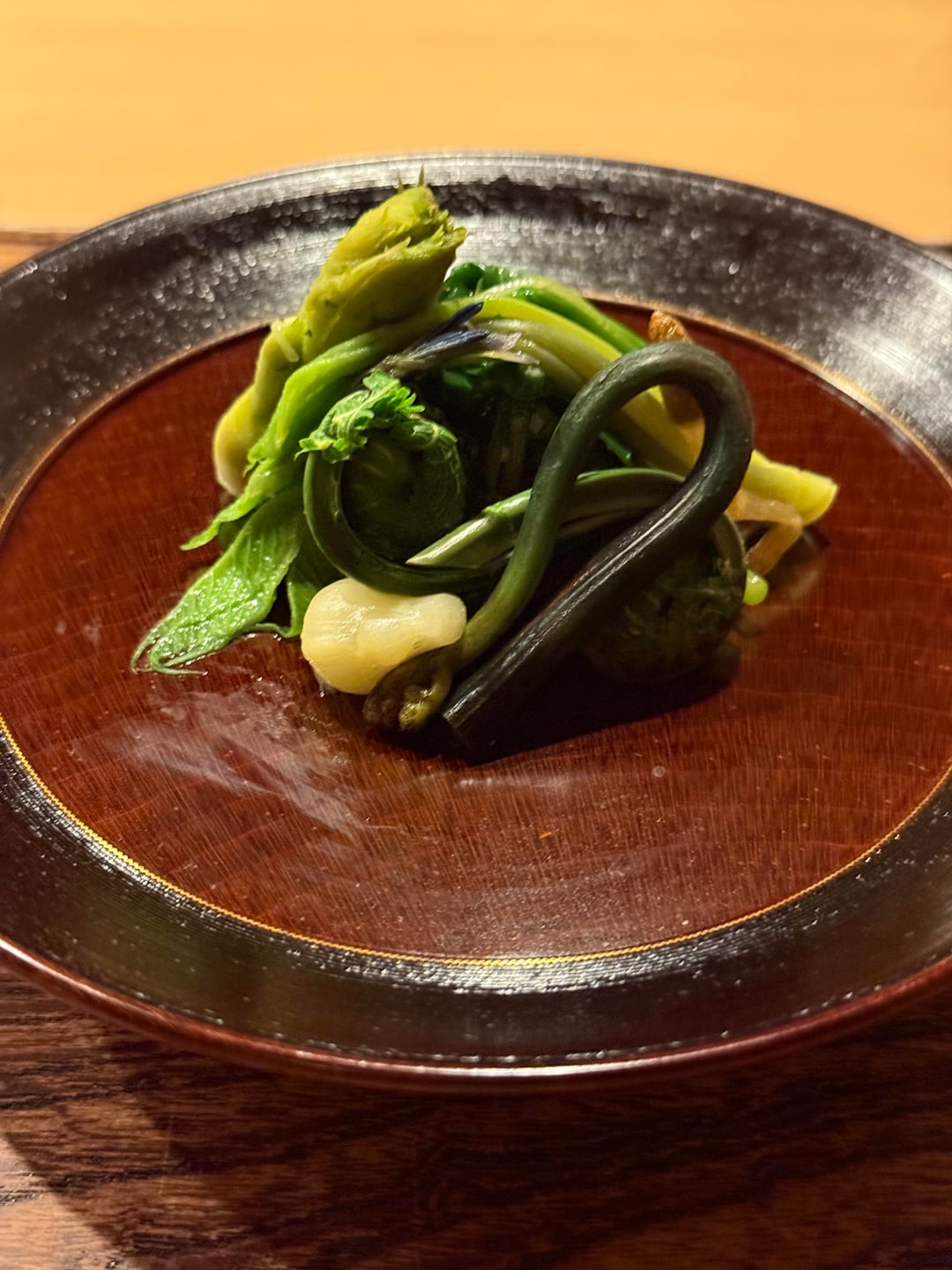
Sansai
– 15 types cooked separately with 10 different dashi
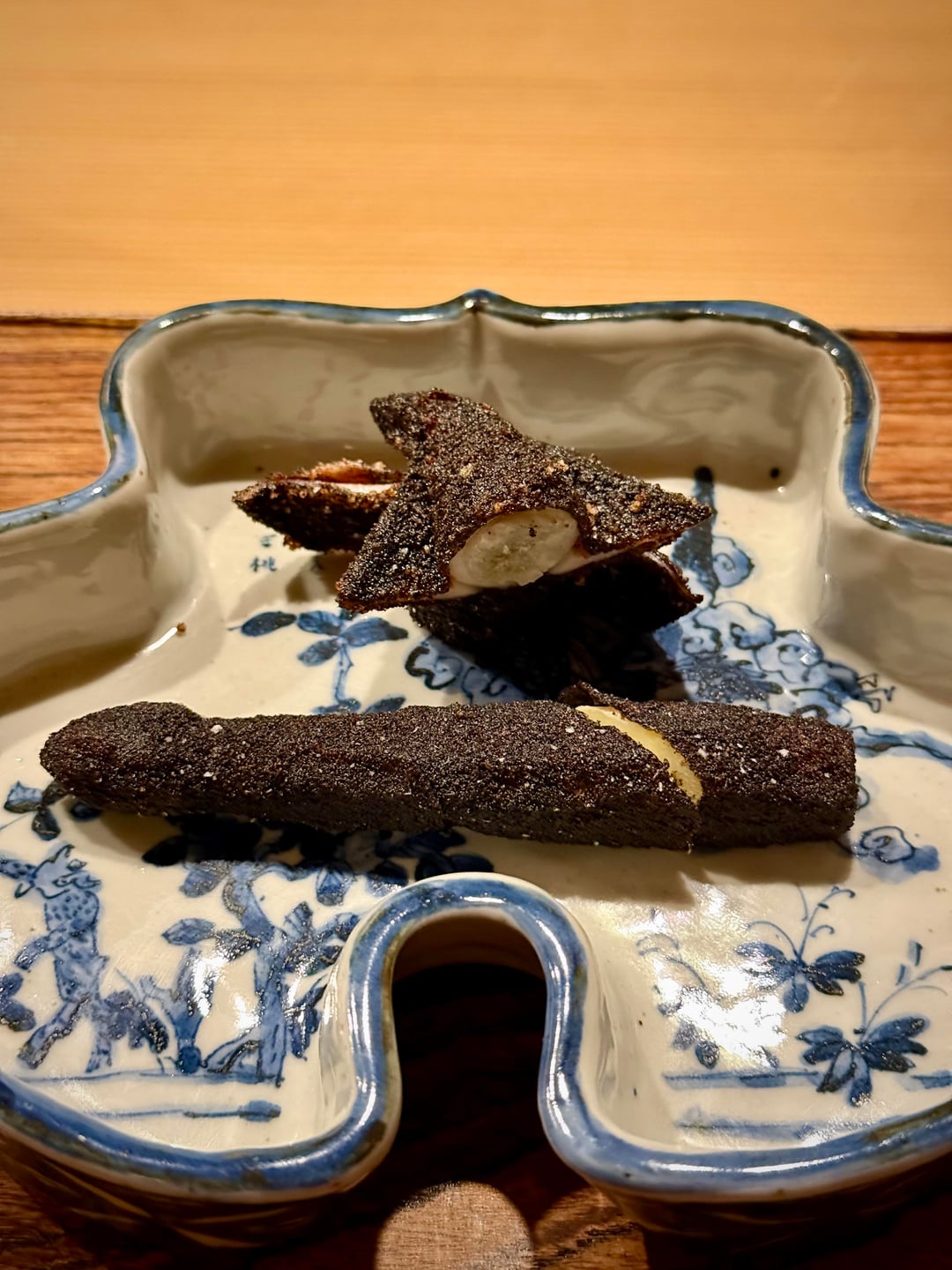
Fried Komochi Yari Ika, Asparagus
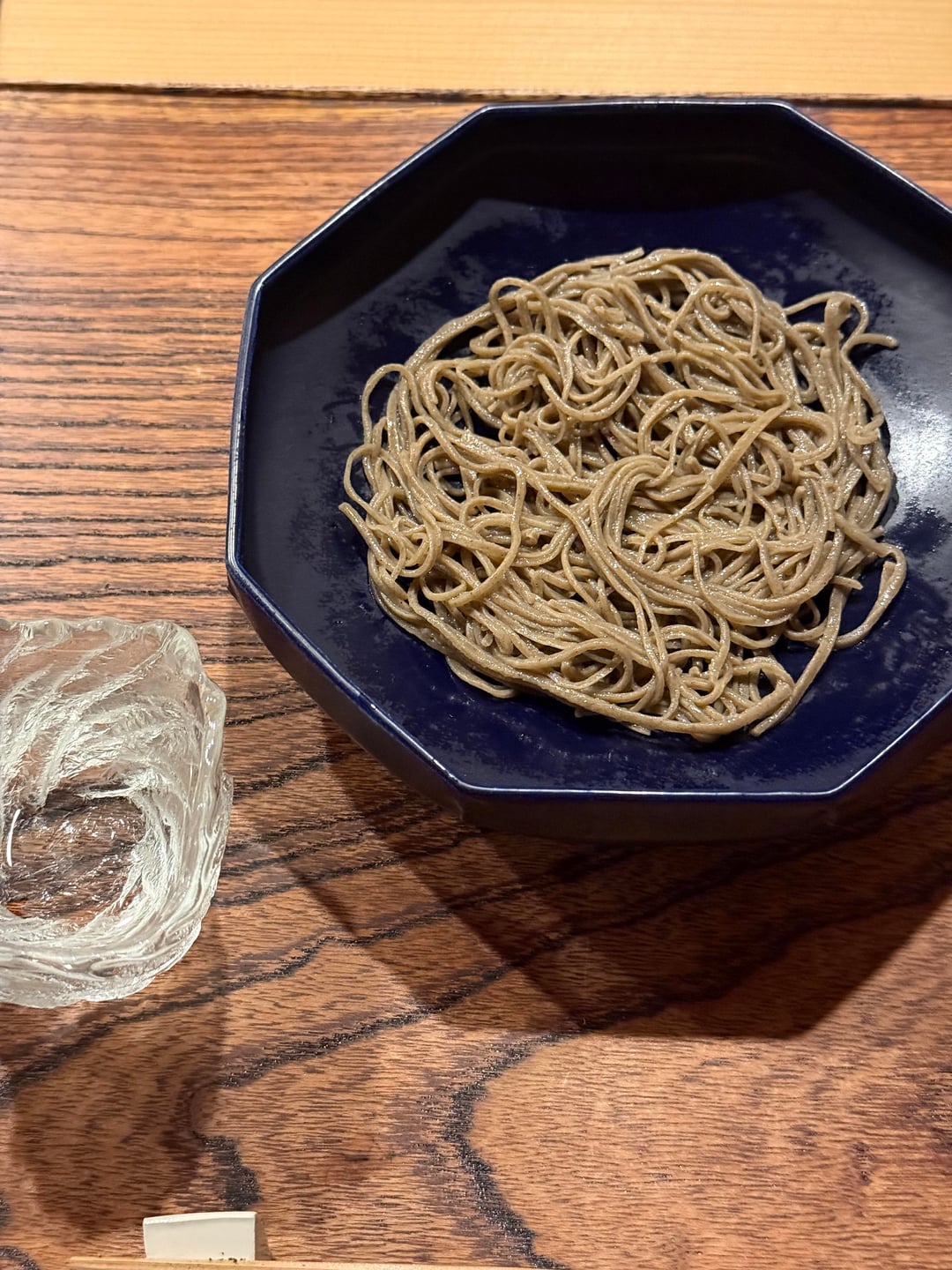
Salt Water Soba
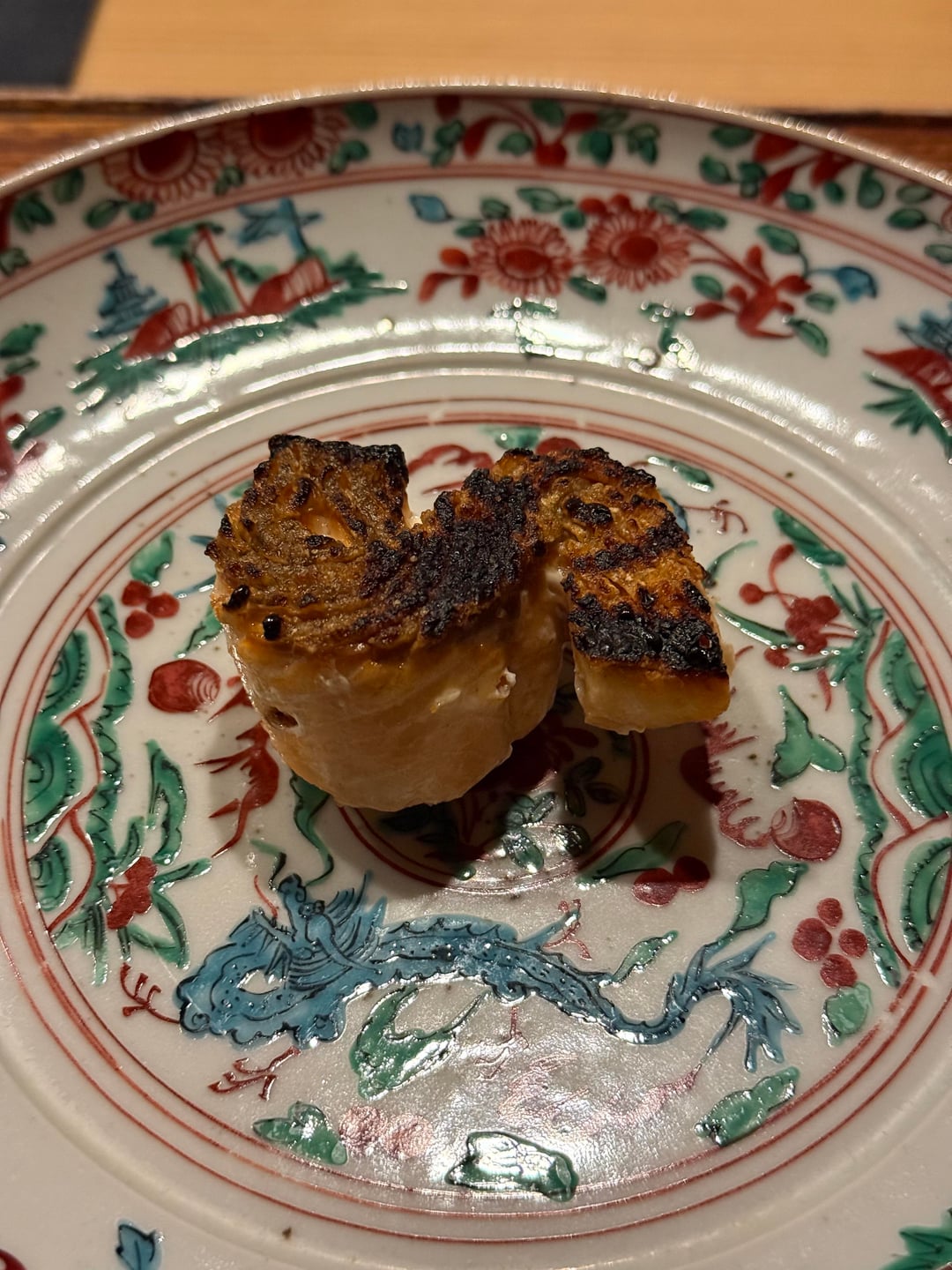
Grilled Sakuramasu
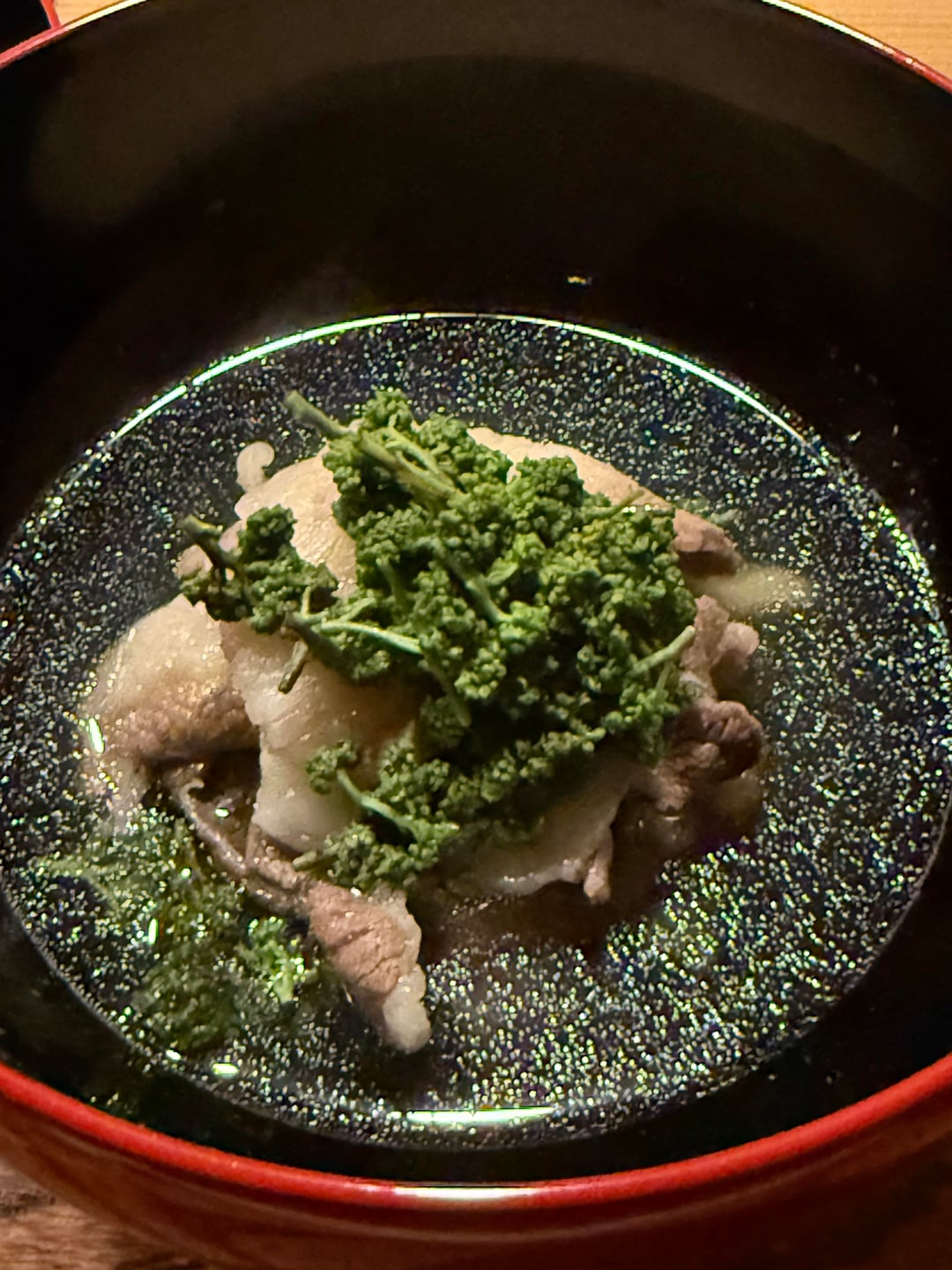
Hanasansho, Kuma
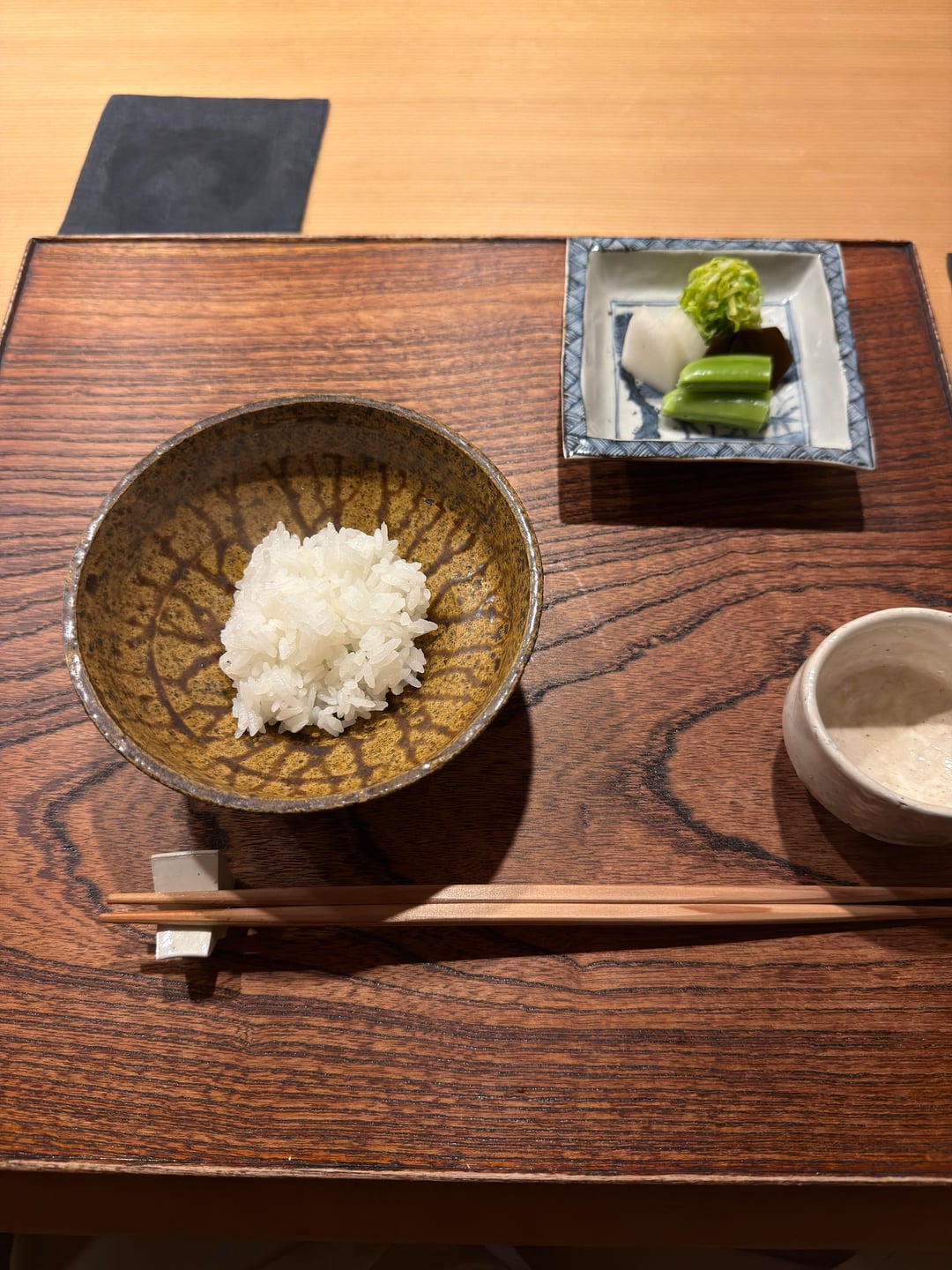
Rice
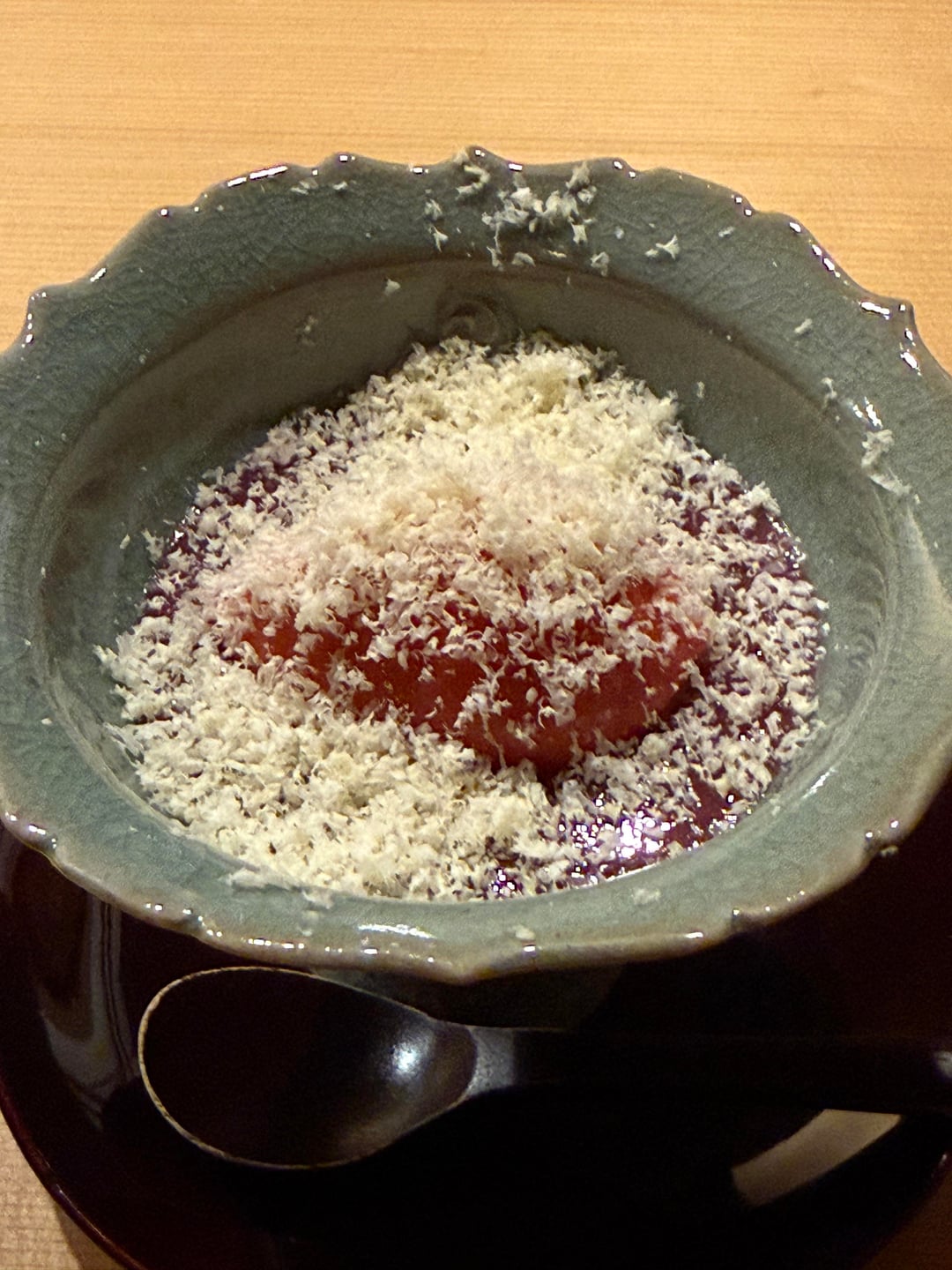
Ichigo Oshiruko, So
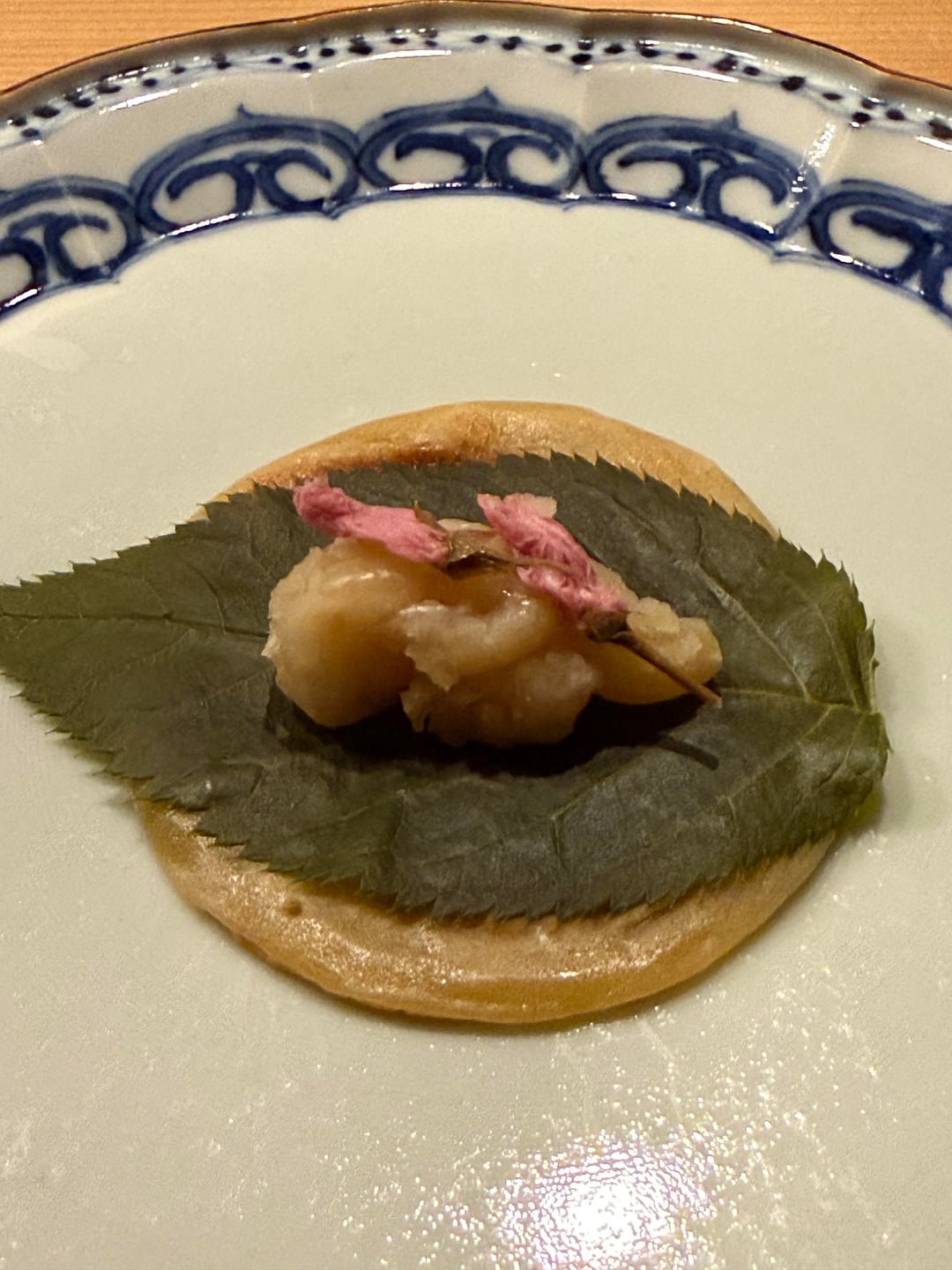
Hoshomaki Sakura Mochi
by DanielfromHK_