
This was my final fine dining stop of the trip, and one I had been looking forward to given its reputation for modern Dutch cuisine with Indonesian influence.
The restaurant is easy to locate, situated next to the Rijksmuseum. Arrival, however, was a bit chaotic. A larger party arrived just before me, followed by additional members of their group who bypassed the host stand and demanded immediate attention. To his credit, the host handled this as best he could and offered me a seat at the kitchen counter (noting they typically reserve it for solo diners), which I gladly accepted.
Sitting at the counter can be a double-edged sword. On one hand, you get a front-row view of the kitchen; on the other, you’re exposed to everything. Early on, the kitchen felt slightly disjointed, in terms of movement and coordination, though it did smooth out as service progressed.
One notable negative: the head chef audibly berated members of the kitchen staff within earshot of guests. This created a genuinely uncomfortable moment and felt unnecessary from both a hospitality and leadership standpoint.
Service timing throughout the meal was inconsistent. There were extended stretches where I was not checked on, and finished plates lingered longer than expected despite a full complement of staff. I opted for the three-course lunch with an added beetroot mille-feuille rather than the full tasting (which I was told would take ~90 minutes). Ironically, the abbreviated lunch lasted closer to 1 hour and 45 minutes, with my first course arriving about 45 minutes after being seated. Meanwhile, a neighboring diner ordering à la carte received dishes in quick succession.
That said, once the food began arriving, the quality nearly made up for the pacing issues.
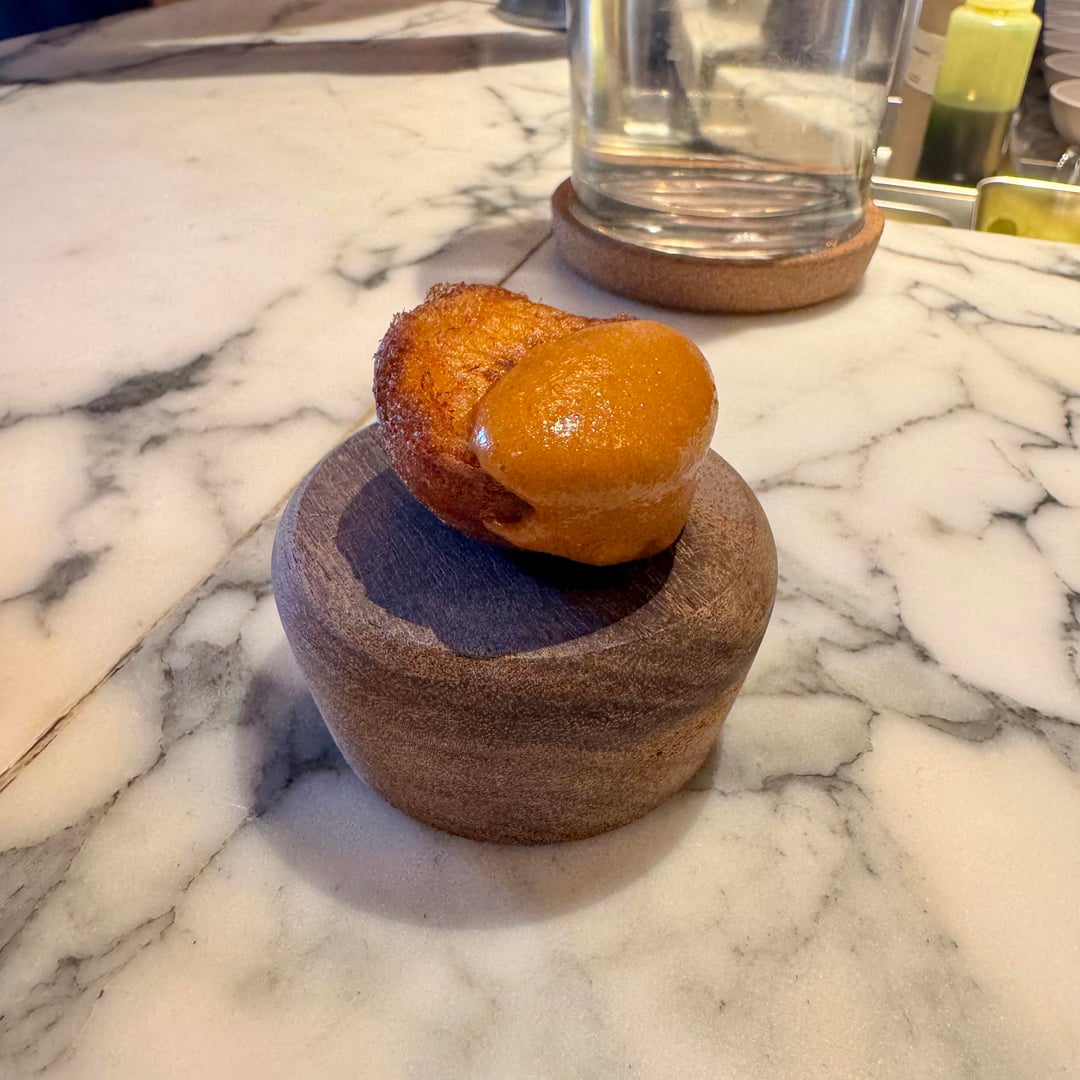
I began with a small bite from the snacks menu: a fried plantain with peanut and chili sauce, drawing on Surinamese influences. It was a concise but expressive opener: sweet, savory, and lightly spiced, with just enough heat to awaken the palate. More than anything, it served as an early indication of the kitchen’s point of view, hinting at the bold, globally influenced seasoning that would carry through the meal.
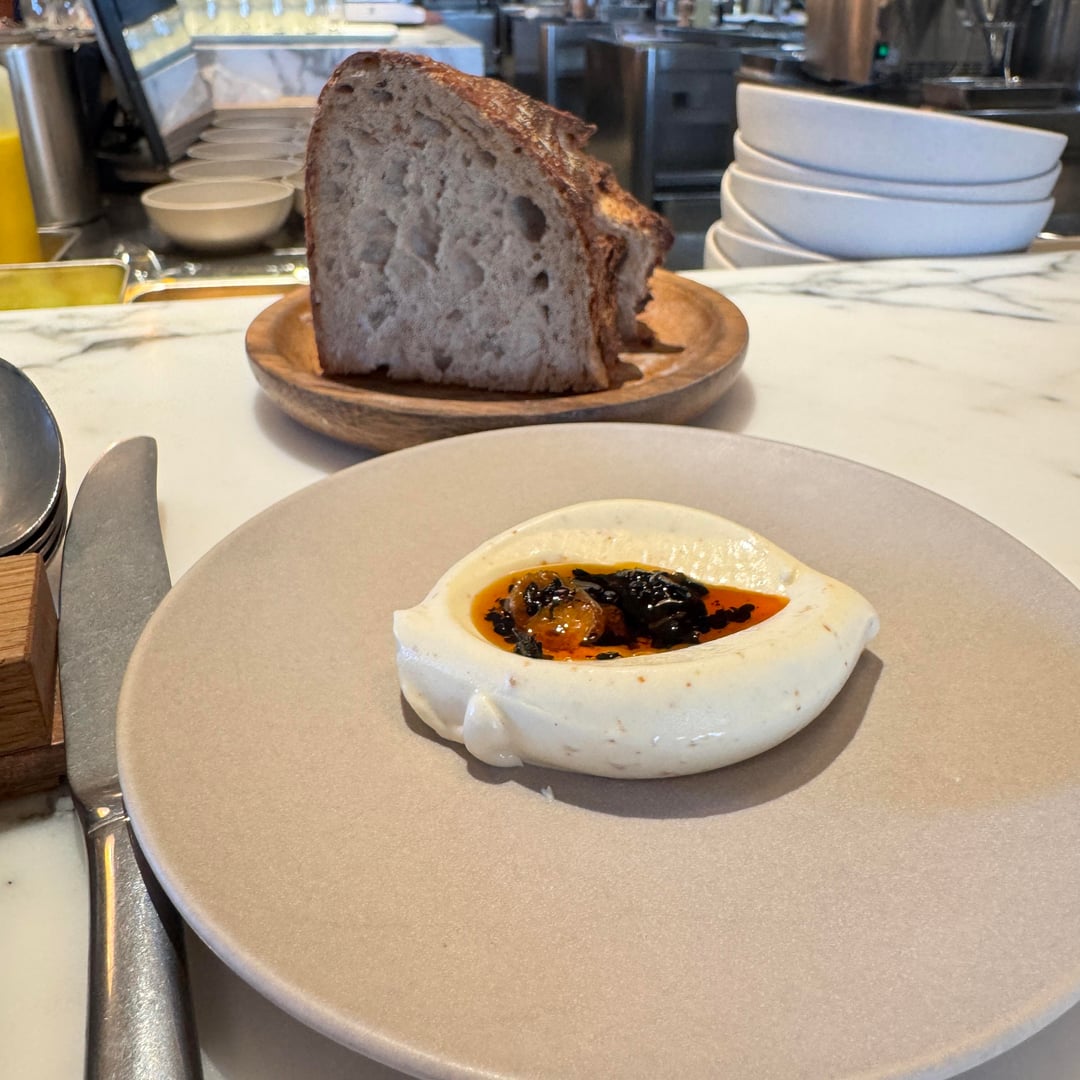
The meal opened with excellent sourdough and an impossibly smooth whipped butter accented with smoked paprika oil: earthy, rich, and a strong signal of the kitchen’s point of view.
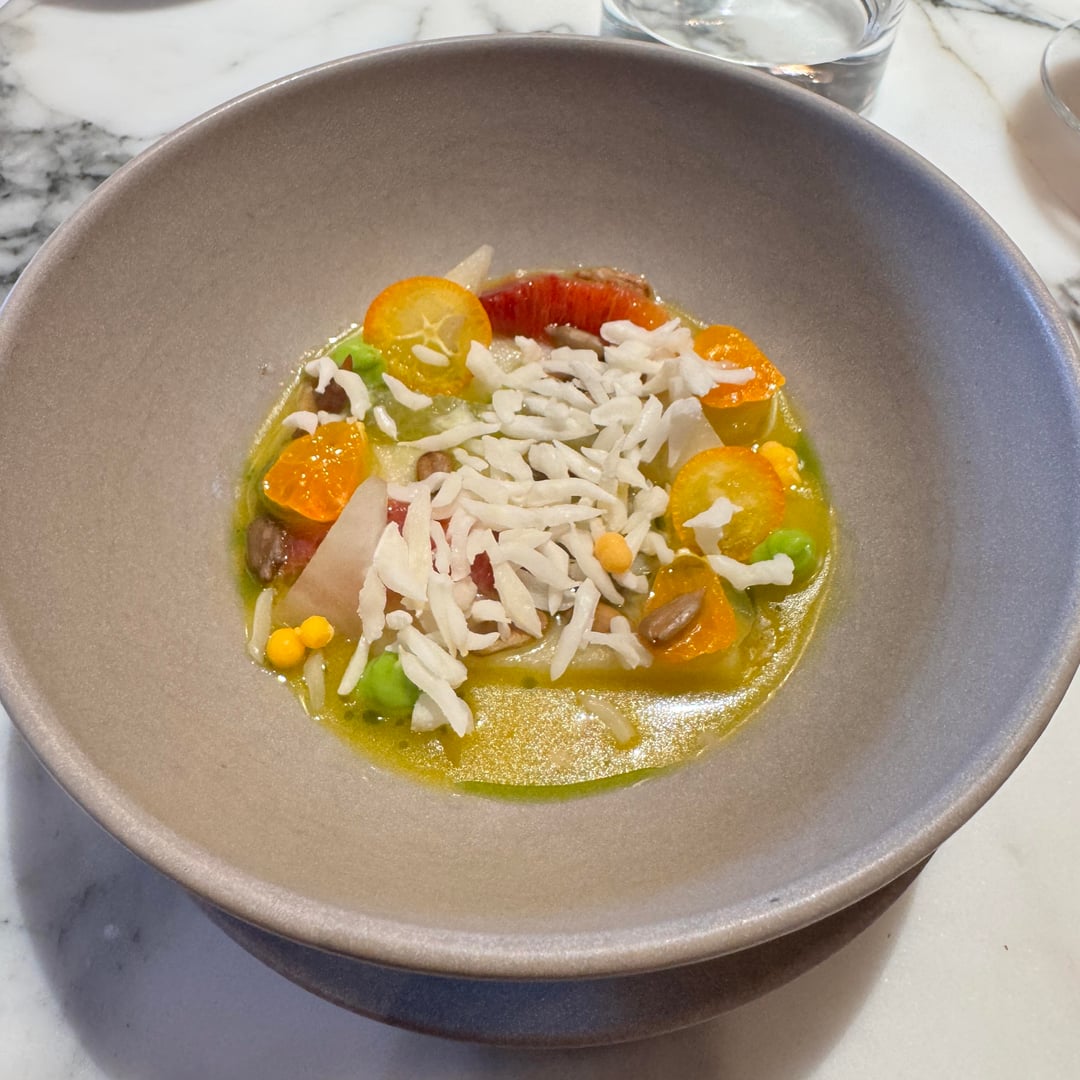
The citrus salad (with ajo blanco and aji amarillo) was bright and layered. There was a touch of modernist technique in the form of small aji amarillo pearls, but didn’t feel gimmicky. The contrast between frozen and fresh elements worked particularly well, adding both texture and temperature variation.
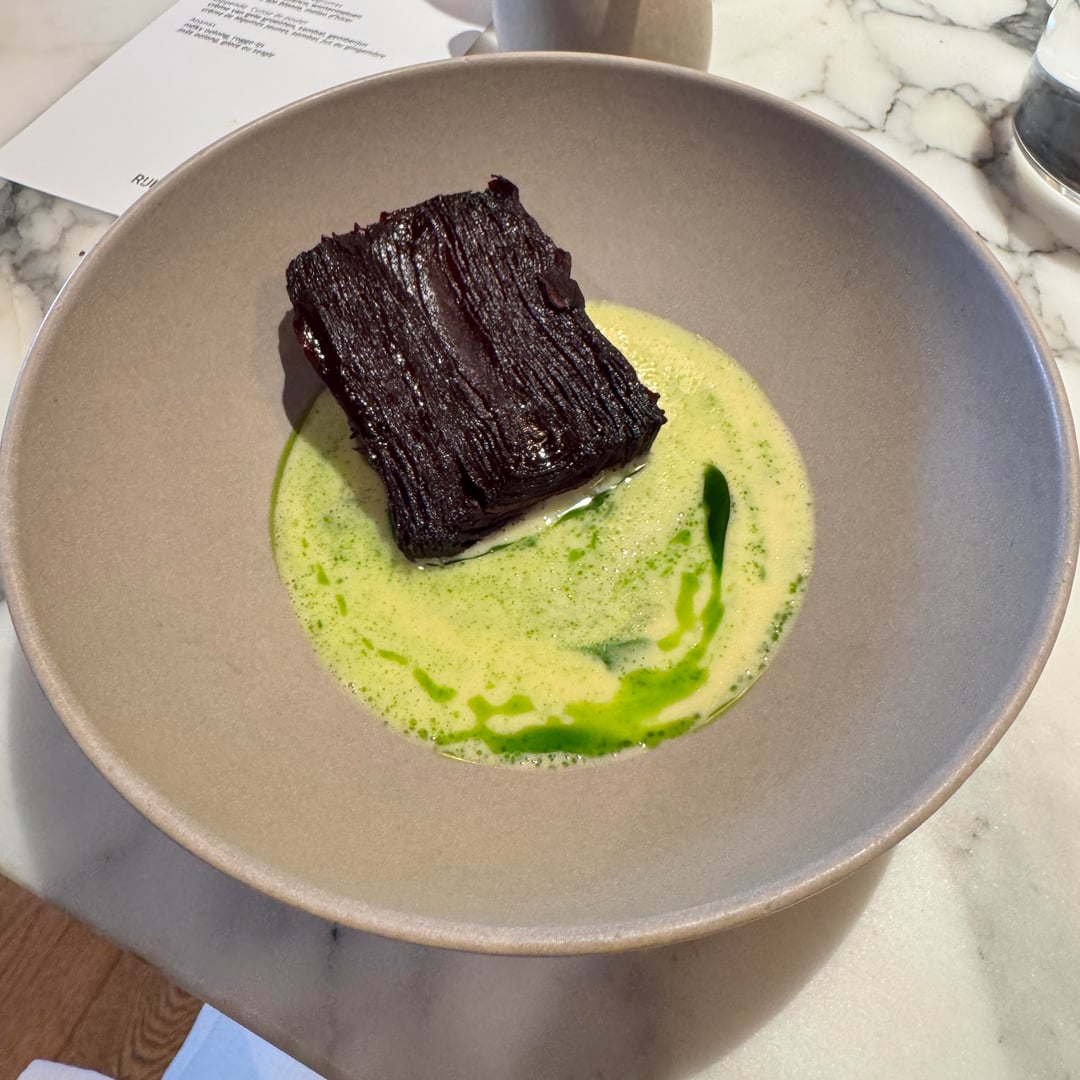
I added the beetroot mille-feuille, which turned out to be one of the highlights of the meal. Visually simple, but technically impressive: countless thin layers of beetroot compressed into a structure reminiscent of a savory lasagna. The long cooking concentrated the flavor while maintaining a tender, slightly toothsome texture. Paired with a luxurious beurre blanc, the dish excelled in both flavor and mouthfeel.
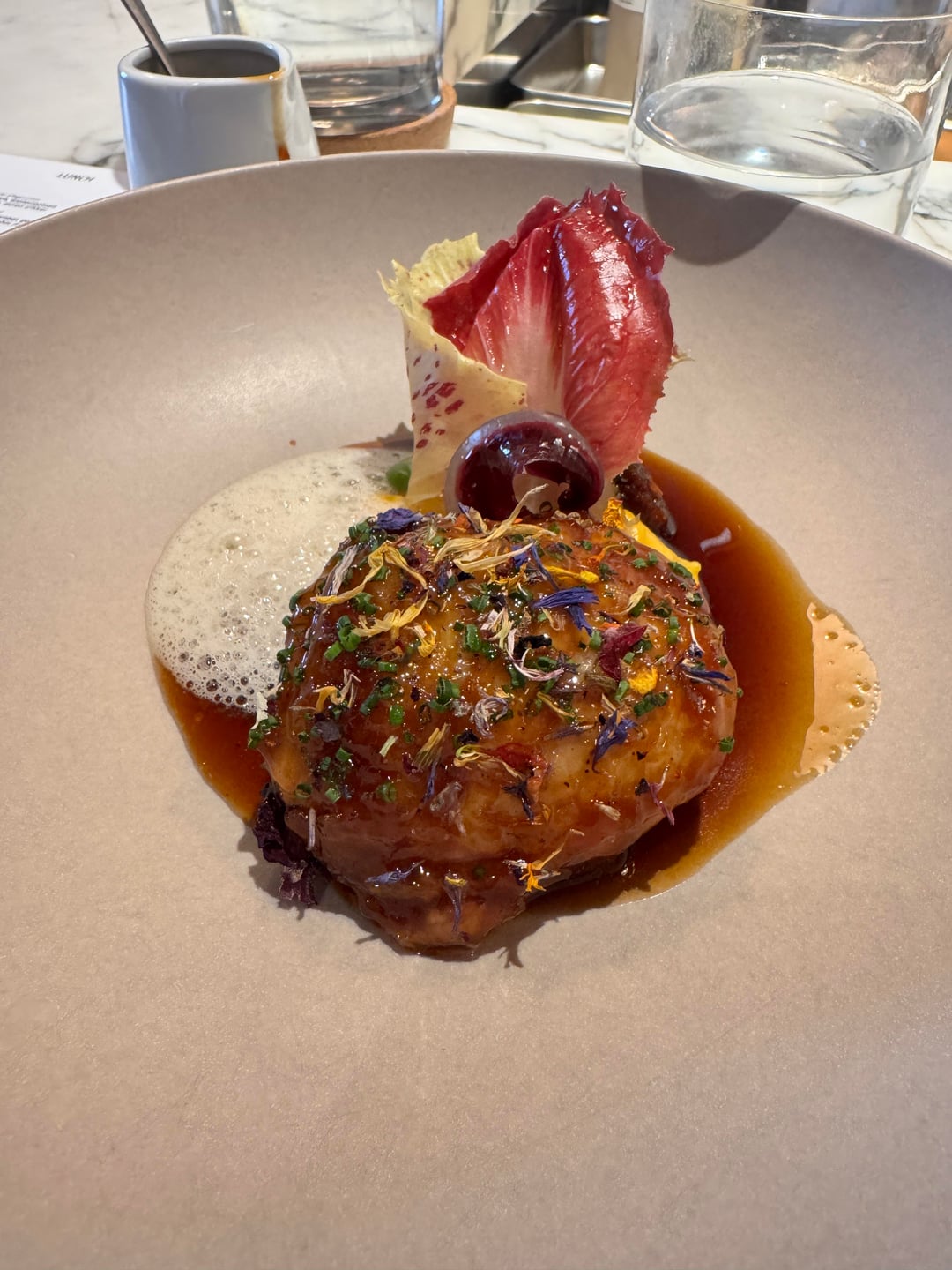
The main, a chicken leg with vegetables, sambal, and a ginger-forward jus, was another standout. The bird was cooked perfectly, with delicately rendered skin that practically melted. Across the savory courses, there was a consistent through-line of assertive yet controlled spice. The kitchen clearly isn’t afraid of bold seasoning, but it remains balanced.
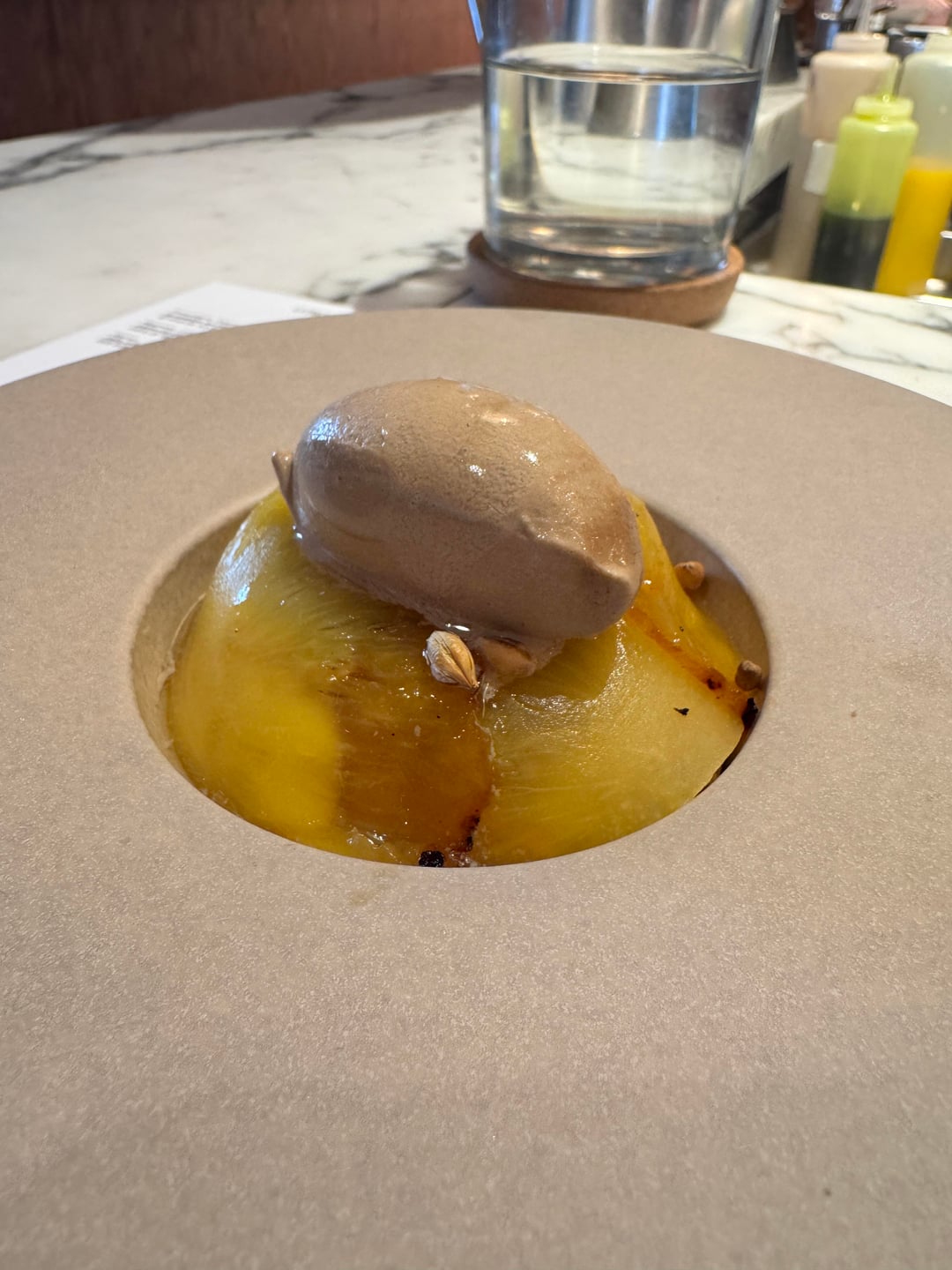
Dessert, however, was less cohesive. A combination of roasted pineapple, oolong tea mousse, and rye ice cream, the components were individually enjoyable but didn’t fully come together as a unified dish. I found myself deconstructing it into separate bites rather than experiencing it as a whole.
Overall, I found the food at RIJKS to be genuinely impressive: vibrant, well-executed, and full of flavor. The arc of the meal was thoughtfully constructed, and several dishes stood out as memorable. However, the inconsistent pacing and visible moments of dysfunction in the kitchen detracted meaningfully from the experience.
I’m not sure I would return given those service elements, but from a purely culinary perspective, it was a strong and flavorful way to close out the fine dining portion of my European trip.
To end my time in Amsterdam, I had dinner at Moeders in the Jordaan: a completely different experience, but equally satisfying.
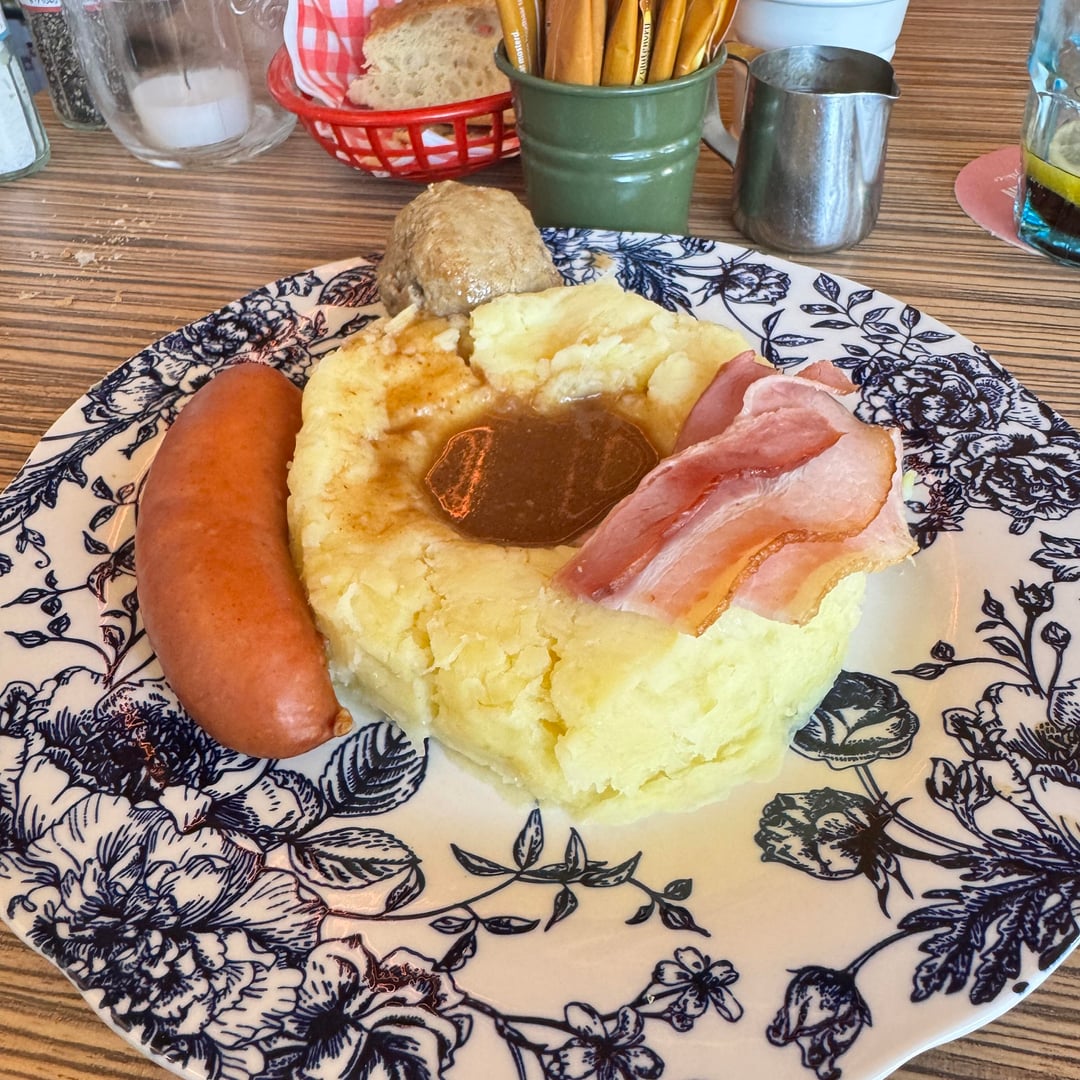
I walked in without a reservation and was seated immediately. I started with a pea soup loaded with bacon and sausage, followed by stamppot (last pic in the slide show): mashed potatoes mixed with sauerkraut, served with meatball, bacon, sausage, gravy, and mustard.
It was rustic, hearty, and deeply comforting. Not refined, not technical: just well-executed traditional food in a warm, lively setting. I couldn’t finish the potatoes, but it was a perfect, grounding way to end my first visit to Amsterdam.
Highly recommended, for entirely different reasons.
by djquinnc