
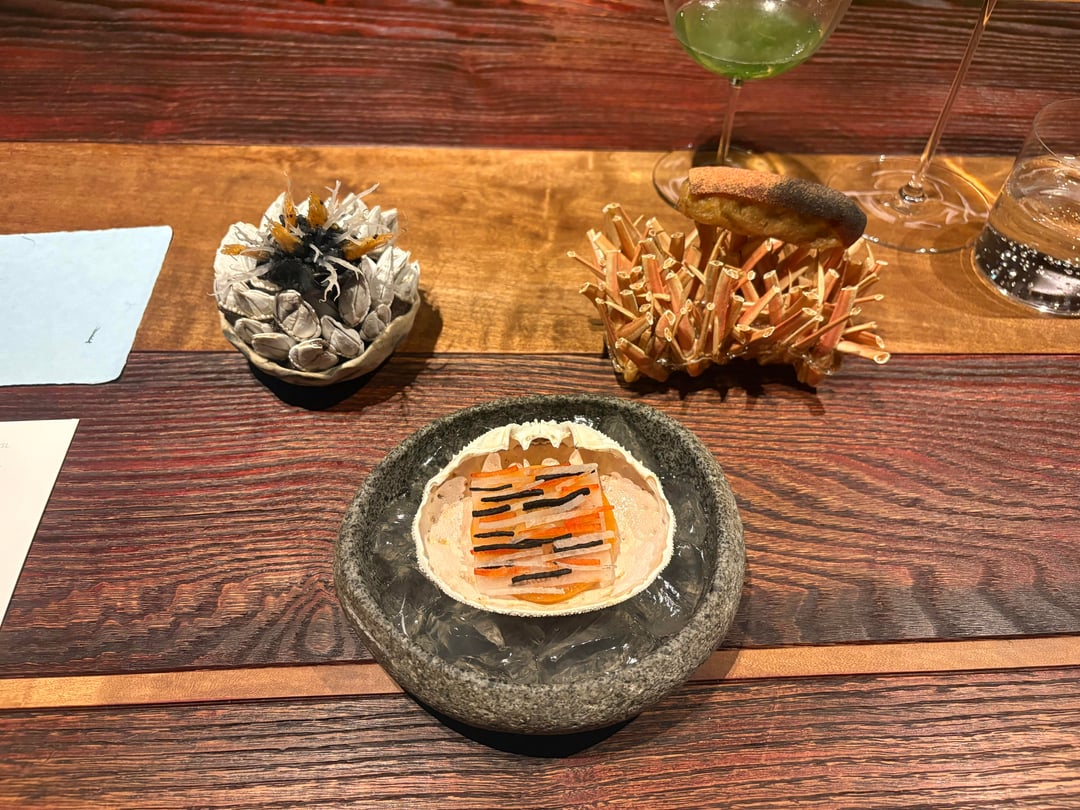
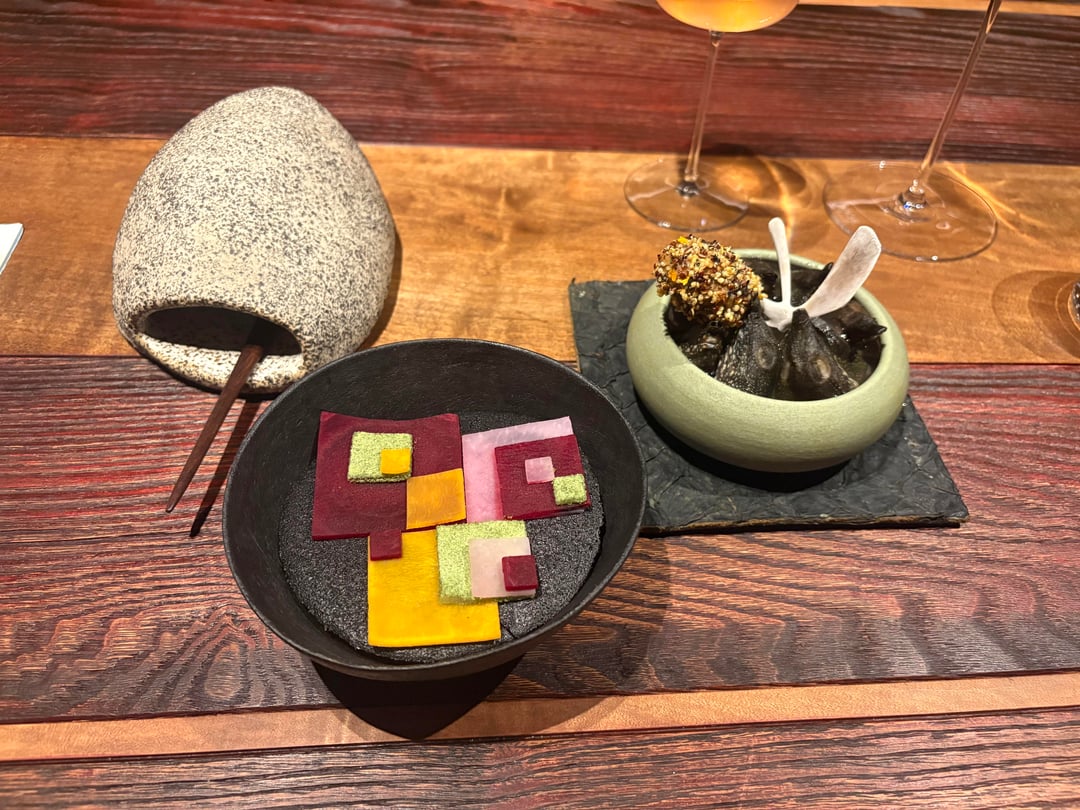
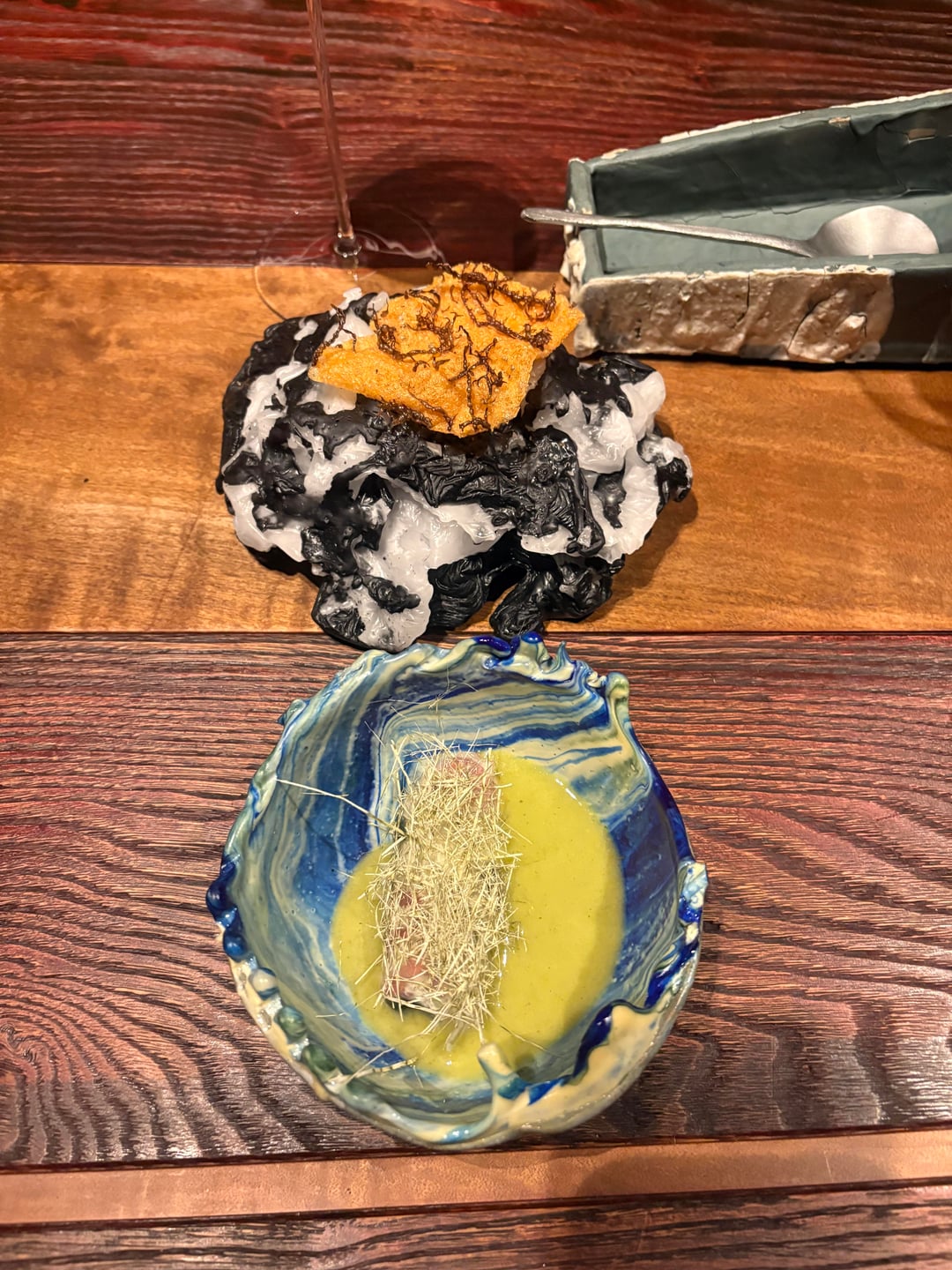
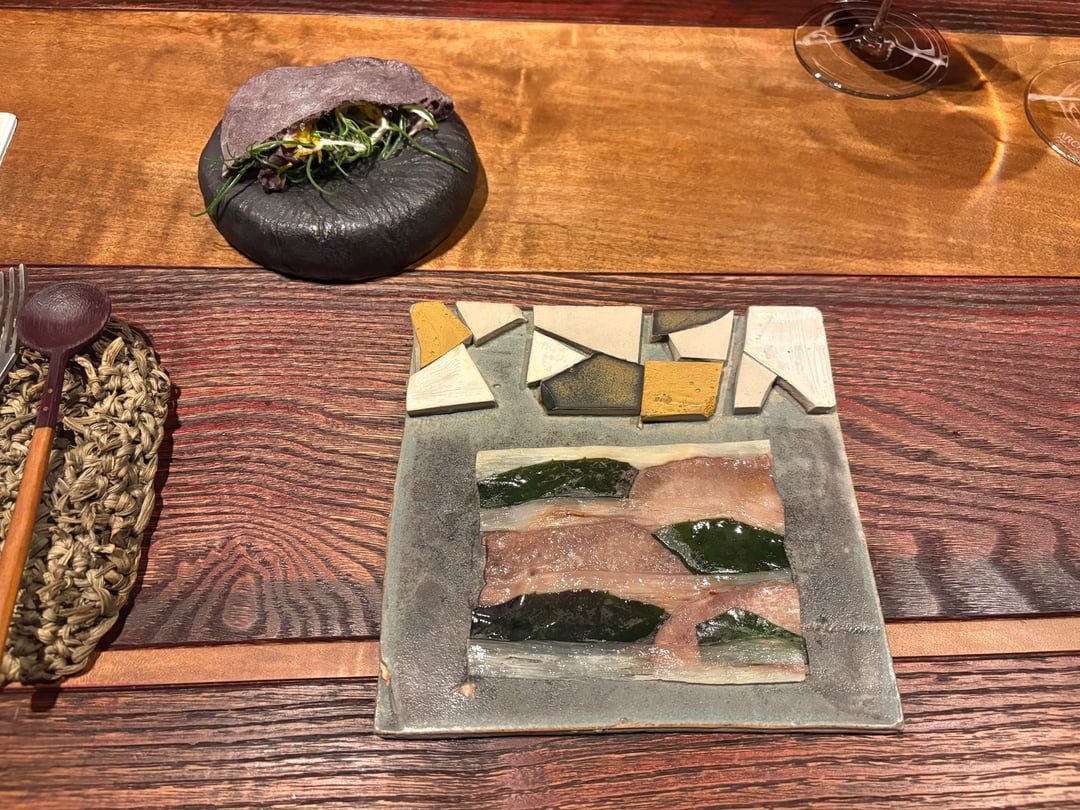
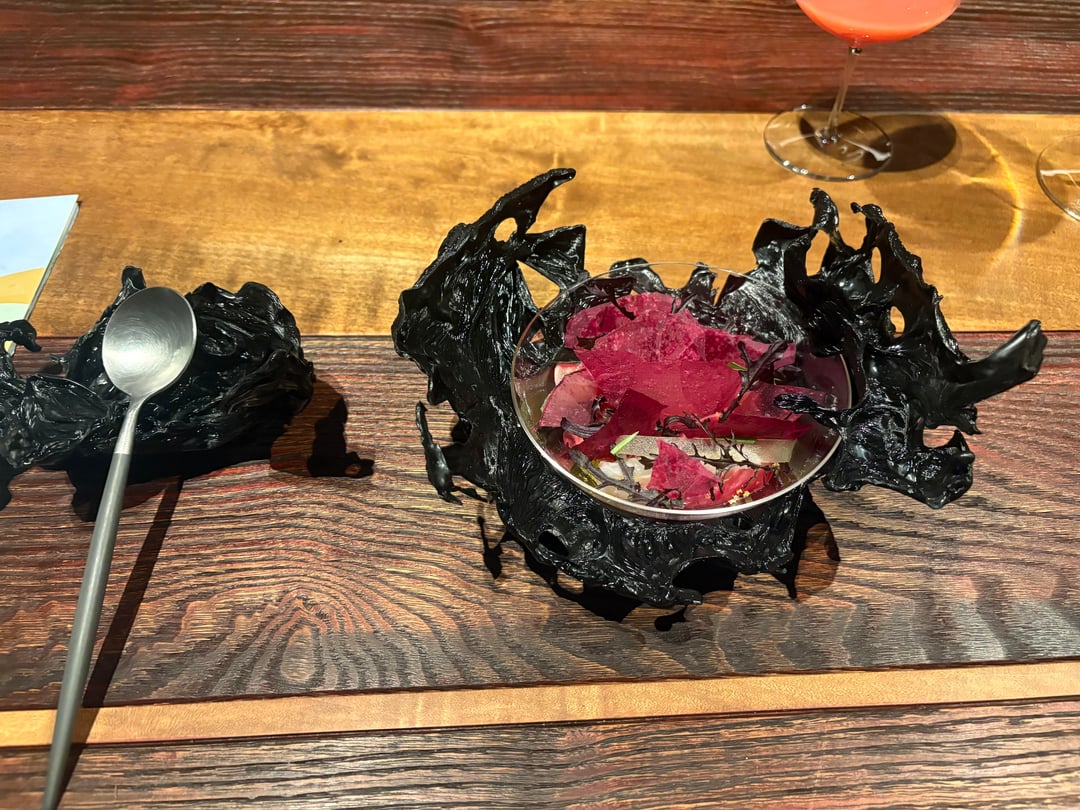
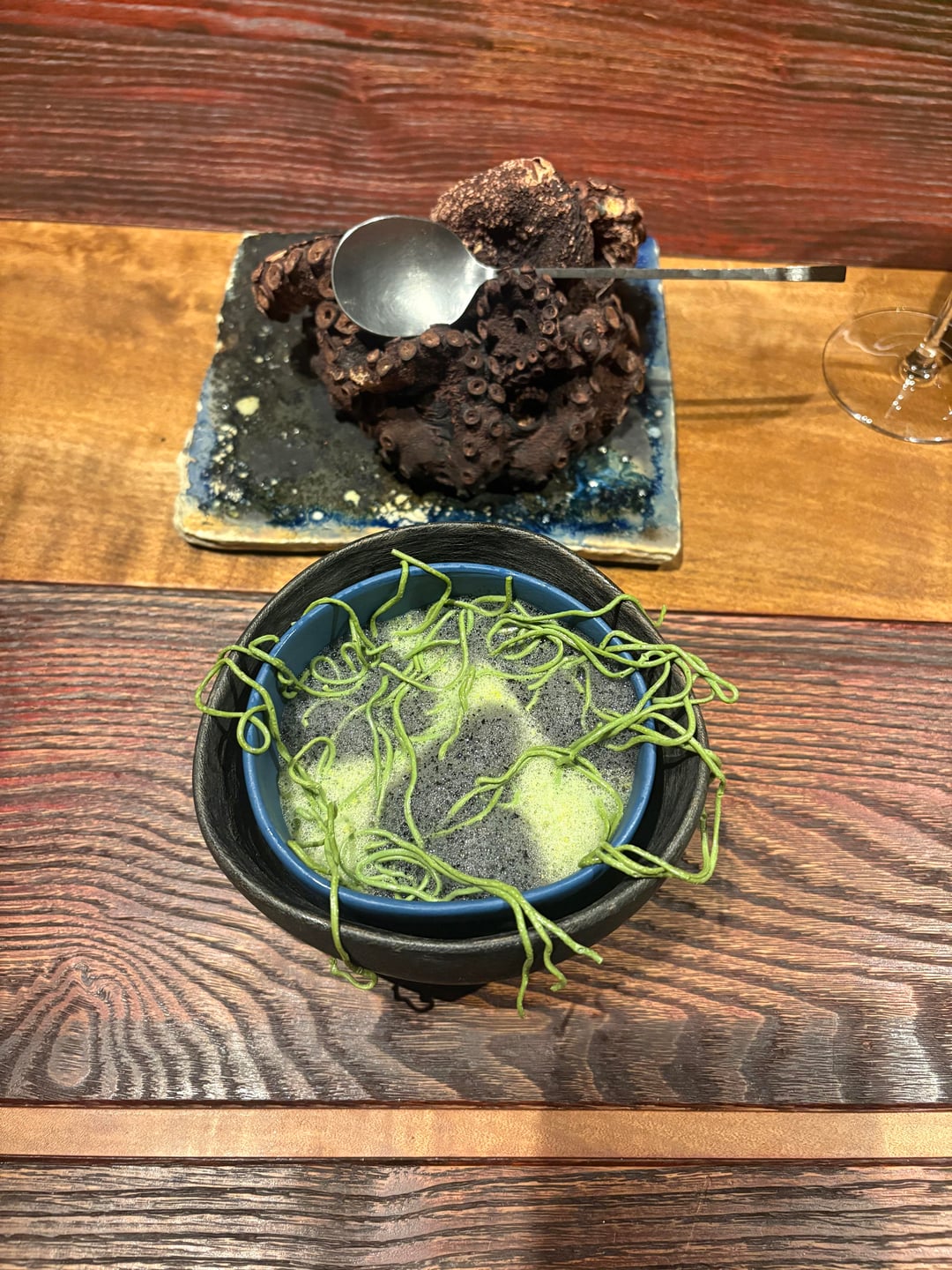
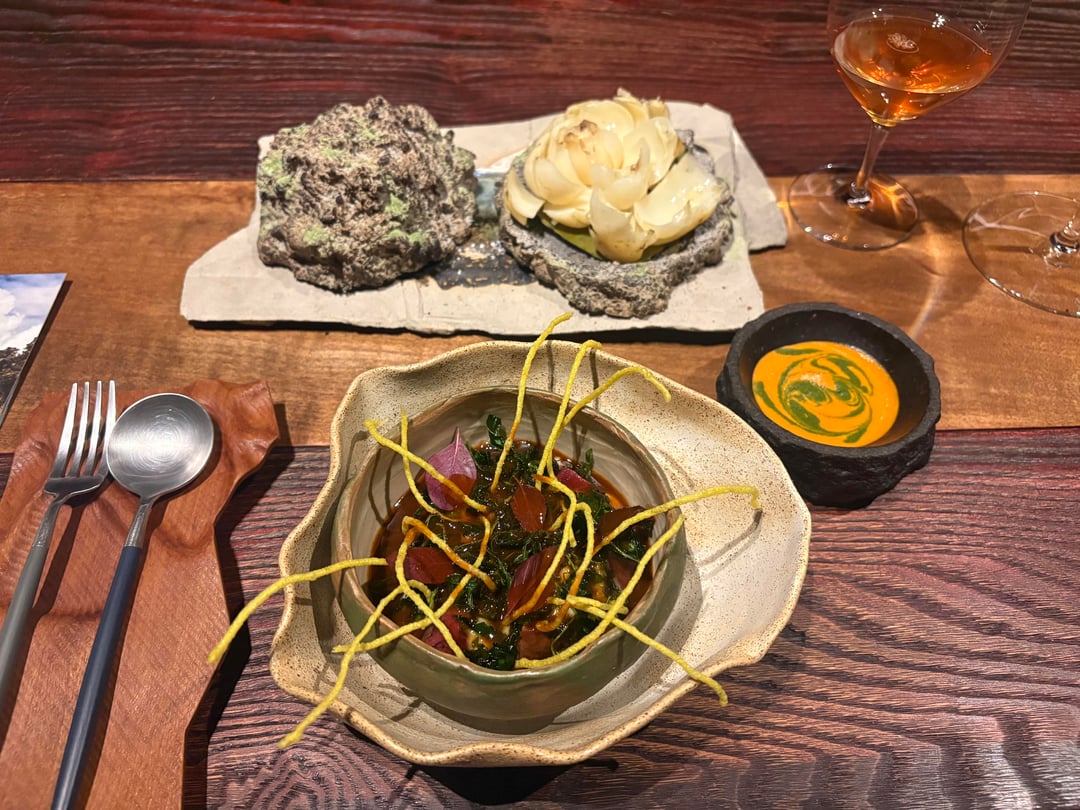
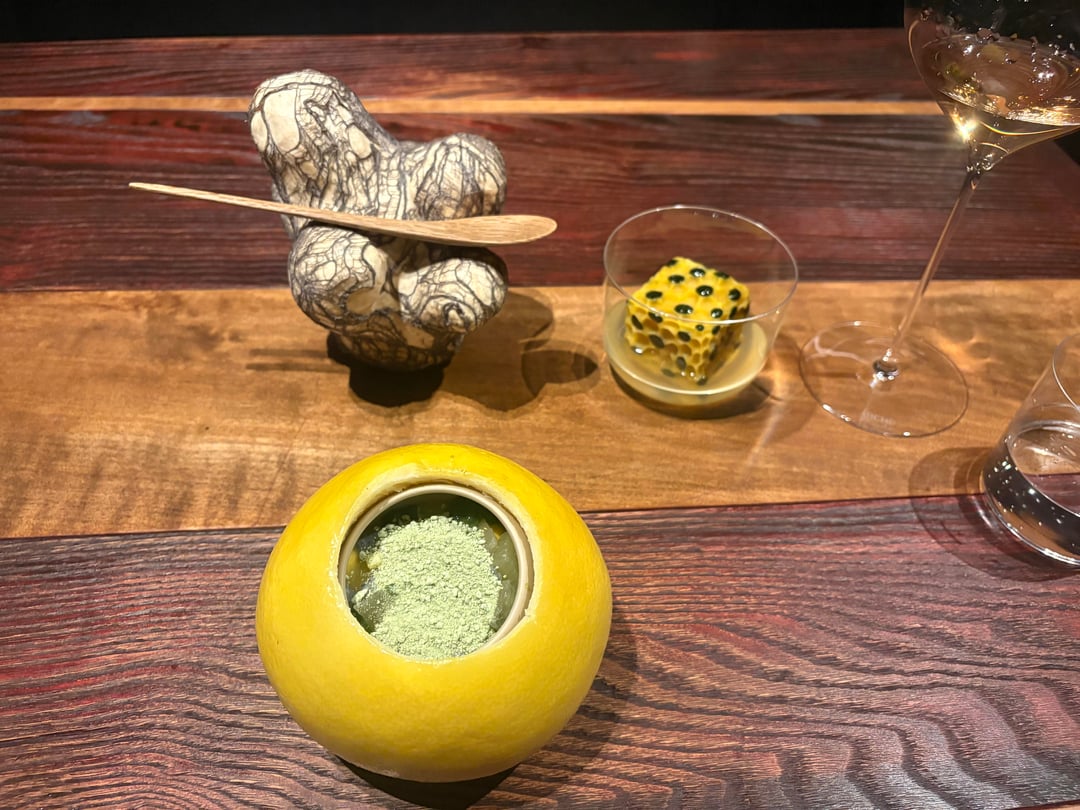
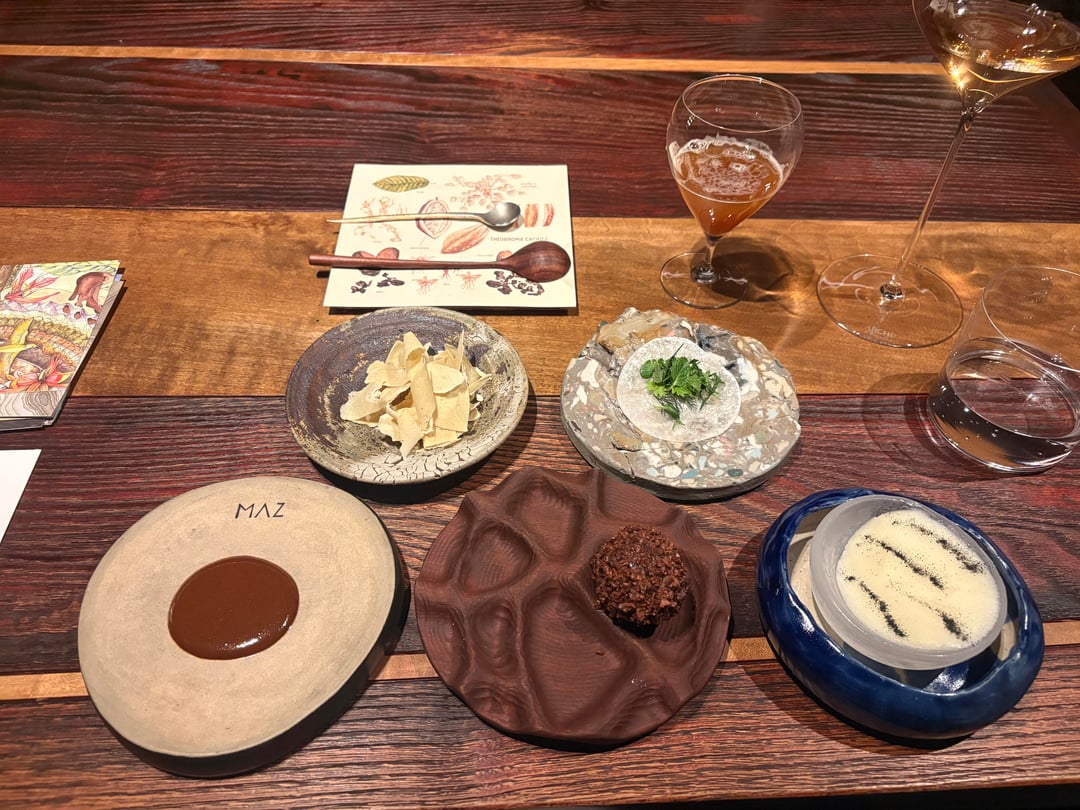
I had no prior exposure to Peruvian cuisine and knew virtually nothing about it. Peru also feels like an overwhelmingly distant destination for me, so when MAZ first opened, before it had received any Michelin stars, it was already a restaurant I had long wanted to experience.
I found the meal to be a highly complete experience. From the opening introduction of the restaurant’s philosophy and ingredients, to the design of the tableware, the staff’s explanations throughout the meal, and even the background music, there was little to fault. The experience successfully detached me from the feeling of being in Tokyo and transported me into an unfamiliar world, inviting a sense of curiosity and challenge toward new flavors. In this respect, MAZ clearly distinguishes itself among Tokyo’s dining scene.
That said, I must be honest. I struggled to fully connect with the flavors and presentations of the dishes. This may stem from my limited understanding of Peruvian cuisine, but many flavors reminded me of Mexican food I have encountered before, relatively familiar and comfortable rather than surprising. While the textures were often complex, they rarely crossed the threshold into genuinely striking deliciousness. Similarly, although the chefs’ intention to express visual creativity was evident, I remain unconvinced that this creativity consistently enhanced the eating experience. For example, as seen in the photos, two dishes featured string-like components which, in my view, added little in terms of flavor or texture and instead made them more difficult to eat.
On the other hand, the non-alcoholic pairing was among the best I have had in recent memory. I am unsure how prominent the Peruvian elements were, as many flavors leaned toward familiar tropical fruits, but whether enjoyed on its own or alongside the food, it was consistently impressive. I would recommend it to anyone dining at MAZ. The staff were engaging, professional, and friendly. Although the lighting, decor, and music create an atmosphere tinged with mysticism, the warmth of the interaction made the overall experience very comfortable.
Overall, speaking personally, I would probably not return for a second solo visit. However, I would happily bring friends or family to experience MAZ at least once. Even though the food itself did not fully resonate with me, I still consider it a worthwhile experience. These flavors may not be difficult to find in the Americas, but in Asia they remain relatively novel and broadly approachable. For diners without much exposure to the Americas, MAZ is likely to feel particularly distinctive. However, for those traveling from the Americas to Japan specifically for food, Tokyo offers other options that are more compelling and better value.
by FCYChen
3 Comments
I agree, flavor wise a very underwhelming experience. With some dishes being straight up not tasty
When I dined there in November, I found it to be exciting and fresh. It reminded me of my first visit to Noma. I’m going back in about 3 weeks and it was the only dinner I booked for this short weekend trip to Tokyo.
Actually one I can comment about.
I had the same menu back in December.
To me the principal challenge Maz is trying to address is how do can we make non-French influenced fine dining meal. I was impressed with the no-gluten (almost) and the absence of butter.
I do agree on the aestheticism and the sometimes feeling of eating a mix-all plate without distinctive texture. I want also add that the alcohol pairing was disappointing, the non-alcohol one was amazing.
The highlight was this galette/tacos and pork (with gluten) as well as the dessert.
Overall, it gave me food for thoughts. Will I go back, probably not, was I happy, yes.